Product Mindset vs Project Mindset: What Changes When You Hire a Software Company
Product mindset vs project mindset for business owners hiring a software company: what changes in the contract, team and roadmap, and what to ask vendors.
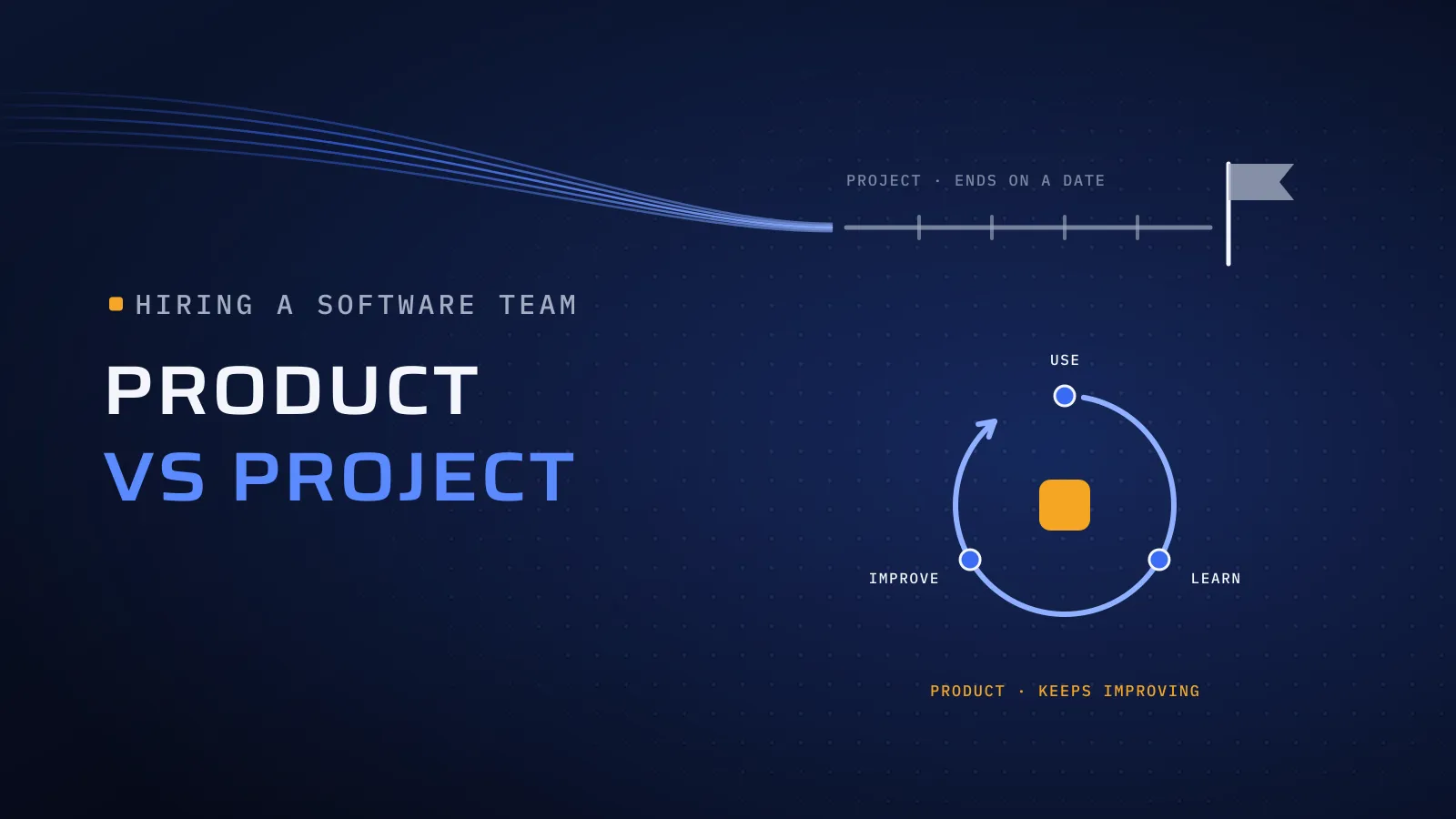
This guide is for business owners and founders who are about to hire a software company. A project mindset treats your software as a delivery: an agreed list of features, a date and a handover. A product mindset treats it as something that has to keep earning its place, and improves it after launch from what users actually do. Which one your vendor brings decides what you sign, who works on it and what you are left with the day after launch.
What is the difference between a product mindset and a project mindset?
Quick answer: A project mindset judges success by output: the agreed features, delivered on time and on budget, then handed over. A product mindset judges it by outcomes: what users do differently and what that does for your business, and it keeps improving the software after launch. Good software usually needs both: fixed, dated phases inside a product plan. A one-off company website can be a project. An app your customers or staff use every day is a product, and you should buy it as one.
Ask about CTO as a service → Or send us one question about a proposal you have on the table. We reply by email first and set up a call only if you want one.
What the wrong mindset costs you
A project mindset isn’t wrong in itself. Used for software a business relies on, it leads to the same problems:
- Built to spec, and not used. Every feature on the list was delivered and accepted. Nobody checked whether customers would use them, and they don’t.
- The knowledge leaves at launch. The team moves on to its next project, and the first change after launch is made by people reading the code for the first time.
- Every lesson becomes a change request. Your first users show you what they need, and each adjustment is priced against a list that was frozen before anyone used the product.
- The platforms keep moving. From 31 August 2026, new apps and app updates on Google Play must target Android 16, and existing apps that fall too far behind become unavailable to new users on newer Android phones (Android Developers). An app nobody looks after slowly stops reaching new customers.
Output vs outcome, in plain words
Output is what gets built: screens, features, releases. An outcome, in the words of the product author Josh Seiden, is “a change in human behavior that drives business results” (Intercom). A project mindset counts the first. A product mindset counts the second, and uses the first to get there.
| Output (what is built) | Outcome (what changes) |
|---|---|
| A reorder screen in the customer app | Repeat customers reorder in the app instead of sending a WhatsApp voice note |
| An inspection form for supervisors | Inspections are closed on site the same day, not typed up at the office later |
| An Arabic version of the app | Customers who use Arabic finish checkout as often as those who use English |
| A customer portal | Customers check their own order status, so fewer calls reach your sales team |
An outcome leaves your vendor room to find the simplest way to get there. A feature list doesn’t, and it can’t tell you whether the money worked.
What changes in the contract, the team, the measure and the roadmap
| Project mindset | Product mindset | |
|---|---|---|
| The contract | One scope, one price and one date for the whole build, ending at handover | Phases, or a team on a longer contract, with each phase scoped from what the last one taught you |
| The scope | A feature list signed before the build | A goal and a ranked backlog: the first release is fixed, and the rest is re-ranked as you learn |
| The team | Put together for the build, and moved on at launch | The same people, or the core of them, stay with the product, so the reasons behind each decision stay too |
| Who ranks the work | The spec | A product owner ranks work by the outcome it serves, and you approve |
| The success measure | On time, on budget, in scope | Users do what the product exists for, and the business result follows |
| The roadmap | Features with dates | Outcomes in order (now, next, later), delivered through dated releases |
| A change halfway | A change request against the frozen list | Swaps inside the backlog; anything that moves cost or dates goes through a written change request |
| After launch | A warranty period, then handover | Monitoring, a support plan, and the next release planned from what users did |
A fixed price isn’t the problem. A fixed price with nothing planned after launch is. On our projects, delivery is priced per phase, and you agree the next phase only once you have accepted the current one, as our delivery process explains. You keep a fixed price, and each phase is scoped from what users did. Once the product is live, it can continue on time and materials or with a dedicated team: the four ways to work with us show who runs the work in each.
When is a fixed project the right call?
Not everything needs a product team. Use this table before you ask for quotes.
| What you are buying | A fixed project? | Why |
|---|---|---|
| A company website or a campaign site | Yes | A clear scope and a launch date. See what a business website needs |
| A defined integration, or work with a legal deadline such as UAE e-invoicing | Yes | The scope and the date are set from outside |
| A clickable prototype for investors or a first test | Yes | It is built to learn from, and is often rebuilt |
| An AI pilot on one process | Yes, with a go or no-go decision | If it goes ahead, it becomes a product |
| An MVP for a new business | The first phase only | Fix the first release, then plan the next ones from what users do. MVP vs MMP vs MLP shows how far each stage goes |
| An internal system that replaces Excel or WhatsApp for daily work | Phased | The first phase can be fixed. The measure is whether staff stop going back to the spreadsheet |
| A customer app or platform that earns your revenue | No | It lives on repeat use, and needs people who stay with it |
| Software you sell to other businesses | No | Customers usually pay a subscription for it to keep improving |
What this means for you: if the software is finished when it launches, buy a project and fix the scope. If your customers or staff will rely on it every day, buy a product. A fixed first phase is fine, but ask the vendor to write down what happens after launch, who stays and how the next release will be chosen.
How to tell which mindset a software company has
Every vendor says it thinks in products. These questions show whether it does. Ask them in the first meeting, and notice what the vendor asks you: a product-minded team asks about your users and the result you need before it asks for your feature list.
| Ask this | A project-only answer | A product answer |
|---|---|---|
| What happens the day after launch? | A warranty period, then handover | Monitoring, a support plan and a review of what users did, to choose the next release |
| How will we know the first release worked? | All features delivered and accepted | They ask you for a measure, and plan how you will see it |
| What would you take out of my feature list? | Nothing: everything is quoted | A shorter first release, with reasons, and a list of what waits |
| Who ranks the work, and by what? | The project manager follows the spec | A named product owner ranks it by outcome, and you approve |
| Will the same people work on version two? | Whoever is free | The core team stays, and every decision is written down |
| What do you need from us after launch? | Sign-off and the final payment | Usage data, user feedback and a decision-maker at each review |
| Who checks that the architecture will last? | The developers building it | Senior technical oversight on the decisions that are expensive to reverse |
Then read the proposal. A product-minded one names the result you are after, separates the product owner from the project manager, prices the work in phases and says what happens after launch. One that lists only features, a total and a date is a project proposal, whatever its cover says. For the other vendor checks, from portfolio to code ownership, use our scorecard for choosing a software company.
Have a proposal on the table? Send us the scope or the proposal you received, with anything confidential removed. We reply with the questions we would put to the vendor and what we would change in the first release. Ask about CTO as a service →
Only one question? Ask it in the same form. Want to know us first? Ask for our company profile. We reply by email first and set up a call only if you want one.
Product mindset principles, in five lines
- Start from the problem, not the feature. Each feature has to answer a business problem.
- Measure outcomes. Agree what users should do differently before the build starts.
- Ship small, then learn. A first release that real users touch teaches more than a long spec.
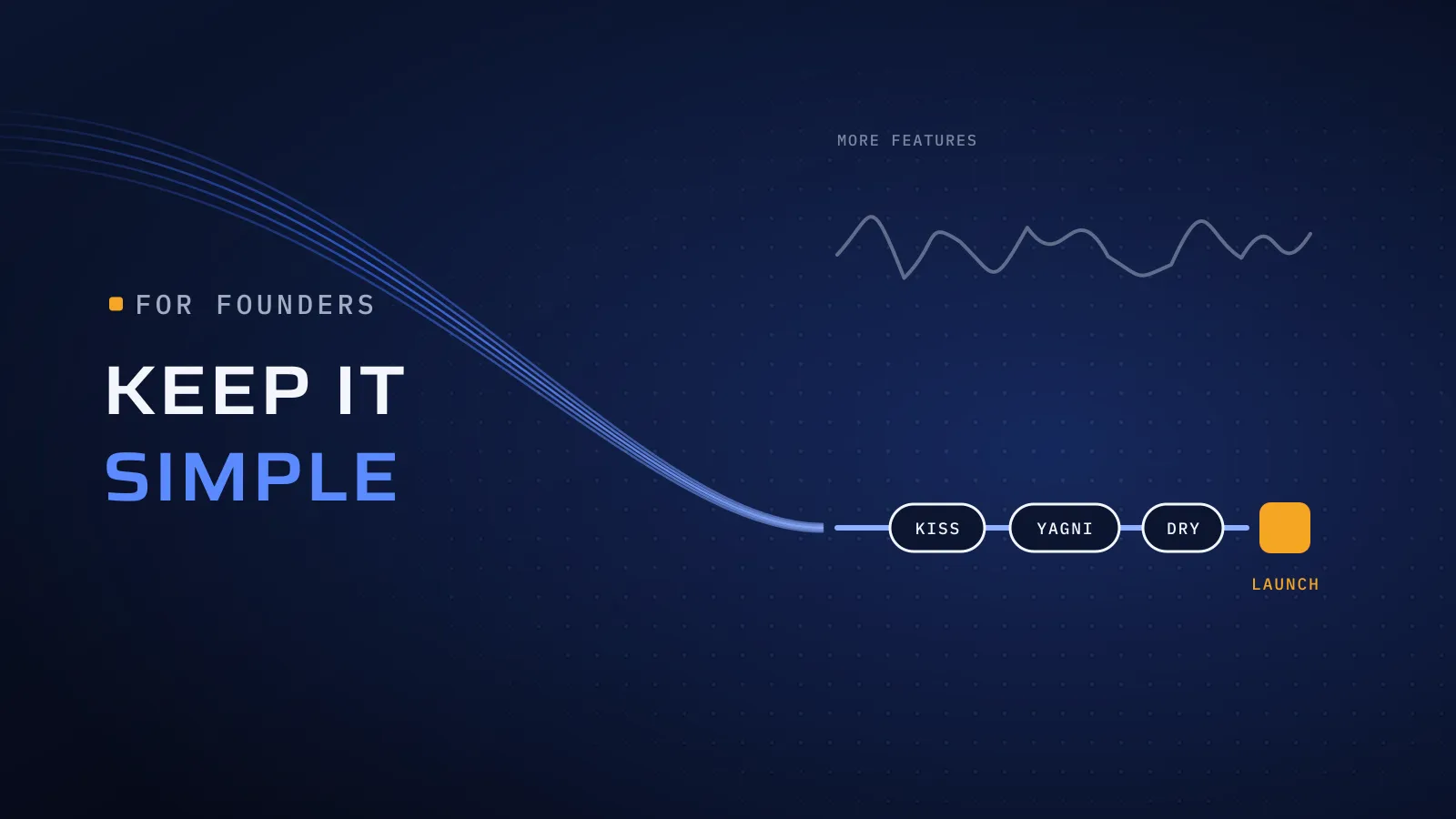
- Say no on purpose. Features that don’t serve the goal wait, however good they sound. KISS, YAGNI and DRY explain why.
- Stay after launch. The people who built the product keep improving it, from data and feedback.
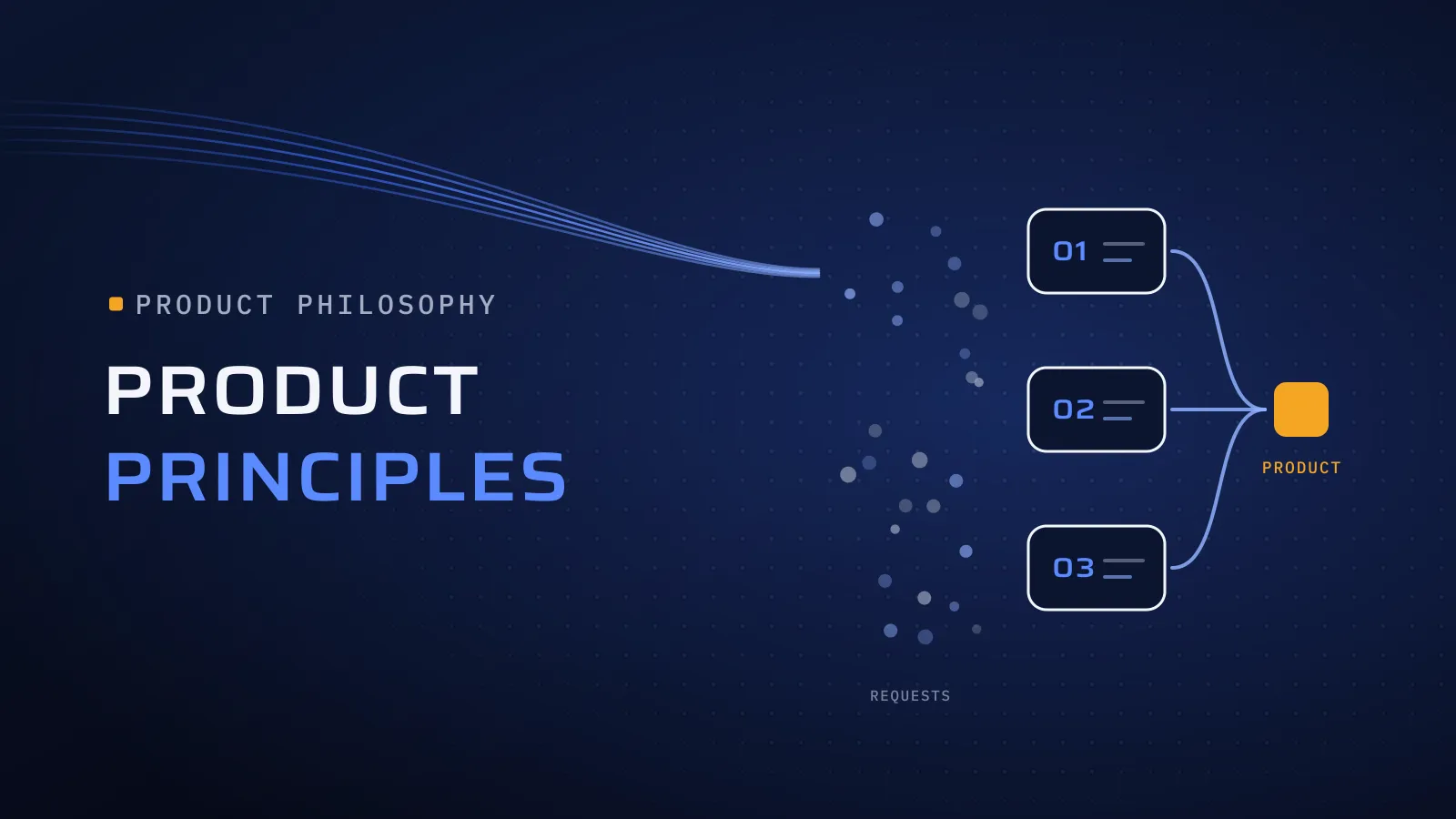
Your product also needs its own few rules for what it builds and never builds: product principles examples shows how to write them.
What a product mindset asks of you
A vendor can’t hold a product mindset alone. On your side, it needs:
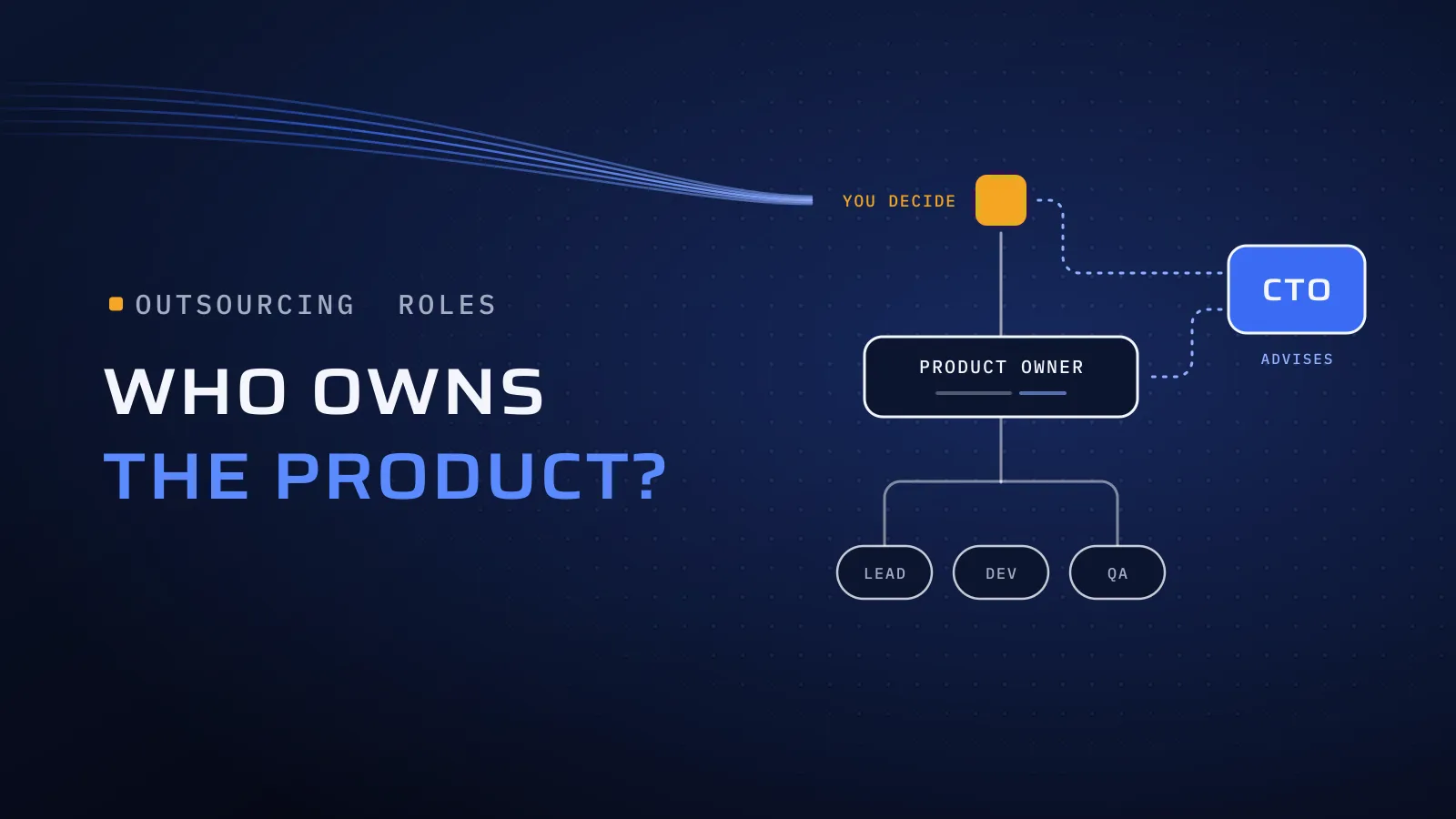
- One named decision-maker who ranks priorities and accepts releases. Product owner vs product manager when you outsource sets out who decides what.
- A measure for each release, agreed before the build.
- Access to users and data: analytics, support messages and reviews, in Arabic as well as English if your customers write in both. Competitor analysis for startups shows how to read them.
- Your calendar. Big changes don’t go live in your busiest week: Ramadan and Eid for retail and delivery, the start of the school year for education.
- A budget that continues after launch, even a small one, for support, store updates and the next release.
- Accounts in your company’s name: the app stores, analytics and code, so the product stays yours whoever works on it.
Where CTO as a service fits
If nobody on your side is technical, someone still has to hold the product view across vendors and phases: an architecture that outlasts the first release, the vendor questions above, and a written record of why each decision was made. That is the job of CTO as a service: senior technical judgement for the days your product needs it. The CTO recommends and explains the trade-offs. You keep the final decisions.
Qargo is a car rental and ride-hailing platform in Qatar, and we led its technical direction and architecture. Talk to the team that built it: book a meeting.
Talk to us before you sign
Since 2014 we have built software for more than 100 clients across the UAE, Saudi Arabia, Qatar, Kuwait, the USA and Canada. Two of our principles shape how we deliver: product thinking, because we solve business problems, not only deliver features, and CTO oversight, because every project is supervised by senior technical leadership.
Ask about CTO as a service → Tell us what you plan to build and how you are buying it: a quote, a proposal or a team. We reply with what we would fix, phase or measure first. We reply by email first and set up a call only if you want one. Asking commits you to nothing, and we sign an NDA first if you ask.
Frequently asked questions
What is the difference between a product mindset and a project mindset?
A project mindset judges software by output: the agreed features, delivered on time and on budget, then handed over. A product mindset judges it by outcomes: what users do differently and what that does for your business. It keeps improving the software after launch, from what users actually do.
Is a fixed-price contract a project mindset?
Not by itself. A fixed price per phase can carry a product mindset, as long as each phase is scoped from what users did in the last one and the contract says what happens after launch. The problem is one fixed scope for the whole product, with nothing planned once it goes live.
When is a project mindset the right choice?
When the software is finished once it launches: a company website or campaign site, a defined integration, work with a legal deadline such as e-invoicing, a prototype to test an idea, or an AI pilot with a go or no-go decision. An MVP can start as a fixed first phase, but the releases after it should be planned from what users do.
What are the principles of a product mindset?
Start from the problem, not the feature. Agree what users should do differently before the build. Ship a small first release and learn from it. Say no to features that don't serve the goal. And keep the people who built the product improving it after launch.
How can I tell if a software company has a product mindset?
Ask what happens the day after launch, how you will know the first release worked, what they would take out of your feature list, who ranks the work, and whether the same people will work on version two. A product-minded team answers with a measure, a shorter first release and a plan for after launch, and asks about your users before your feature list.
What does a product mindset ask of us as the client?
One named decision-maker, a measure for each release, access to usage data and user feedback, a budget that continues after launch, and the app stores, analytics and code in your company's name.
Do we need CTO as a service to work this way?
Not always. If nobody on your side is technical, it helps: someone holds the product view across vendors and phases, asks vendors the right questions and keeps a written record of each decision. The CTO recommends and explains the trade-offs, and you keep the final decisions.