Software Delivery Process: How We Take Your Product From Brief to Release
Our software delivery process in four stages, from brief to release: a named owner for scope, dates and quality, and working software every cycle.
A clear software delivery process takes your product from brief to release on the date you planned, with fewer surprises on the way. You know who owns the scope, the dates and the quality, and you see working software at every step, not slides.
What does a good software delivery process give you?
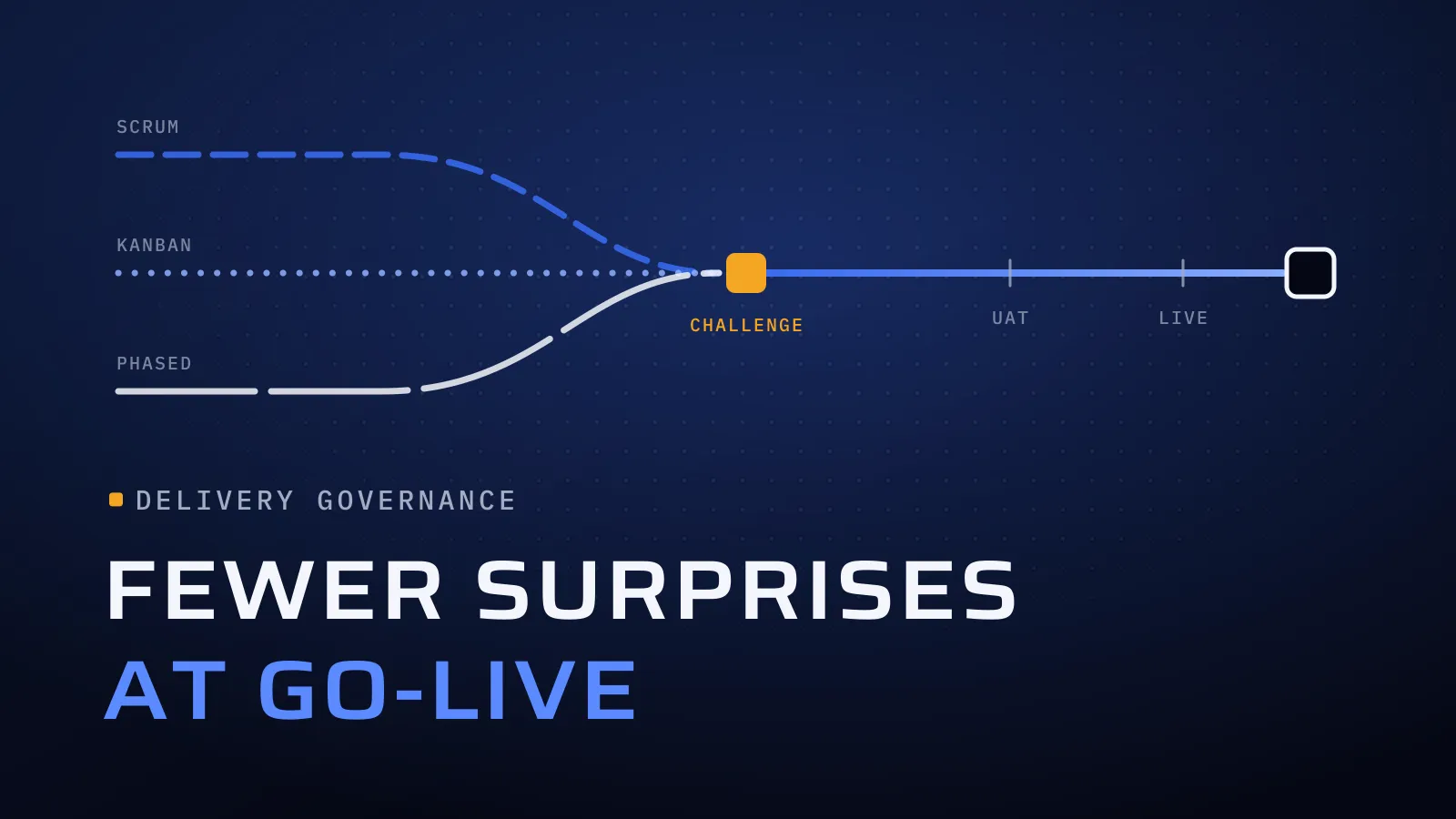
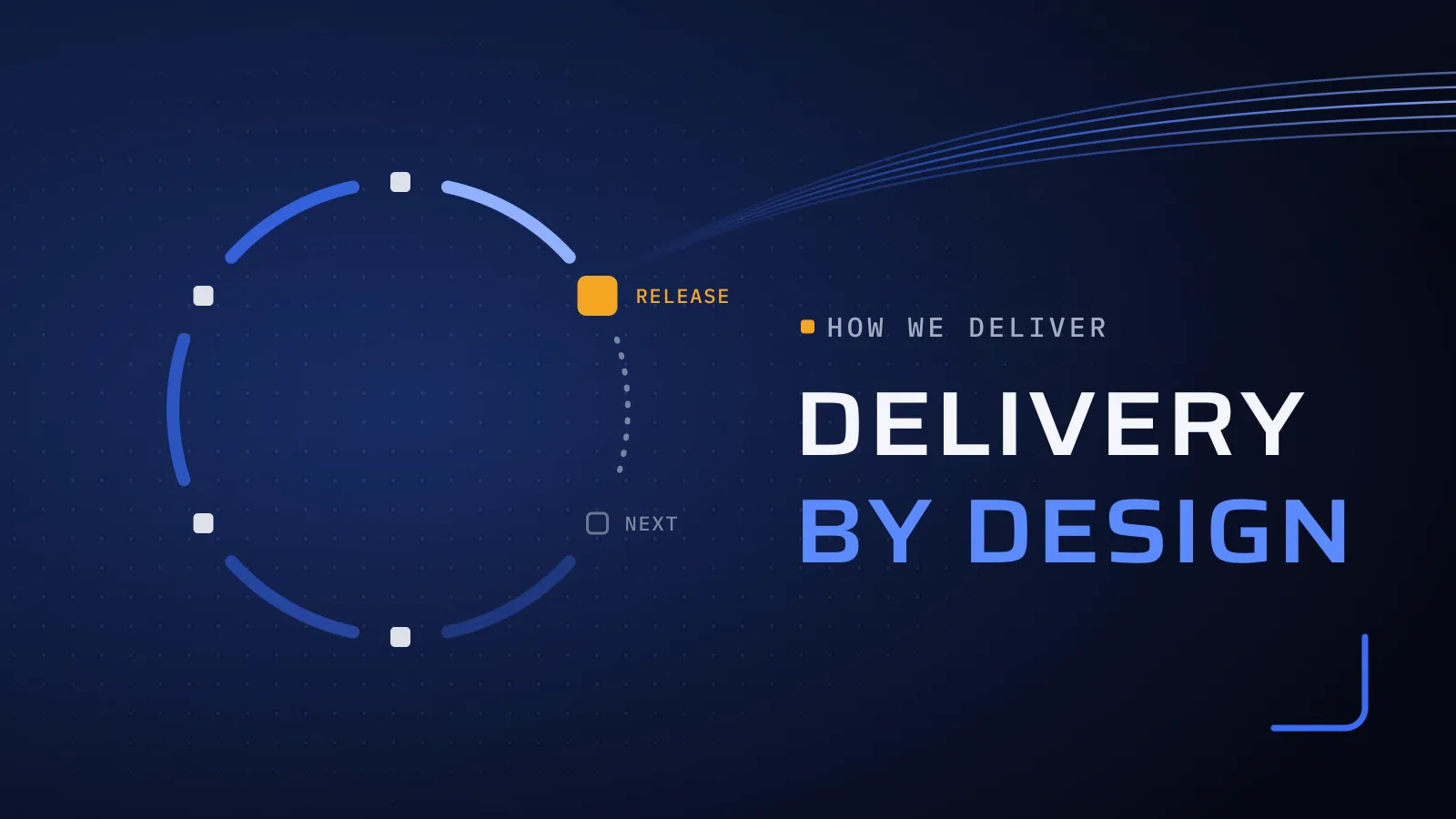
It gives you a written scope before the build, a named owner for scope, dates and quality, working software you can click through at the end of every short cycle, and an early warning when a date is at risk. We run it in four stages, Discover, Plan, Build and Run, and fit it to your project and team.
Have a product to build or rebuild? Talk to us about your project →
Without clear owners, the expensive decisions get made by accident. The stack is picked by whichever developer starts first, the scope grows one “small” request at a time, and testing waits for the end, when each fix costs most. None of it shows in the early demos. It shows in the launch date, so it pays to settle it in week one.
How we take a product from brief to release
- Discover. Workshops with your team on users, processes and constraints. You get a written scope in three lists (first release, later, not doing) and success measures. Our guide to software product discovery covers this stage.
- Plan. The architecture, the technology stack, the data model and a dated release plan. The calls that are expensive to reverse are made here, on purpose, and explained to you in plain terms.
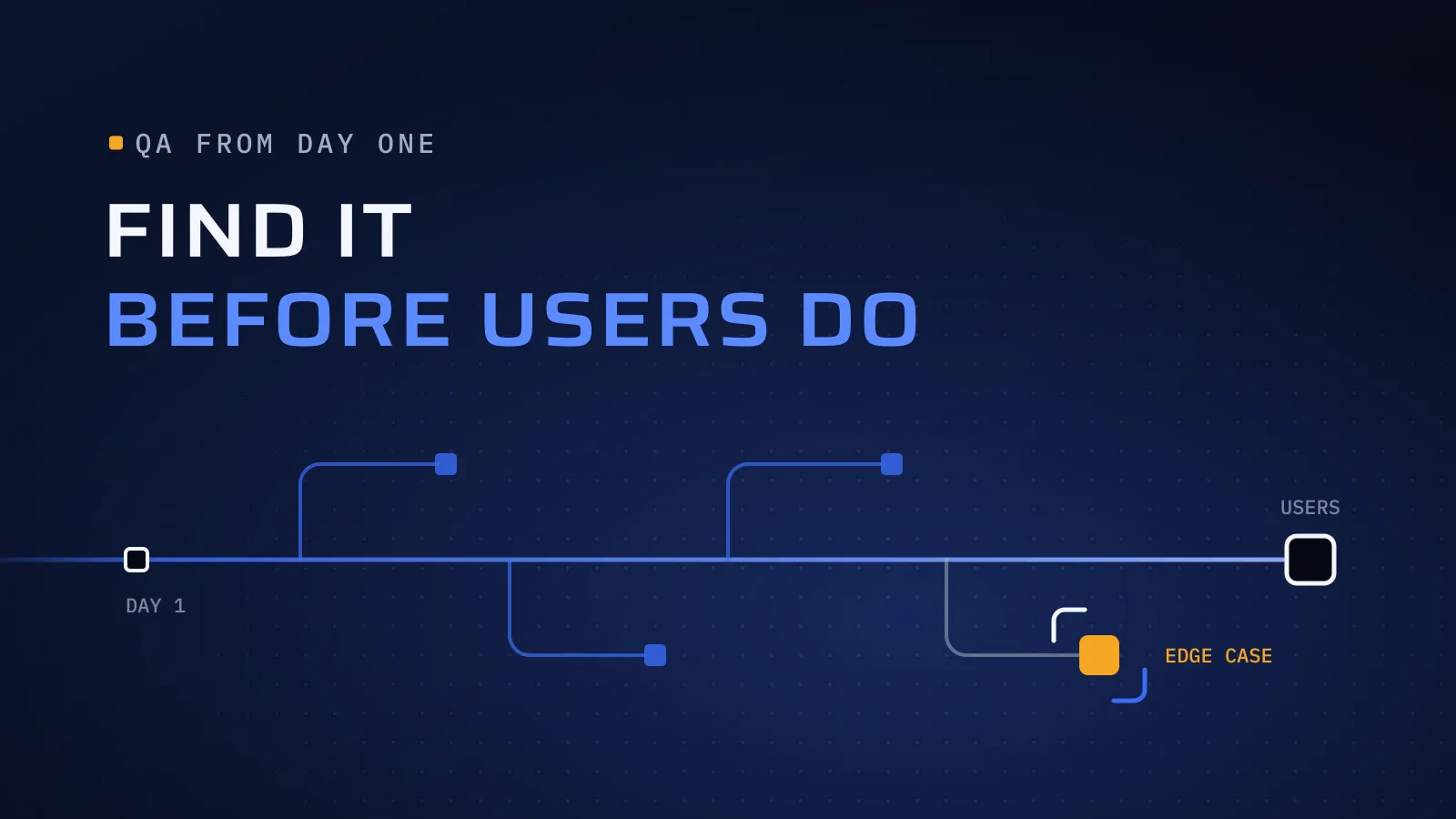
- Build. Short cycles, each ending in software you can click through. The Technical Lead reviews the code, and independent QA tests each feature in the same cycle, so problems surface in days, not in UAT.
- Run. Launch with a release checklist you sign off, then monitoring and a support plan. New features keep shipping on the same rhythm.
The stages overlap, because every cycle brings feedback. That is the point: a wrong turn costs you one cycle, not the budget.
Who owns what on your project
Use this table to plan your side. Each role on our side owns something you can point to, and each one works with a named counterpart on yours.
| Role | What it owns | What you get from it | Your counterpart |
|---|---|---|---|
| Product Owner | Scope and priorities, tied to your business goals | A ranked backlog, and clear calls on what waits | Your product or business lead, who makes the final call |
| Project Manager | Dates, reporting and early warnings | A dated release plan, progress reports and risks raised early | Whoever reports progress to your management |
| CTO oversight | Architecture, the stack and the decisions that are expensive to reverse | Technical choices explained in plain terms | Your CTO or IT lead, if you have one |
| Technical Lead | Code quality, day to day | Code reviewed before it reaches you | Your engineers, for integrations |
| Developers | Building the features | Working software at the end of every cycle | Your users, at the reviews |
| Independent QA | Acceptance criteria, the risk list and the testing | Issues found before your users find them | Your UAT testers |
Two choices in this table protect you. The Product Owner and the Project Manager are different people, because scope and dates pull against each other, and you should see that trade-off made in the open. And QA sits outside the development team, so the person checking the work didn’t write it, as quality assurance in software development explains. No technical leader of your own? CTO as a service covers that role.
Talk to us about your project
Send us your brief in a few lines, or the problem you want solved. We reply with how we would run it, what a first release could cover and the questions we would ask first.
Talk to us about your project → · Not ready for a call? Ask for our company profile and we’ll send it to you.
How the process fits the way you work with us
The roles stay; who directs them changes. On project delivery, we run the process and you accept each milestone. With staff augmentation, developers you chose from our shortlist work inside your own process. On time and materials, you set the tasks and we log the hours against each one. A dedicated team, recruited for you on a long-term contract, takes its priorities from you while our delivery lead runs the process, and with Build-Operate-Transfer you can take over the engineers we recruited for you when the contract ends, on terms agreed up front, while our delivery lead and QA stay with our core team. Compare the four ways to work.
Whichever you choose, our engineers draft faster with AI tools, then review, test and own everything that ships, as AI-assisted software development explains.
What this looks like on a real project
Qargo, a mobility platform in Qatar, is four connected products: a self-drive rental app, a driver app, an admin dashboard and a partner dashboard. A rental booked in the app has to reach the partner’s dashboard with its dates, revenue and before-and-after photos, and the partner can propose a fine with those photos as evidence.
In a product like this, the data model is a Plan decision, because a change late in the build touches all four parts at once. The awkward cases, such as a missing photo or a disputed fine, are questions for planning, not for launch week.
Two of our principles matter most here:
- CTO oversight. Every project is supervised by senior technical leadership, so the big technical calls are made once, deliberately.
- Transparent delivery. Clear milestones, reporting and communication, so you always know where the project stands.
Since 2014 we have delivered software for more than 100 clients in the UAE, Saudi Arabia, Qatar, Kuwait, the USA and Canada, from our headquarters at Dubai Digital Park in Dubai Silicon Oasis and our offices in Houston and Alexandria. We design for UAE PDPL, Saudi PDPL and PIPEDA, and agree data rules with you before access.
Ready to take your product from brief to release? Talk to us about your project. We ask about your goal, what you use today, your timing and who else should be involved. You leave with clear next steps. The call commits you to nothing, and we sign an NDA first if you want one.
Frequently asked questions
How long will my project take, and what will it cost?
Both follow the scope, so both are agreed in your proposal. By the end of Plan you have a dated release plan. Project delivery is priced per phase, and you agree the next phase only once you have accepted the current one, so you commit in steps you can see.
How much of my team's time does the process need?
One named person who can make decisions, at a short review at the end of each cycle, plus your experts in the Discover workshops. Our team runs the planning, the build and the testing, and the Project Manager tells you ahead of time when we need your people.
What happens if a date is at risk?
The Project Manager tells you early, with options: move a feature to a later release, change the scope through a written change request, or move the date. You choose. Because every cycle ends in working software, a problem shows up within one cycle, not at launch.
Can the process work with our own developers?
Yes. With staff augmentation, developers you choose from our shortlist join your team and follow your process. With a dedicated team, you own the priorities and our delivery lead runs the process. The roles stay the same; only who directs them changes.
Who owns the code, and how is our data handled?
The code and IP pass to you at the end of the project or contract term, once it is completed and paid, as written in your contract. Until then, the code can sit in your own repositories from the first commit, so you see every commit as it is written. We sign an NDA before any access if you want one, design for UAE PDPL, Saudi PDPL and PIPEDA, and agree data rules with you before anyone touches your systems.
What happens after launch?
Run is part of the process: monitoring, a support plan and new features on the same rhythm. If you would rather take the product in-house, you get the code and the documentation at handover, so your own team can carry on from there.