Custom Software Development in Dubai for Business Systems and Web Apps
Custom software development in Dubai for the work your team still runs on spreadsheets, email and workarounds. We build business systems, customer and vendor portals, internal tools and dashboards, and the integrations that link them to your ERP, CRM and payment gateways. We also modernize older systems in stages while they keep running. Since 2014 we have built software for 100+ clients in the UAE, the GCC, the USA and Canada.
What we build, and what it replaces.
Each project starts from a process your team runs today, in a spreadsheet, by email or in an old system. The first release covers that process from start to finish.
- Business systems
- Operations, finance and approval systems for the process that sets you apart, where a ready-made product leaves your team working around it.
- Customer and vendor portals
- Logins where customers or suppliers request, approve, track and download, instead of emailing your team for every update.
- Internal tools and dashboards
- Admin panels, scheduling, approvals and the dashboards managers check each morning, built around your roles and rules.
- Integrations and APIs
- Connections to your ERP, CRM, payment gateways and partners’ systems, so each record is entered once and stays in step.
- Spreadsheet replacement
- The Excel file the business runs on, turned into a system with roles, approvals, a history of changes and reports. FloPlan, our own delivery software, replaced our planning spreadsheets.
- Legacy modernization
- Old PHP, .NET Framework, Access or VB6 systems refactored, rebuilt or replaced module by module, while the old one runs until the new one matches it.
How a custom software project runs with us.
Quality is built into every step: CTO oversight on the architecture, independent QA before each release, and a dated plan in FloPlan, the delivery software we built and use ourselves. Every two weeks you see working software and where the plan stands.
- 01
Discovery
A business analyst and your project manager map the process with the people who run it: its rules, roles, reports and connected systems. You get a written scope, a dated plan and an estimate that lists its assumptions.
- 02
Design and architecture
A designer turns each role’s main journeys into clickable screens, in Arabic and English where your users need both, checked by native Arabic speakers on our core team. A CTO-level lead signs off the data model and the architecture.
- 03
Build, in two-week cycles
Back-end and front-end developers, with a technical lead reviewing the code, build the rules, screens and integrations. Every cycle ends with working software you can try.
- 04
Independent QA, every cycle
A QA engineer who doesn’t write the code turns the rules from discovery into tests and checks each release. Your team then accepts it on real cases.
- 05
Data and switch-over
Records from the spreadsheet or the old system are cleaned, mapped and imported in test runs, and the switch-over is rehearsed before go-live.
- 06
Support and the next phase
A smaller team stays on for fixes and changes, and the next phase goes into the plan. If you would rather grow your own team, our engineers can join it.
Built for Al-Mawared ERP, iBankMarkets, CombiTrip and Adltix.
Al-Mawared ERP
Currency exchangeAl-Mawared ERP is a web-based system for MENA exchange companies, handling regulatory compliance, real-time multi-currency exchange and branch management.
iBankMarkets
Forex brokerageFlojics Technology partnered with forex broker iBankMarkets to deliver a CRM, trial accounts, MetaTrader 4 integration and a secure online trading system.
CombiTrip
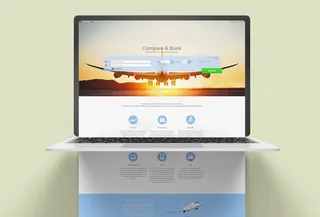
TravelA modern frontend redesign and an advanced price comparison system for the CombiTrip travel search engine, gathering real-time prices via APIs and web scraping.
Adltix
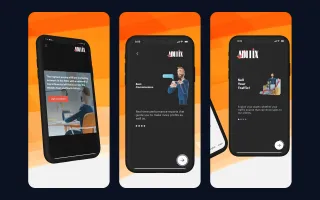
Ad tech & marketingAdltix is a smart marketing platform that gives businesses full campaign control, real-time reports and risk-free pay-per-action pricing.

Questions before a first call.
Custom software, Odoo or an off-the-shelf product: which do we need?
A ready-made product, when the process is standard, such as accounting, payroll or a helpdesk. Odoo, when you need accounts, VAT, stock and HR in one system; we implement it in the UAE. Custom software, when the process is how you win or serve customers and no product fits it, so your team keeps working around it in spreadsheets. Many companies combine them: Odoo for the records, and a custom portal or workflow for the part it can’t cover.
Excel, Odoo or custom software: where to start Custom CRM in Dubai: buy one, extend it or build your own ERP for exchange companies: specialist, general or custom
How much does custom software development cost in Dubai?
Your price is agreed in your proposal, after discovery, and it follows the effort: the roles the work needs and the phases they carry it through. What moves the effort is the rules and exceptions in your process, the user roles, each integration, Arabic and English screens, and the data moved from the old system. One workflow needs a small team; a core business system needs a larger team over several phases. Send us the process, and we reply with an estimate of the effort, the team and the price.
Get an estimate for your system Custom software development cost in the UAE: team and phases
How long until the first release?
Your dates are set in the plan at the end of discovery, before the build starts. One workflow ships sooner than a portal with several user roles, and a core business system ships in phases, each with its own dates. Integrations and data moved from an old system add the most time. The less the first release holds, the sooner your team uses it.
Can you modernize a system we already run, or move it off .NET Framework?
Yes. We have modernized and replaced older in-house systems and upgraded Laravel versions. Old PHP, .NET Framework, Access and VB6 systems are refactored, rebuilt or replaced module by module, and the old system keeps running until the new one gives the same results.
Legacy system modernization: refactor, rebuild or replace .NET Framework migration to .NET 10: a staged plan
Can it connect to our ERP, CRM and payment systems?
Yes. Most builds include APIs and connections to the payment, ERP and CRM systems you already use, each tested against the other system’s test environment. For iBankMarkets, a forex broker, we delivered a CRM, trial accounts, MetaTrader 4 integration and a secure online trading system.
What should we ask a custom software company before choosing one?
Ask who signs off the architecture, who tests apart from the developers, and where you will see the plan and its dates each week. Ask how Arabic screens are designed and who checks them, how your data moves from the spreadsheet or old system, and who owns the code. Then ask to talk to the team behind a system that is already live.