Competitor Analysis for Startups: Find Your Selling Point in Your Competitors' Reviews
Competitor analysis for startups in the UAE and GCC: read what rivals' users complain about in Arabic and English, and turn it into a selling point to test.
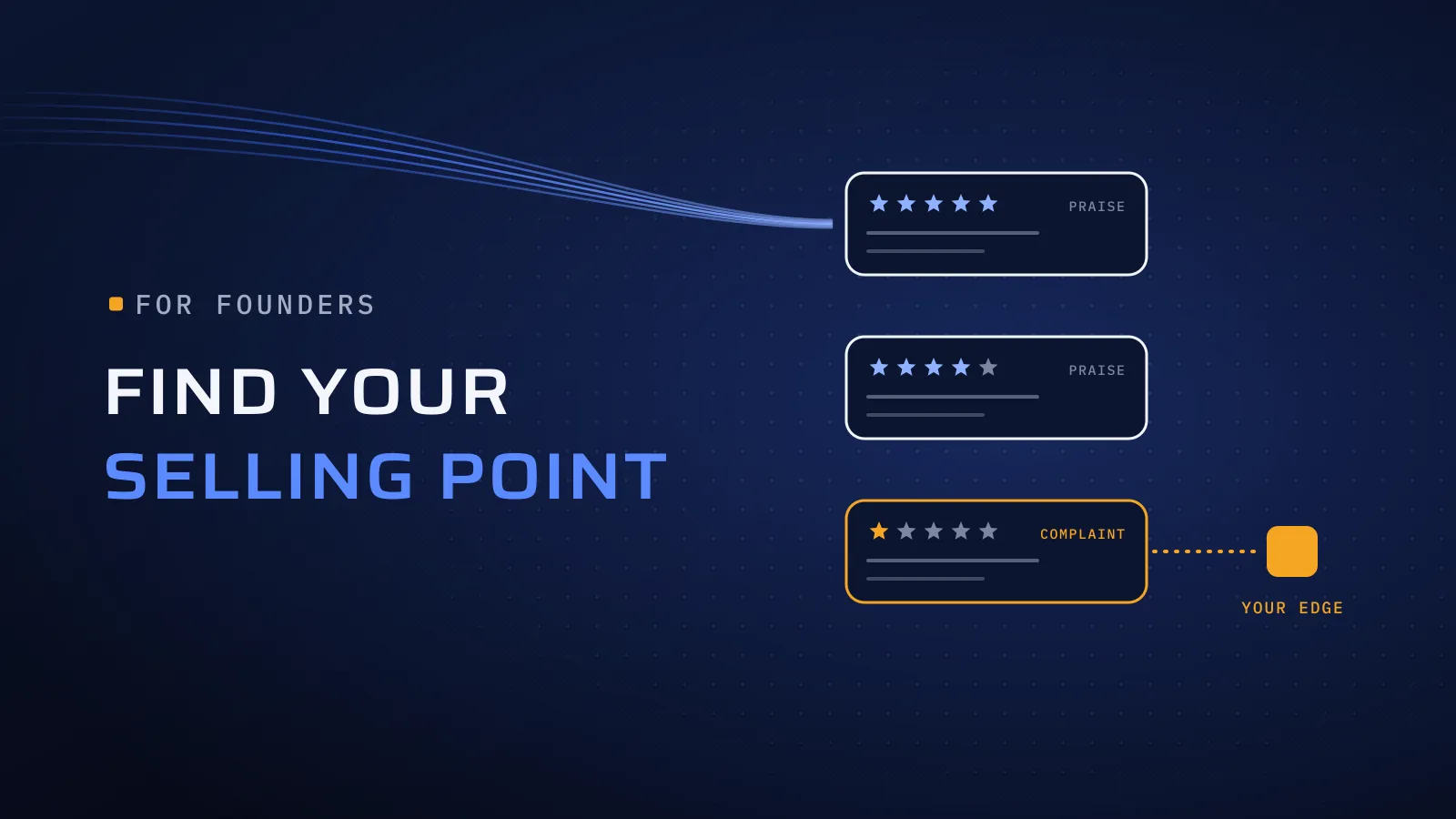
This guide is for founders and business owners about to start an app, a platform or a system, who want to know how to compete before they pay for the build. Competitor analysis for a startup is not a table of your rivals’ features. It is reading what their users praise and complain about, choosing the complaint you can fix better than anyone else, and checking it with real customers before anyone writes code.
How do you do competitor analysis for a startup?
Quick answer: List three to five competitors, and count “doing nothing”, Excel and WhatsApp among them. Read their users’ reviews in the app stores, on Google Maps, on G2 or Capterra, on Reddit and in social media comments, in Arabic and in English. Tag every complaint and every piece of praise, then count which ones repeat. Pick the complaint that hurts most, that you can fix in your first release and that they can’t fix quickly. Check it in conversations with real customers, then write it as one positioning line.
Why a feature list leads you to the wrong product
A feature comparison shows what your competitors built. It doesn’t show what their users wish they had built, or why some of them left. Founders who start from it usually promise “the same, plus a few extras”, and build a smaller copy of the market leader with less money and a later start.
Reviews show the other side: what users praise, you must match; what they complain about is where you can win. Finding that now is cheap. Changing a sentence on paper takes an afternoon; changing a product after launch takes a release.
Who are your competitors, really?
Start wider than the apps that look like yours. Competitors come in three kinds:
- Direct: products that do the same job for the same customers.
- Indirect: a different route to the same result. A booking app competes with a phone call to the shop.
- The current way: doing nothing, a spreadsheet, a WhatsApp group, a notebook, or a person who handles it. In many Gulf businesses this is the strongest competitor of all, because it is free, familiar and already on every phone. Our guide to replacing Excel with custom software covers the point where a spreadsheet stops being enough.
Six steps from competitor reviews to a selling point
- Write down the job. One sentence: who does what, and how they do it today. “Trading companies take repeat orders through WhatsApp voice notes” is a job. “A B2B app” isn’t.
- Pick three to five competitors: the market leader, your closest rival, one that does things differently, and the current way.
- Read where their users write. The table below lists the places and what each signal means. Read the store of the country you will launch in.
- Tag and count. Copy each complaint and each piece of praise into a sheet: the moment it happened (signing up, paying, delivery, support), the user’s own words, and the date. Keep the exact words; they become your marketing copy later. Then count the themes. One angry review is a story; the same complaint about three competitors is a gap in the market.
- Choose the complaint you can own. It repeats, it makes people leave or pay for a workaround, you can fix it in your first release, and the competitor can’t fix it quickly. A slow screen they can fix next month; an English-only support team, a cards-only checkout or a commission model they depend on is much harder to change.
- Check it with real customers. Talk to people who do the job today. Ask about the last time it happened, what they did and what it cost them, not whether they would use your app: almost everyone says yes. Stop when the answers start to repeat. If nobody raises your complaint unprompted, it isn’t your selling point yet.
The review-mining table: what to read, and what it tells you
| Where | What to read first | Signals to look for | What it tells you |
|---|---|---|---|
| App Store and Google Play, in your launch country | One- to three-star reviews, newest first, and the developer’s replies | “It used to work”, “since the update”, “I deleted it” | Quality and reliability gaps, and whether the competitor listens |
| Google Maps | Reviews of the clinics, shops or workshops your product would serve | “Nobody answered”, “I waited”, “wrong order”, “they lost my booking” | Day-to-day pain your software can remove |
| G2 and Capterra (B2B software) | The cons, and the notes on what reviewers switched from | “Hard to set up”, “support is slow”, “doesn’t connect to our accounting” | The gaps that decide B2B deals |
| Reddit and local forums | Threads asking “any alternative to…?” or “how do you handle…?” | People asking for something that doesn’t exist yet | Unmet needs, and how ready people are to switch |
| Instagram, TikTok and X | Comments under competitors’ posts and ads | “Sent you a DM three times”, “price?”, “do you deliver to…?” | Support, trust and coverage gaps, in your customers’ words |
| Five-star reviews, everywhere | Praise that names one specific thing | “The driver called before arriving”, “the invoice came in Arabic” | The basics you must match first |
Read the praise as carefully as the complaints. Praise sets the minimum; complaints show you where to win.
What Gulf reviews tell you that global guides miss
- Arabic, English, and both at once. Many Gulf users write reviews in Arabic, often in dialect; some type Arabic in Latin letters and numbers, and some mix both languages in one sentence. Read only English and you miss part of your market. Arabic reviews also hold the complaints about Arabic itself: a clumsy translation, screens that break from right to left, support that answers only in English.
- Country by country. Apple shows a separate overall rating for each country or region of the App Store (Apple), and Google Play shows phone users the ratings from their own country. A competitor rated well at home can be weak in Saudi Arabia.
- How people pay. Look for a mada card that fails in Saudi Arabia, no KNET in Kuwait, no Apple Pay, no cash on delivery. Customers who can’t pay the way they want leave at the last step.
- Delivery and timing. Late deliveries, couriers calling to ask for the location, no choice of time slot: these point to operations, not screens. Your selling point may be a promise kept in the field, with software that makes it possible.
- WhatsApp as the support desk. In a YouGov poll of 1,000 UAE residents, published in February 2024, 65% had used WhatsApp to ask a business about a product or service in the past year, more than had used a call centre or email (Communicate). Reviews that say “no reply”, “only a chatbot” or “email only” show a support gap you can win on.
What this means for you: if you launch in the Gulf, read the Arabic reviews and the country stores before you decide anything. Payment, delivery, language and support are where a new product often wins, because large competitors are slow to change them.
Where AI helps with competitor reviews, and where it doesn’t
Once the reviews are in front of you, AI can sort a few hundred into themes and count them, put Gulf dialect into plain English for a co-founder who doesn’t read Arabic, and suggest questions for your customer conversations.
Read a sample of each theme yourself: AI tends to merge different complaints, and it can miss sarcasm and dialect. Collect reviews only in the ways each platform allows; don’t scrape against its terms. And AI doesn’t replace the conversations: it tells you what users wrote, while only customers can tell you what they would switch for. Our article on AI-assisted software development covers where AI speeds up the build itself. On our projects, what customer data goes into AI tools is agreed with each client.
Know your competitors, but not yet what to build? Tell us where your product is today and who you want to serve. We say what technical leadership you need now and what can wait. Ask about CTO as a service →
Only have one question? Ask it in the same form. Want to read about us first? Ask for our company profile. We reply by email first and set up a call only if you want one.
Turn the complaint into a positioning line
Fill in this line. If one blank is hard to fill, go back to that step.
For [who, and where] who today [use the current way] and are tired of [the complaint you heard most], [your product] lets them [do the job, better], so [the result they notice]. Unlike [the main alternative, even if it is Excel or WhatsApp], we [how you keep the promise].
An illustration, not a real product: “For trading companies in Sharjah who take repeat orders through WhatsApp voice notes and are tired of wrong quantities, the app lets their customers reorder from last month’s list in Arabic or English, so orders arrive right the first time. Unlike WhatsApp, every order is written down, confirmed and priced before it ships.”
A good line passes three checks: a customer would describe the complaint in those words, your first release can show the promise working, and the competitor can’t copy it this quarter.
What to do with your selling point
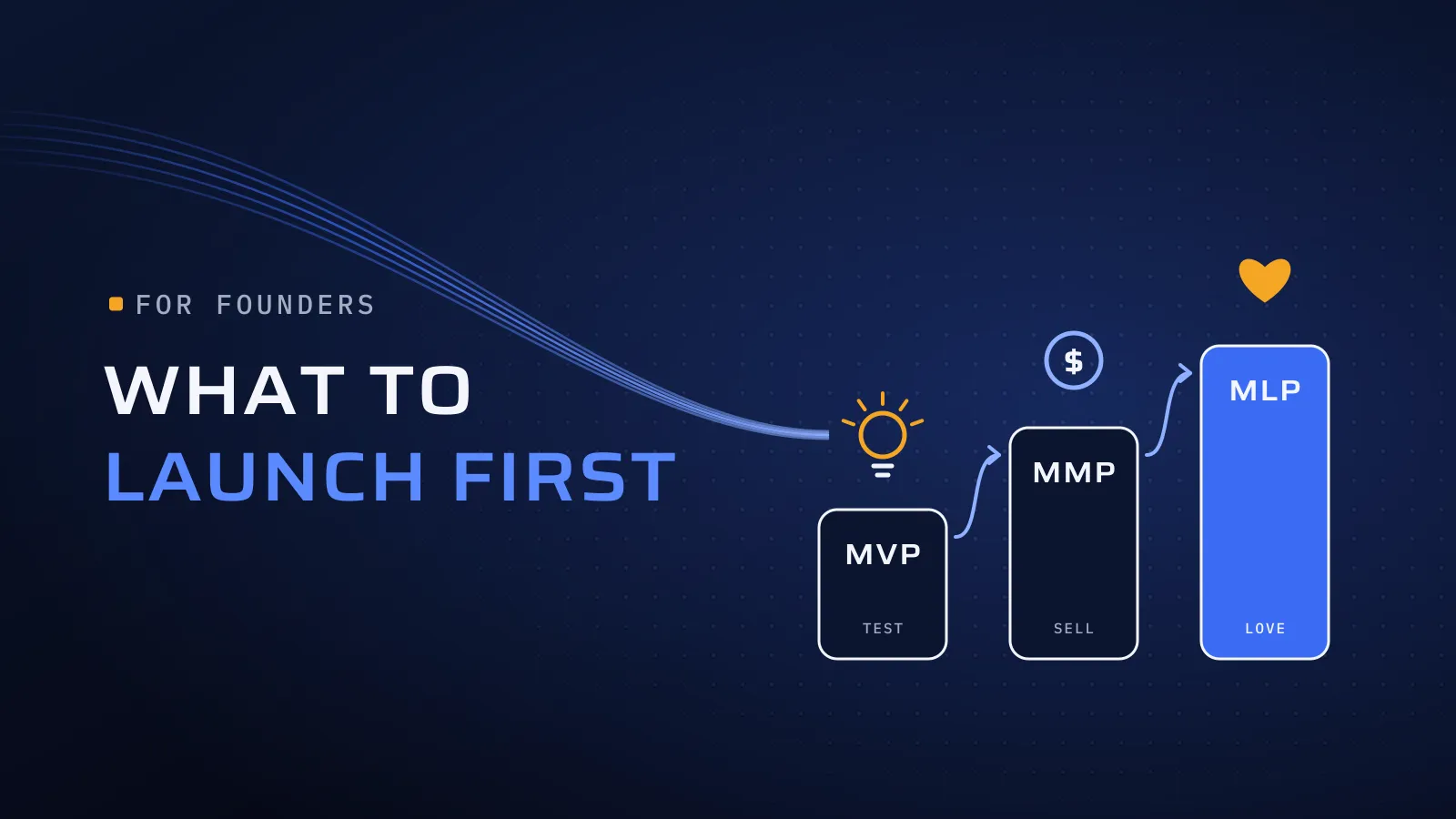
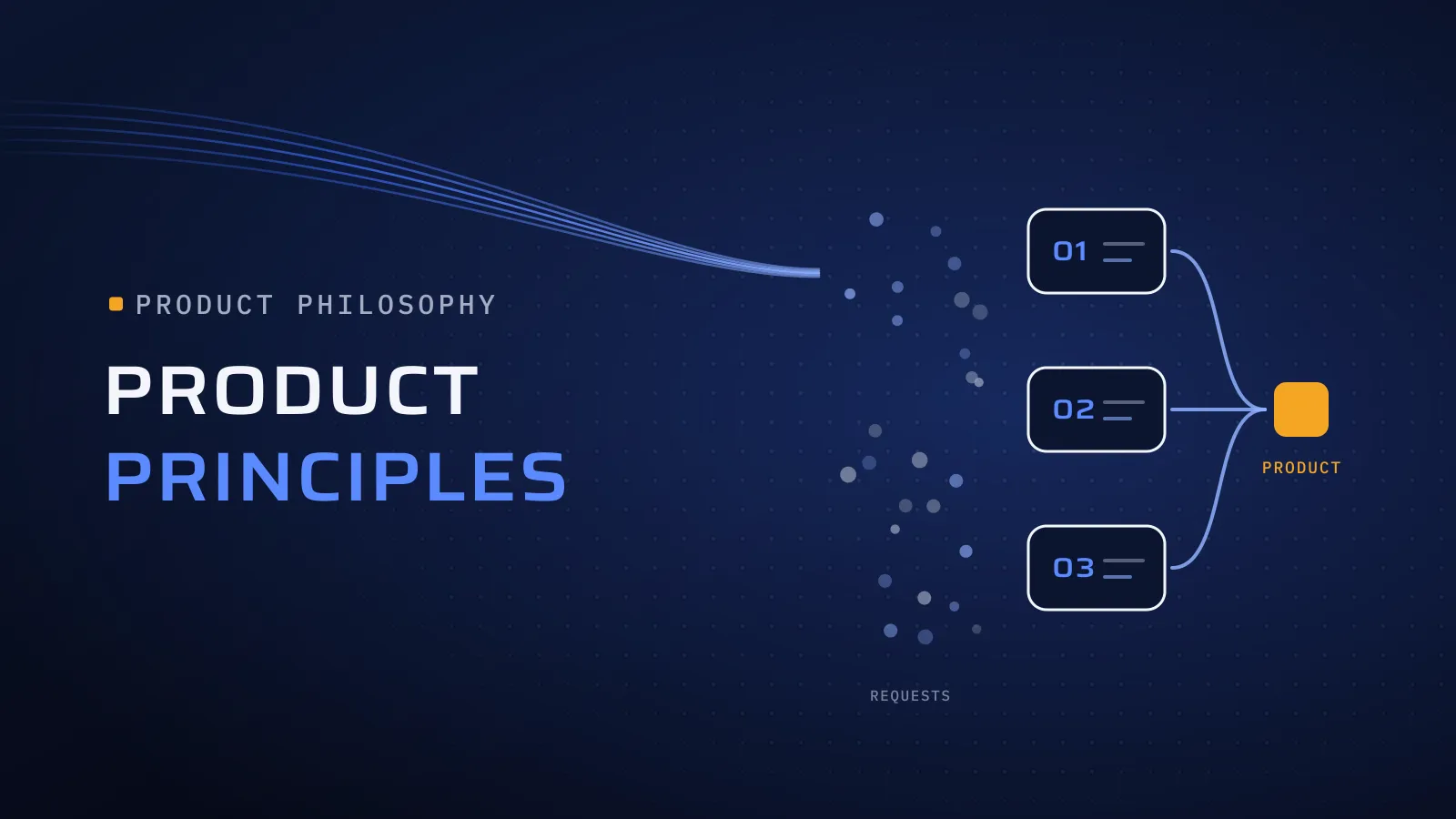
The selling point decides what goes into your first release and what waits. Our guide to MVP vs MMP vs MLP shows how far a first version should go: proving the idea, selling, or being loved. Write the selling point into a few product principles, so every later feature request is judged against it. Software product discovery turns it into a scope, wireframes and a release plan.
If an agency or freelancers will build it, settle early who guards the selling point on each side: product owner vs product manager when you outsource sets out who decides what.
How CTO as a service uses your competitor map
Your selling point also drives technical decisions:
- If the gap is payments, local cards must work on launch day, so the payment provider is chosen first.
- If it is Arabic, screens are designed right to left from the first wireframe, not translated at the end.
- If it is support, WhatsApp may need to connect to your system instead of living on one person’s phone.
- If it is speed on older phones, that shapes the architecture and the mobile app technology.
Turning a complaint into the stack, the integrations and the list of what to leave out is the job of CTO as a service: senior technical judgement for founders without a technical co-founder, with every final decision kept by you.
Qargo is a car rental and ride-hailing platform in Qatar, and we led its technical direction and architecture. Talk to the team that built it: book a meeting.
Talk to us before you build
Since 2014 we have built software for more than 100 clients across the UAE, Saudi Arabia, Qatar, Kuwait, the USA and Canada, from our headquarters at Dubai Digital Park. Our core team are native Arabic speakers who work in English, so your Arabic reviews are read by people who speak the language.
Ask about CTO as a service → Tell us where your product is today and who you want to serve. We say what technical leadership you need now and what can wait. We reply by email first and set up a call only if you want one. Asking commits you to nothing, and we sign an NDA first if you ask.
Frequently asked questions
How many competitors should a startup analyse?
Three to five: the market leader, your closest rival, one that does things differently, and the current way, such as Excel, WhatsApp or doing nothing. With more than that, you spend your time collecting reviews instead of reading them.
What if my idea has no competitors?
Then your competitor is the current way: a spreadsheet, a WhatsApp group, a phone call or doing nothing. Read the Google Maps reviews of the businesses that do the job by hand today, and the forum threads where people describe the problem. If nobody complains about it anywhere, check that the problem hurts enough for someone to pay to fix it.
How do I find the USP of my product?
Look for the complaint that repeats across competitors, makes people leave or pay for a workaround, and that you can fix in your first release while they can't fix it quickly. Check it in conversations with real customers, then write it as one positioning line.
Can I use AI to analyse competitor reviews?
Yes, to sort and count reviews by theme and to put Gulf dialect into plain English. Read a sample of each theme yourself, collect reviews only in the ways each platform allows, and don't treat the result as proof. Only conversations with customers tell you what they would switch for.
Do I need to read Arabic reviews if my app launches in English?
Yes, if your customers are in the Gulf. Many of them write reviews in Arabic or in dialect, and ratings differ from one country's store to the next. Arabic reviews are also where you find complaints about poor translation, broken right-to-left screens and English-only support.
Should my product copy competitors' features?
Match the basics that users praise, because they expect them. Don't copy the rest. Your selling point should be the complaint you fix, not a longer feature list than the market leader's.
How does a CTO use my competitor analysis?
To turn your selling point into technical decisions: what the first release must do well, which languages and integrations it needs, and what can wait. That is part of CTO as a service. Tell us where your product is today. We reply by email first and set up a call only if you want one.