KISS and YAGNI Principles for Founders: Why a Good Team Says No to Features
KISS and YAGNI principles, plus DRY, explained for non-technical founders: what each rule saves you, how a CTO cuts scope, and a feature request test.
This guide is for founders and business owners who are about to start something, and who have heard a developer say “we don’t need that yet”. KISS, YAGNI and DRY are three old engineering rules behind that answer. You don’t need to read code to use them: they decide how soon you launch, how many bugs users meet, and what each later change costs.
What are the KISS and YAGNI principles?
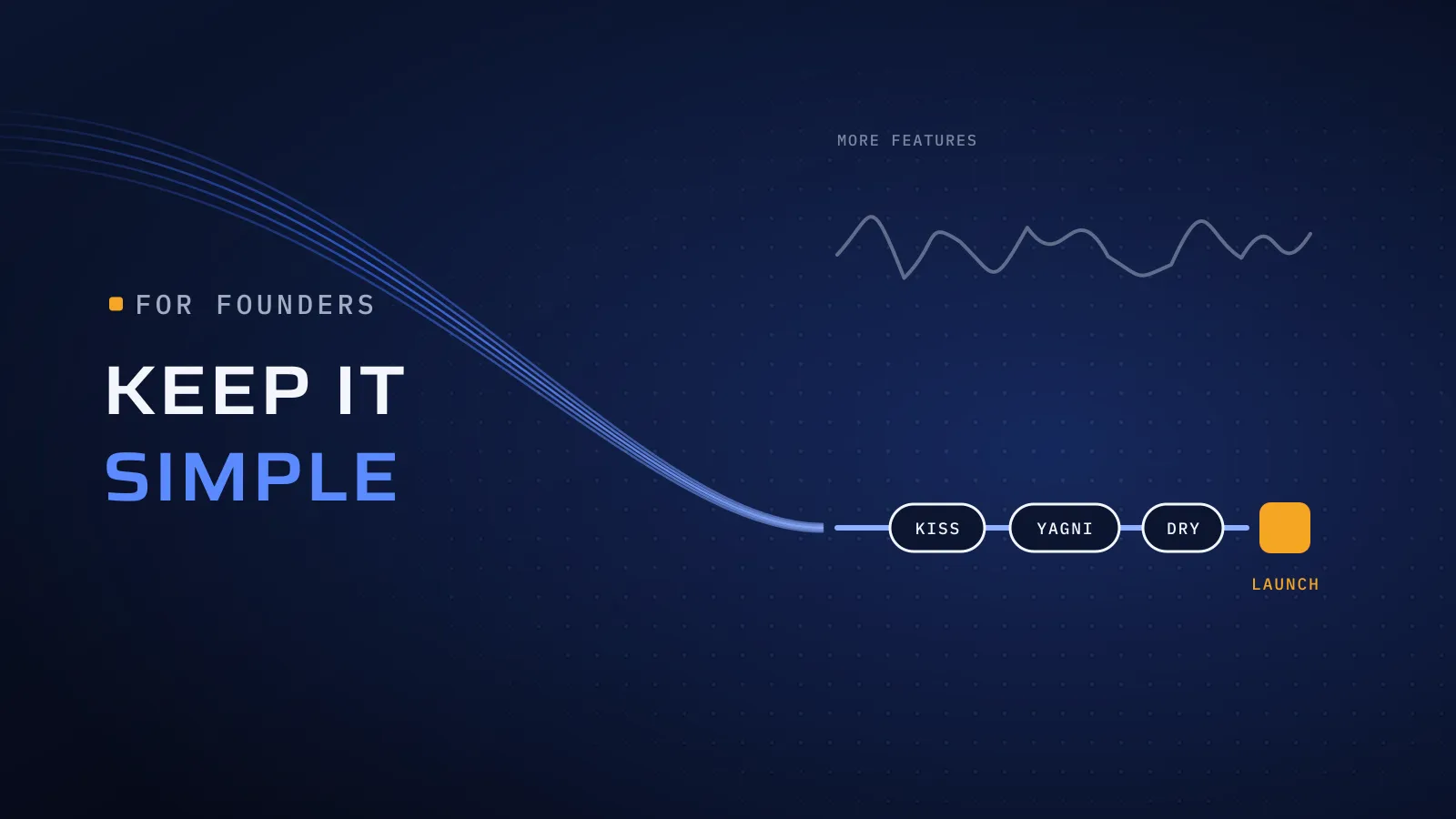
Quick answer: KISS (“keep it simple, stupid”) means choosing the simplest design that does today’s job. YAGNI (“you aren’t gonna need it”) means building a feature when a real user needs it, not when someone guesses they might. DRY (“don’t repeat yourself”) means each business rule, such as a price or a fee, lives in one place, so a change is made once. Together, they let a team say no to features without saying no to value.
Deciding what to build first? Ask about CTO as a service →
What one extra feature costs you
Every “while we’re at it” feature looks free in a meeting. The software author Martin Fowler splits its real cost into four parts (martinfowler.com):
- Build: design, build and testing for something users may never touch.
- Delay: the launch, and the features users do need, wait for it.
- Carry: every later change works around it, every release has more to test, and every new developer has more to learn.
- Repair: if the guess was wrong, someone changes or removes it and moves the data people already put into it.
Carry is the cost founders don’t see. A restaurant with a hundred dishes needs more stock, more training and a slower kitchen; a short menu cooked well serves customers sooner. In software, the stock is code someone keeps working with every release. AI-assisted coding shrinks the build cost, not the carry, so “it’s quick to add” is a weaker reason than ever (how we keep AI from growing the scope).
KISS, YAGNI and DRY in one table
| Rule | Where it comes from | In plain words | What it saves you | Where it goes wrong |
|---|---|---|---|---|
| KISS: keep it simple | Usually credited to Kelly Johnson of Lockheed’s Skunk Works; in US Navy use by 1960 | The simplest design that does today’s job | Bugs, and time to launch | When “simple” drops something users need, such as Arabic or the way they pay |
| YAGNI: you aren’t gonna need it | Extreme Programming, an agile method of the late 1990s | Build for a real user, not a guess: no four-car garage for cars you might own one day | Build cost, and time to launch | When the need is certain and dated, such as a tax rule with a start date |
| DRY: don’t repeat yourself | The Pragmatic Programmer, Andy Hunt and Dave Thomas, 1999 | Each business rule in one place: one price list every branch reads | The cost of change, and contradictions | When two things that only look alike are forced into one |
KISS: what the simplest version saves you
Kelly Johnson is said to have handed his engineers a few tools and told them the jet had to be repairable by an average mechanic in the field with only those tools. In your product, that mechanic is the next developer fixing a fault on a busy evening. The simpler the design, the faster they find the problem, and the less likely the fix breaks something else.
For a founder, KISS usually means:
- One codebase for iPhone and Android, unless the product needs something only a native app can do (how we choose).
- One well-structured application before many separate services. Monolith vs microservices shows when splitting pays.
Simple is not easy. The plain design is usually harder to find, because someone must understand the problem well enough to leave things out. That judgement is what a senior engineer is for.
YAGNI: why “we might need it” is not a reason
YAGNI comes from Extreme Programming. Ron Jeffries, one of the method’s founders, put it in one line in 1998: “Always implement things when you actually need them, never when you just foresee that you need them.”
The usual guesses: a loyalty programme before anyone has bought twice, detailed staff permissions when three people run the business, a second country before the first has paying customers.
YAGNI means “not yet”, not “never”. Each idea goes on a later list with the signal that would bring it back: customers asking unprompted, a second market opening, a contract that requires it. When the signal arrives, you know what the feature should do, which is often not what you first guessed.
Two limits keep YAGNI honest:
- It covers features, not foundations. Fowler is clear that keeping software easy to change, with clean structure and automated tests, is not a YAGNI violation. We cut features, never foundations (what to cut first).
- It doesn’t cover needs that are certain and dated. A tax rule with a published start date isn’t a guess. If you invoice in the UAE, plan for e-invoicing now, even if its screens come later.
DRY: one rule, one place
In The Pragmatic Programmer, Andy Hunt and Dave Thomas wrote that every piece of knowledge must have “a single, unambiguous, authoritative representation within a system”. For a founder, that knowledge is your business rules: prices, VAT, delivery fees, discounts, commissions.
Picture a delivery fee written separately into the app, the website and the invoice. Change it, miss one, and a customer sees one price at checkout and another on the invoice. With DRY, the fee lives in one place, every screen reads it, and you change it once.
DRY can be overdone. A customer refund and a supplier refund may look alike but follow different approval rules; force them into one, and changing one breaks the other.
What this means for you: when your team pushes back on a feature, ask which rule they are using and what it saves you. “Nobody has asked for it yet, and it’s cheap to add later” is a good answer. “We’d rather not” isn’t. Either way, the final decision stays with you.
How a CTO cuts scope without cutting value
Applying these rules is a large part of what CTO as a service does for founders without a technical co-founder:
- Start from the one job and the selling point, which never gets cut. Competitor analysis for startups shows how to find it.
- Sort every request into three lists: launch, later (with its signal), and never. “Never” comes from your product principles.
- Find the “later” items that are expensive to add later. The feature can wait; the decision behind it may not: right-to-left Arabic screens, the payment provider, the data model, whose accounts the code lives in. Settle those now, and the feature arrives later without a rebuild.
- Find the simplest version that keeps the value: a manual step before automation, an export before a dashboard.
- Write each decision down with its reason and signal, so today’s “not yet” isn’t argued again next month.
Typical requests, as illustrations rather than client projects:
| The request | What a CTO would suggest | The value you keep | What you don’t pay for yet |
|---|---|---|---|
| “Customers should pay in any currency.” | Your first market’s currency, with prices stored so another can be added | Customers pay from day one | Exchange rates, rounding rules and tests on every price screen |
| “Managers need a full analytics dashboard.” | The few numbers you will act on, on one screen or a weekly export | The decisions those numbers drive | Charts and filters nobody asked for |
| “Every order needs three levels of approval.” | One approver now, with roles designed so more can be added | Control over what goes out | Approval chains and their edge cases |
| “Let people sign in with everything.” | The one or two sign-in options your users already have | Sign-up without friction | Extra providers and their store rules: on iPhone, Google or Facebook sign-in also requires a privacy-focused option (Apple 4.8) |
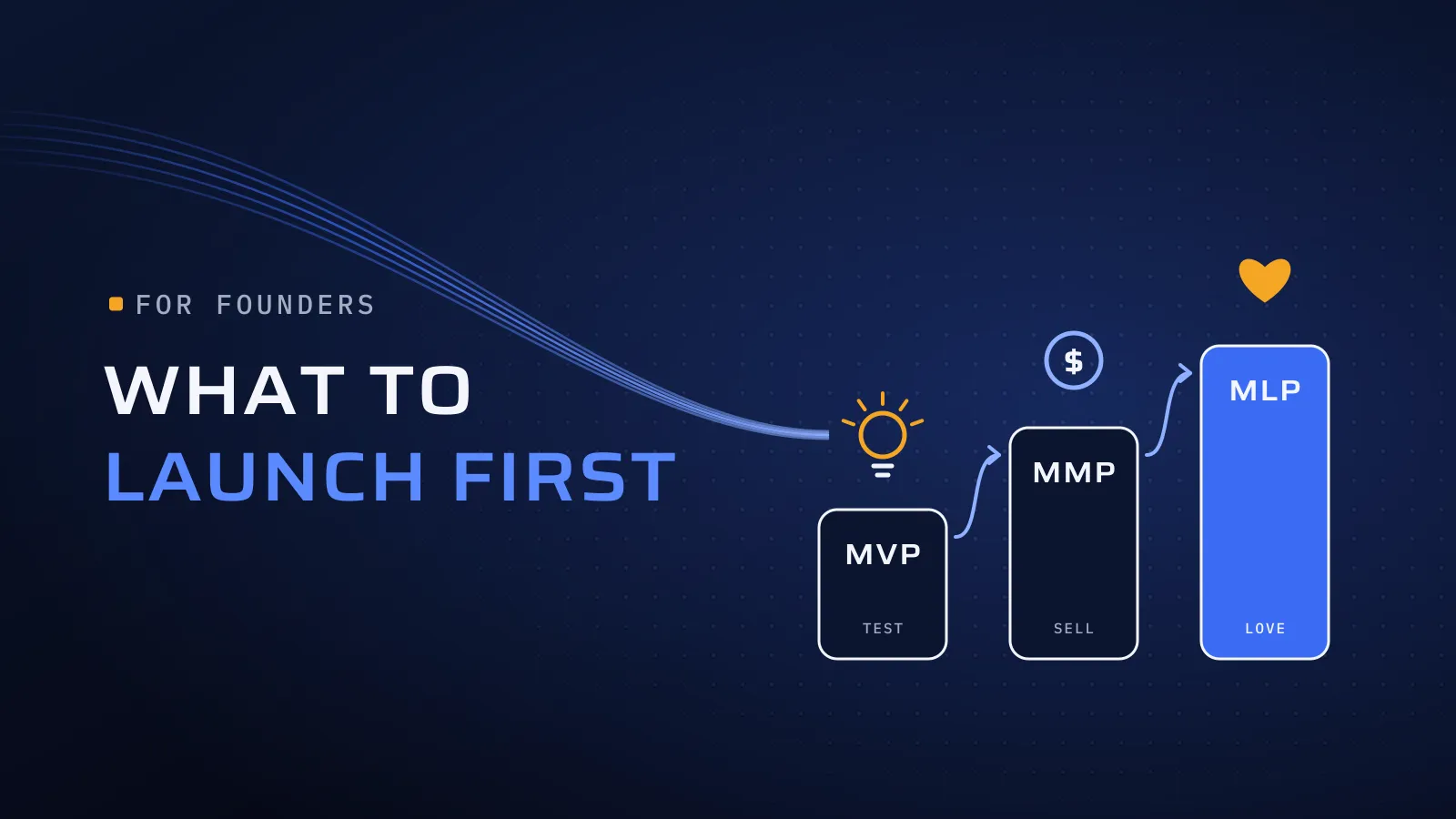
Which release holds what is the subject of MVP vs MMP vs MLP; on the build team, the product owner protects these lists.
Every feature feels essential? Tell us where your product is today and who it is for. We say what technical leadership you need now and what can wait. Ask about CTO as a service →
Only have one question? Ask it in the same form. Want to know more about us first? Ask for our company profile. We reply by email first and set up a call only if you want one.
The feature request test: eight questions for any team
Use it with us, another agency or your own developers, on every request before it joins the plan.
| # | Ask | The rule behind it | What the answer tells you |
|---|---|---|---|
| 1 | Which real user asked for this, and for what job? | YAGNI | “Someone might” means park it |
| 2 | Can users do the core job at launch without it? | YAGNI | If yes, it waits for its signal |
| 3 | Is there a simpler version: a manual step, a link, an export? | KISS | Start there |
| 4 | Is it expensive to add later: the data model, payments, Arabic, where data lives? | YAGNI’s limit | Decide now, even if the feature waits |
| 5 | Is the need certain and dated: a law, a signed contract, a store rule? | YAGNI’s limit | Plan it; it isn’t a guess |
| 6 | Does it repeat a rule that lives elsewhere: a price, a fee, a tax rate? | DRY | It reads from that one place |
| 7 | What does it add to every release: screens to test, permissions, data? | KISS | Weigh that, not just the build |
| 8 | What signal would bring it back from the later list? | YAGNI | Write it next to the request |
No real user behind it, and cheap to add later? It goes on the later list with its signal. That is the whole test.
When “keep it simple” is the wrong answer
The rules cut features, not value. Three things they never cut:
- Correctness. VAT on every invoice, money moving between users, who can see what. A first release can do less, but what it does must be right.
- Foundations. Tests, backups, security and a data model built for where the product is going. Fewer features also means fewer paths for QA from day one to cover.
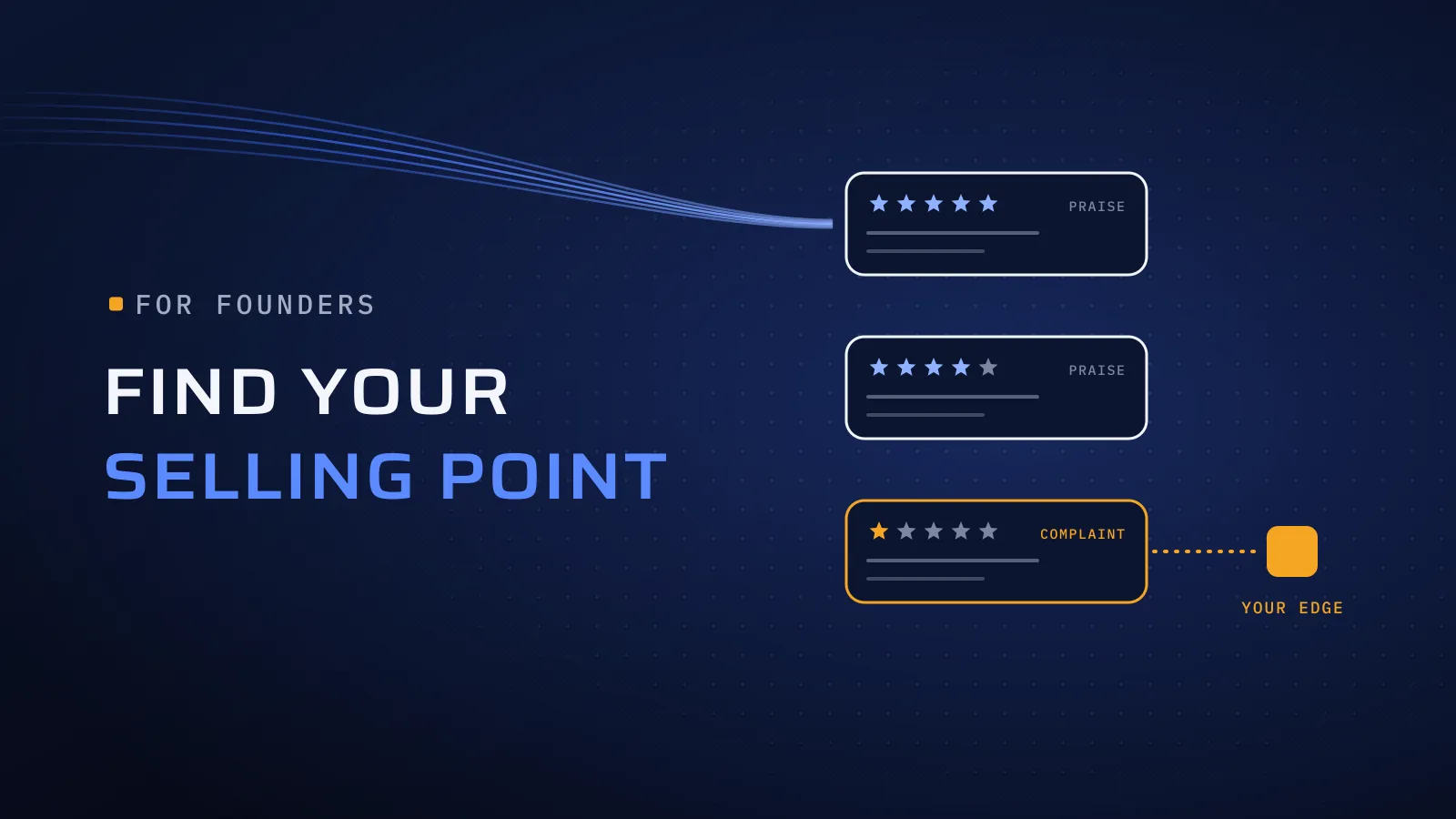
- Your selling point. If the feature being cut is why customers would switch to you, it isn’t extra scope. It is the product.
Ask, too: simple for whom? When simple to build and simple to use pull apart, the customer wins: if a one-tap reorder brings people back, build it.
How we work this way
On our projects the rules live in the team: CTO oversight on decisions that are expensive to reverse, a product owner who keeps the launch list short, and independent QA before each release, whether we build an app, a web platform or a SaaS product. If a fixed-scope contract pushes you to cram everything into version one because “later” means a new contract, read product mindset vs project mindset.
Qargo is a car rental and ride-hailing platform in Qatar, and we led its technical direction and architecture. Talk to the team that built it: book a meeting.
Talk to us before you commit to a scope
Since 2014 we have built software for more than 100 clients across the UAE, Saudi Arabia, Qatar, Kuwait, the USA and Canada, from our headquarters at Dubai Digital Park in Dubai Silicon Oasis.
Ask about CTO as a service → Tell us where your product is today and who it is for. We say what technical leadership you need now and what can wait. We reply by email first and set up a call only if you want one. Asking commits you to nothing, and we sign an NDA first if you ask.
Frequently asked questions
What do KISS, YAGNI and DRY mean?
KISS (keep it simple, stupid) means choosing the simplest design that does today's job. YAGNI (you aren't gonna need it) means building a feature when a real user needs it, not when someone guesses they might. DRY (don't repeat yourself) means each business rule, such as a price, a fee or a tax rate, lives in one place, so a change is made once and every screen agrees.
Where do the KISS, YAGNI and DRY principles come from?
KISS is usually credited to Kelly Johnson, lead engineer at Lockheed's Skunk Works, and the US Navy was using the phrase by 1960. YAGNI comes from Extreme Programming, the agile method of the late 1990s. DRY comes from The Pragmatic Programmer by Andy Hunt and Dave Thomas, published in 1999.
Why does my development team say no to features?
A good team says no, or not yet, because every feature has four costs: building it, delaying the launch, carrying it through every later release, and repairing it if the guess was wrong. Ask which rule they are using and what it saves you. You keep the final decision either way.
Does YAGNI mean building a cheap product that can't grow?
No. YAGNI applies to features, not foundations. Automated tests, security, backups and a data model built for where the product is going stay in from the first release, because they keep the software easy to change. What waits is the feature nobody has asked for yet.
When should you build a feature before users ask for it?
When the need is certain and dated, such as a tax rule with a published start date, a signed client contract or an app store rule. Also settle early the decisions that are expensive to reverse, such as right-to-left Arabic screens, the payment provider and the data model, even if the feature itself comes later.
What is the feature request test?
Eight questions to ask before any request joins the plan: who asked for it, whether users can do the core job without it, whether a simpler version exists, whether it is expensive to add later, whether the need is certain and dated, whether it repeats a rule that lives elsewhere, what it adds to every release, and what signal would bring it back from the later list.
Can you review our feature list?
Yes, scope review is part of CTO as a service. Tell us where your product is today and who it is for. We reply by email first and set up a call only if you want one.