Hire Flutter Developers in Dubai: What to Test, Which Level You Need, and Who Chooses
Hire Flutter developers in Dubai who join your team: the skills to test, mid, senior or lead, Arabic right-to-left, shared hours, and you choose who joins.
When you hire Flutter developers in Dubai, the right person ships features to both app stores from the first sprint, and the wrong one fills your senior’s week with rewrites. Flutter is quick to learn and slow to master, so a CV can’t tell the two apart. A short task on your own app can: one screen in Arabic and English, one test and one call to native code.
How do you hire Flutter developers in Dubai who fit your app?
Quick answer: Choose the level before the person: mid-level to add screens where a lead already reviews the code, senior to own features and releases, lead to set the app’s structure. Then test each candidate on your own app: one screen in Arabic and English, a widget test and a native call. Interview them yourself, and agree the shared hours in writing.
Know the level you need? See Flutter developer profiles →
What a weak Flutter hire costs you
A Flutter app is one codebase for iOS and Android, so a weak hire slows both stores at once. The signs arrive slowly: state handled three different ways in one app, screens that break when the language switches to Arabic, a payment or maps SDK wrapped in a package nobody maintains, and release builds that only one person knows how to make. Each takes a sprint to notice and longer to undo, and you pay in your senior’s time and your launch date. An afternoon spent testing each candidate on your own code costs far less.
How to hire Flutter developers in Dubai, step by step
- Confirm Flutter is the right call. If the app is new and the framework still open, read our Flutter vs React Native comparison first. A Flutter hire locks that choice in, so let the people who will maintain the app decide it.
- Write the brief around your app. Whether the app is new, live or being rebuilt; the Flutter and Dart versions; how state is managed today; the SDKs you can’t launch without, such as payments, maps or UAE PASS sign-in; whether Arabic screens are in scope; and the hours you need to share.
- Pick the level from the table below. It decides the task you set, the interview and most of the cost.
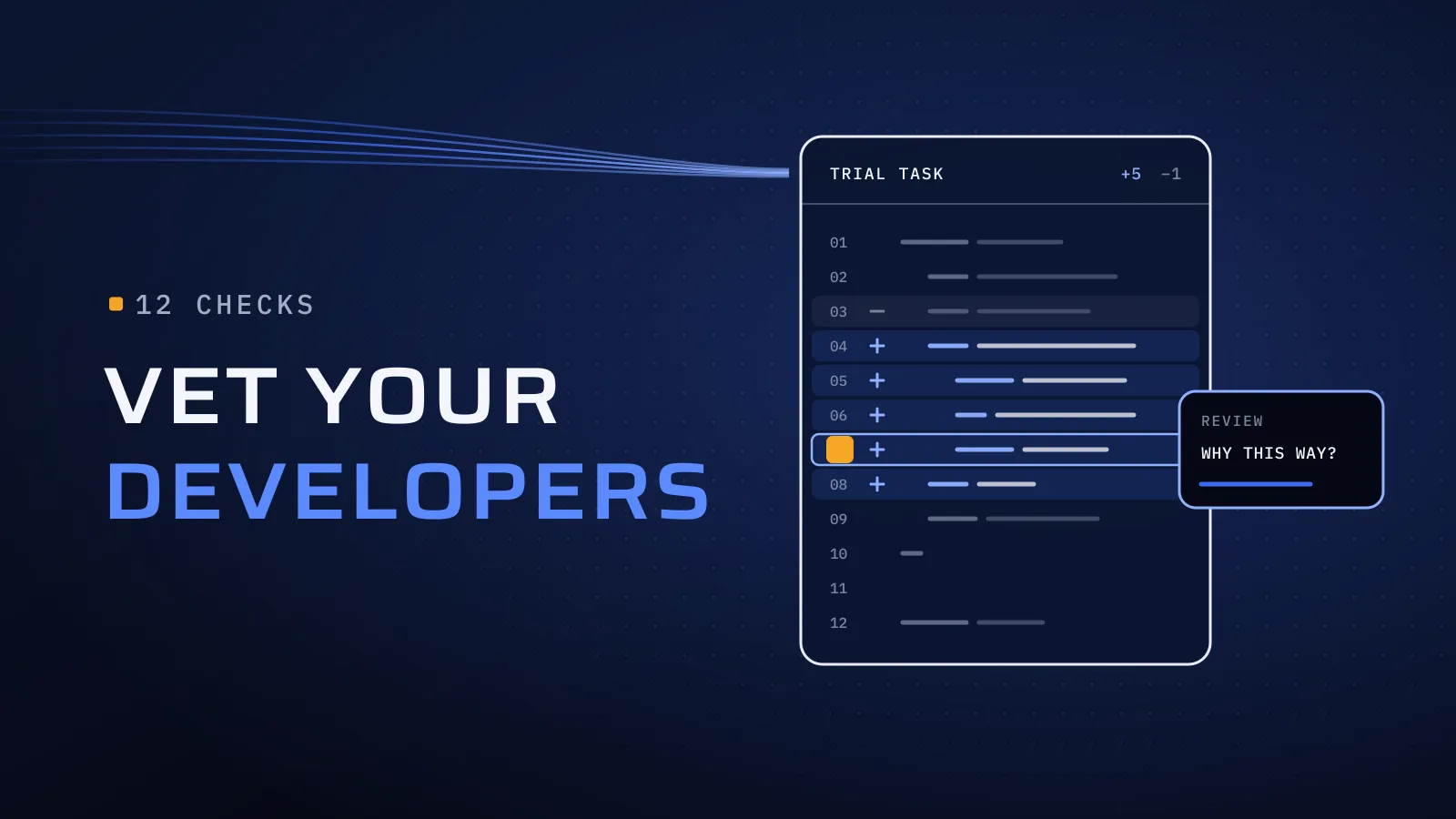
- Set a task from your own app. Small and close to a real ticket: the screen, the test and the native call described below. Judge how the candidate structures it and the questions they ask, not only whether it runs.
- Review the first sprint together. The first pull request on your real code is the final test. Check it against the brief, and adjust the brief before the next hire.
Mid-level, senior or lead: the Flutter level you need
| Level | What they own | Hire this level when | Test it with |
|---|---|---|---|
| Mid-level | Screens and features built from a design, inside a structure someone else set | A senior or lead on your side reviews their code | One screen from your design, with loading, empty and error states, plus a widget test |
| Senior | A feature end to end: state, API calls, offline cases, native plugins and release builds | You need someone to work alone on a feature, or on a second app | A feature added to a small repository you provide: they choose the state approach, explain why and write the tests |
| Lead | The app’s structure, code review, the build and release pipeline, store submissions and the link to your backend team | You are starting the app, or nobody owns its structure today | A pull request you prepared with planted problems, then a sketch of the folders, state and release flow for your app |
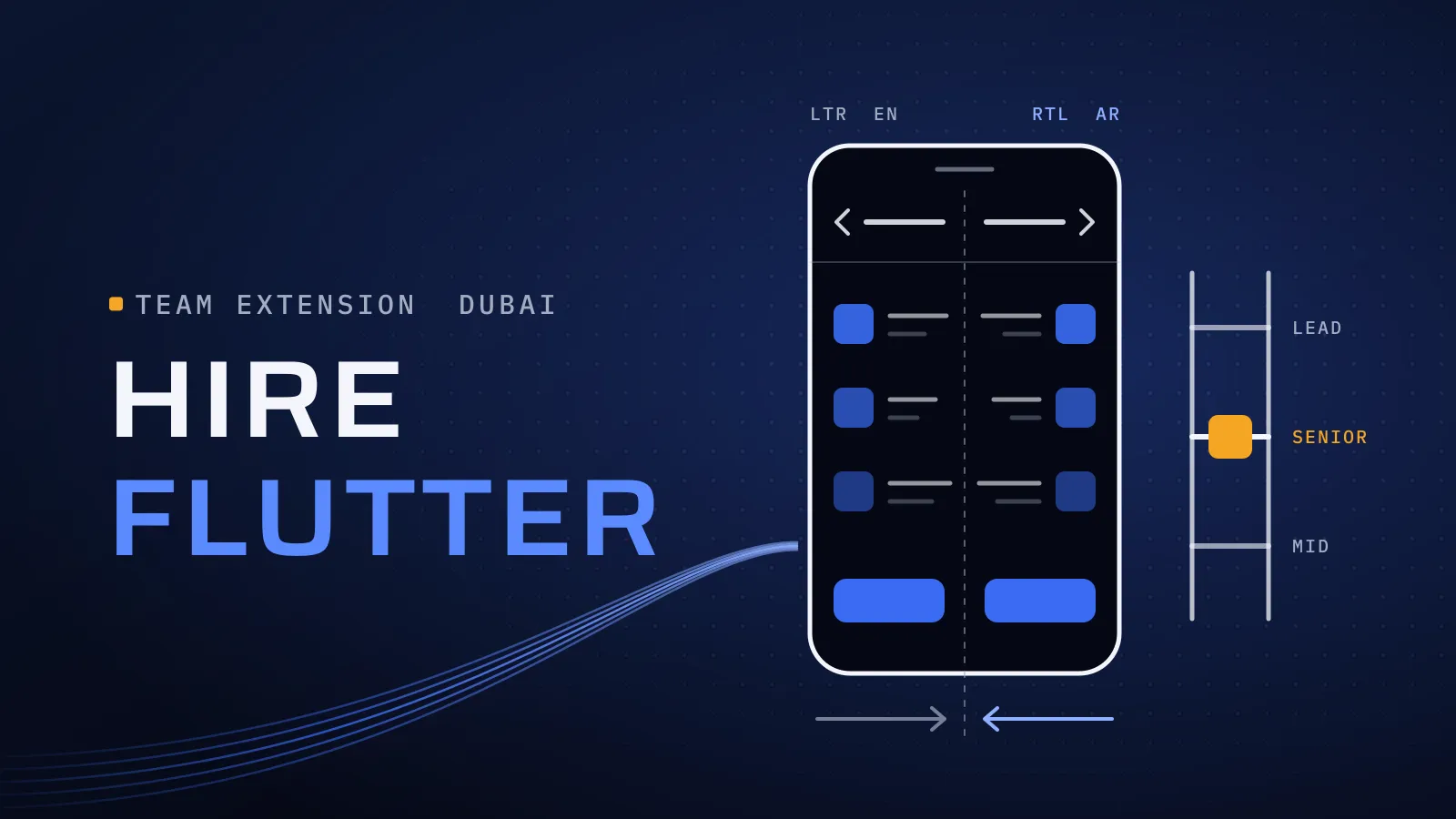
How to read it: a new app needs a senior or lead before any mid-level developer, because someone has to set the structure the others follow. The level also drives most of the cost. A senior costs more than a mid-level developer, but one senior who can work alone often costs you less than two mid-level developers with nobody to review their code. Start with the smallest team that covers the brief, and add people when the backlog proves the need.
Send us your Flutter brief. The app, the level, the SDKs and whether Arabic screens are in scope. We source candidates for the role and share their profiles with our assessment notes; you interview each one and choose who joins. See Flutter developer profiles →
Not ready for a call? Ask for our company profile and we’ll send it to you.
Four Flutter skills to test, beyond the CV
- Dart and state. Ask why they chose Bloc, Riverpod or Provider on their last app, and what they would change. Any of them works. A developer who can’t explain the choice will mix them in yours.
- Tests. Unit and widget tests on the task, plus an integration test for one user flow if the role is senior. An app without tests turns every release into a manual check of two platforms.
- Native code. Flutter reaches the phone through plugins and platform channels. Ask a senior how they would call a native feature that has no maintained plugin, or wrap your payment gateway’s iOS and Android SDKs. Most delays hide here.
- Releases. Signing, separate test and live builds, and App Store and Google Play review. Ask who produced the release builds on their last app, and what a store review once rejected.
Arabic and right-to-left: test it on every Flutter hire
Flutter can lay out a whole app right to left. Once the app’s languages are set up, Flutter’s internationalization guide has widgets follow the right-to-left layout for Arabic. What breaks is code written in left and right instead of start and end: padding on the wrong side, arrows that point backwards, reversed swipe gestures, and an order number or phone number jumbled inside an Arabic sentence.
The test is short. Give the candidate a screen with real Arabic data and ask them to switch the language inside the app. Developers who build with direction-aware padding and alignment pass; developers who hard-code left don’t, whatever their first language.
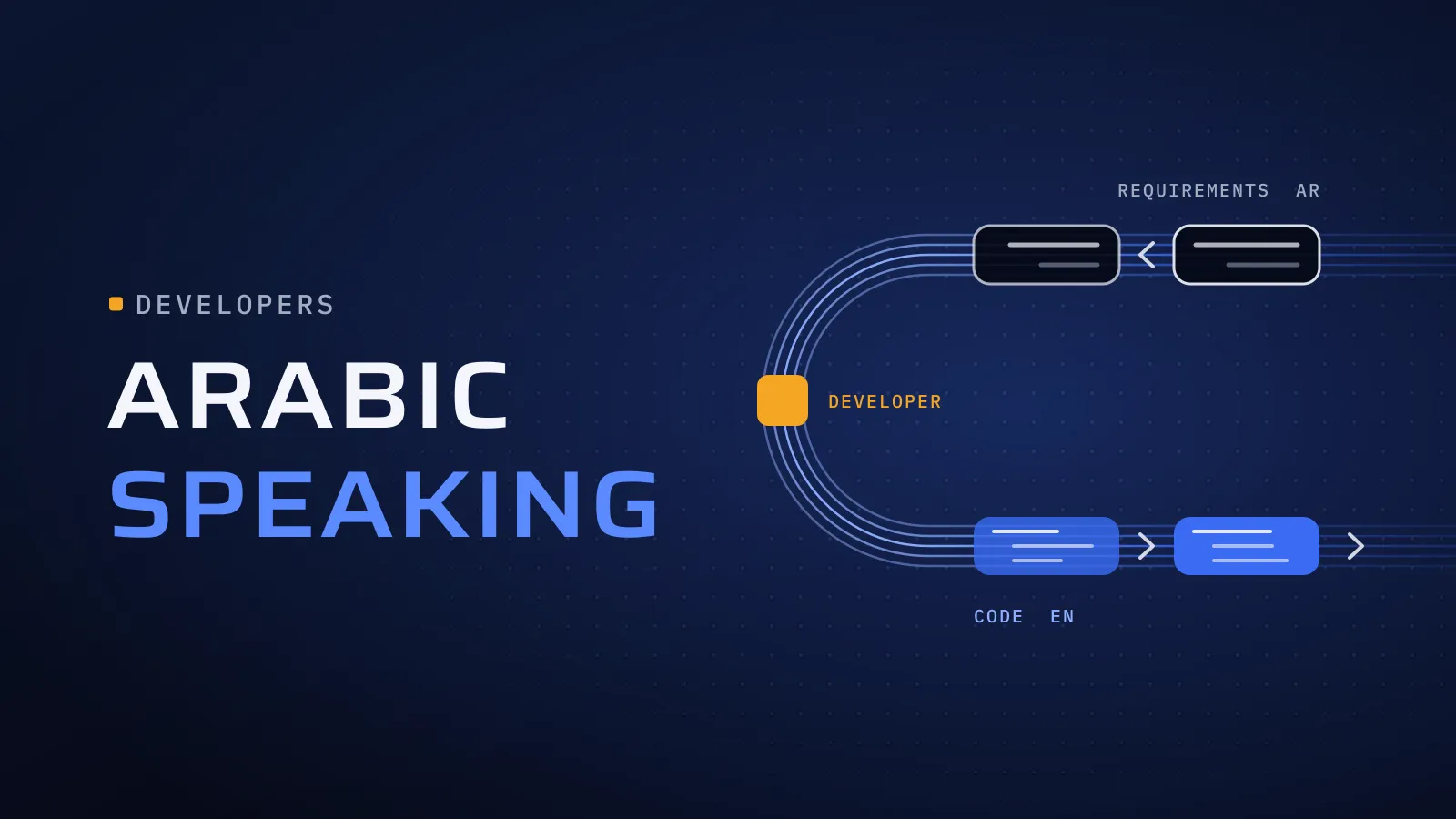
Speaking Arabic is a separate skill. It matters when a role reads Arabic requirements or must notice a label that reads wrongly, and our guide to Arabic-speaking developers for hire shows how to mark it in the brief. Our core team in Alexandria are native Arabic speakers who work in English.
Shared hours and the working week
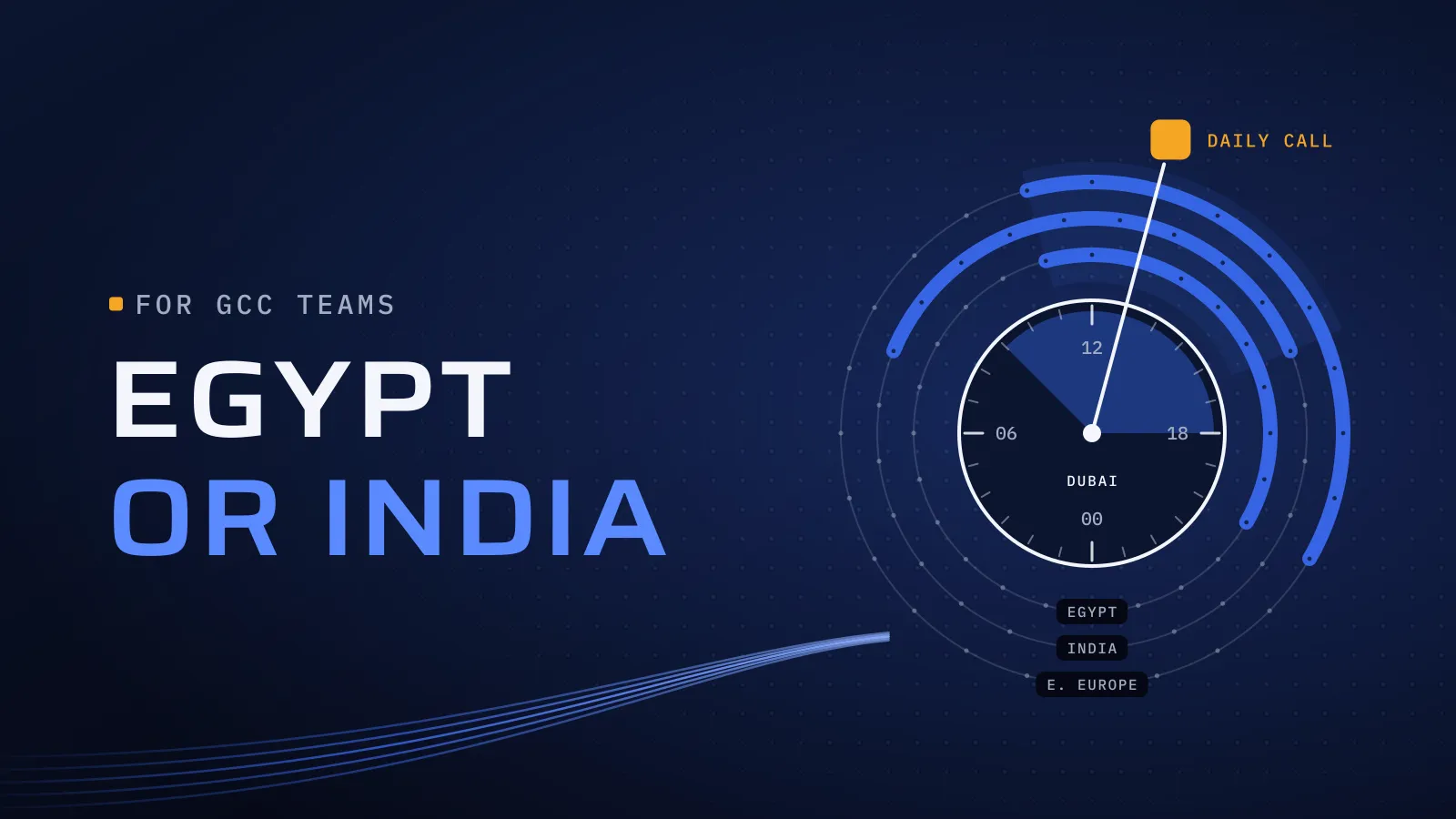
Our core team works from Alexandria, Sunday to Thursday, one to two hours behind UAE time. A Dubai company on a Monday-to-Friday week shares four weekdays with us. With a 09:00 to 18:00 day in both cities, Dubai and Alexandria share seven office hours a day in Egyptian winter time and eight in summer. Teams in Saudi Arabia, Qatar and Kuwait share all five weekdays, and our staff augmentation for Saudi Arabia, Qatar and Kuwait runs on that week.
Whoever joins your team, agree the shared window and the stand-up time in writing before the first day, and keep handovers in your tracker so nothing waits for a call.
How it works with us: we source, you choose
When you hire dedicated developers in Dubai through us, we source Flutter candidates for your role from the market, and from our core team where one fits. Each has a technical interview with a senior Flojics engineer, a practical assessment for the role, an English check, written and spoken, with Arabic where your project needs it, and a team-fit interview. You get the profiles with our notes, interview every candidate, can set your own task and decide who joins.
On staff augmentation, the developer works in your repositories, tools and stand-ups, and you set the priorities. Your account manager at Flojics handles the contract, HR, payroll and replacements. Nobody starts without your yes.
Want the app built rather than a team added? Our page on Flutter app development in Dubai covers project delivery by our core team.
Proof: engineers inside a client’s own team
ButlerFM is facility management software for cleaning and maintenance businesses, and our engineers joined ButlerFM’s own team to fill its gaps. Talk to the team that worked on it: book a meeting.
On a dedicated team, two of our pillars keep checking the fit after day one. CTO oversight: senior technical leadership supervises the work, so the app’s structure never rests on one developer. Independent QA: each release is tested before it ships by someone who did not build it.
Hire for the app you have
Since 2014 we have worked with more than 100 clients across the UAE, Saudi Arabia, Qatar, Kuwait, the USA and Canada, with our headquarters at Dubai Digital Park. Bring the level you need, the SDKs your app depends on and whether Arabic is in scope.
See Flutter developer profiles → We ask about your goal, what you use today, your timing and who else should be involved. You leave with clear next steps. The call commits you to nothing, and we sign an NDA first if you want one.
Frequently asked questions
How much does it cost to hire a Flutter developer?
Your rate is agreed in your proposal, as one monthly fee per developer. What moves it is the level (mid-level, senior or lead), how many people you add and how long you need them. For many apps, one senior who can work alone covers more than two mid-level developers with nobody to review their code, so send us the brief and we will suggest the smallest team that covers it.
How soon can a Flutter developer start?
We agree the start date with you once you have chosen from the shortlist. Each candidate is sourced for your role, so the date follows the level and skills you need. You can start with one developer while the rest of the team is recruited.
Do we also need a backend developer?
Often, yes. A Flutter developer builds the app and connects it to your APIs. New APIs, the admin dashboard your team uses and links to your ERP are backend work. Tell us your backend stack and we will say whether one more role is needed; we work in Laravel and PHP, Java, .NET, Go and Python.
Should we hire Flutter developers or hand over the whole app?
Hire developers when someone on your side owns the backlog and reviews the code. If nobody does, a project is usually the better fit: our core team delivers the app with CTO oversight, independent QA before each release and a dated plan in FloPlan, our own delivery software.
What if the developer isn't the right fit?
Tell your account manager. Replacements are our job: we source and shortlist again, and you interview the new candidates as before. The code stays in your repositories, so the work carries on while the new person settles in.