Flutter vs React Native for UAE Apps: How to Choose, and When to Go Native
Flutter vs React Native for apps in the UAE and GCC: Arabic right-to-left, speed in 2026, hiring and handover, when to go native, and a scorecard.
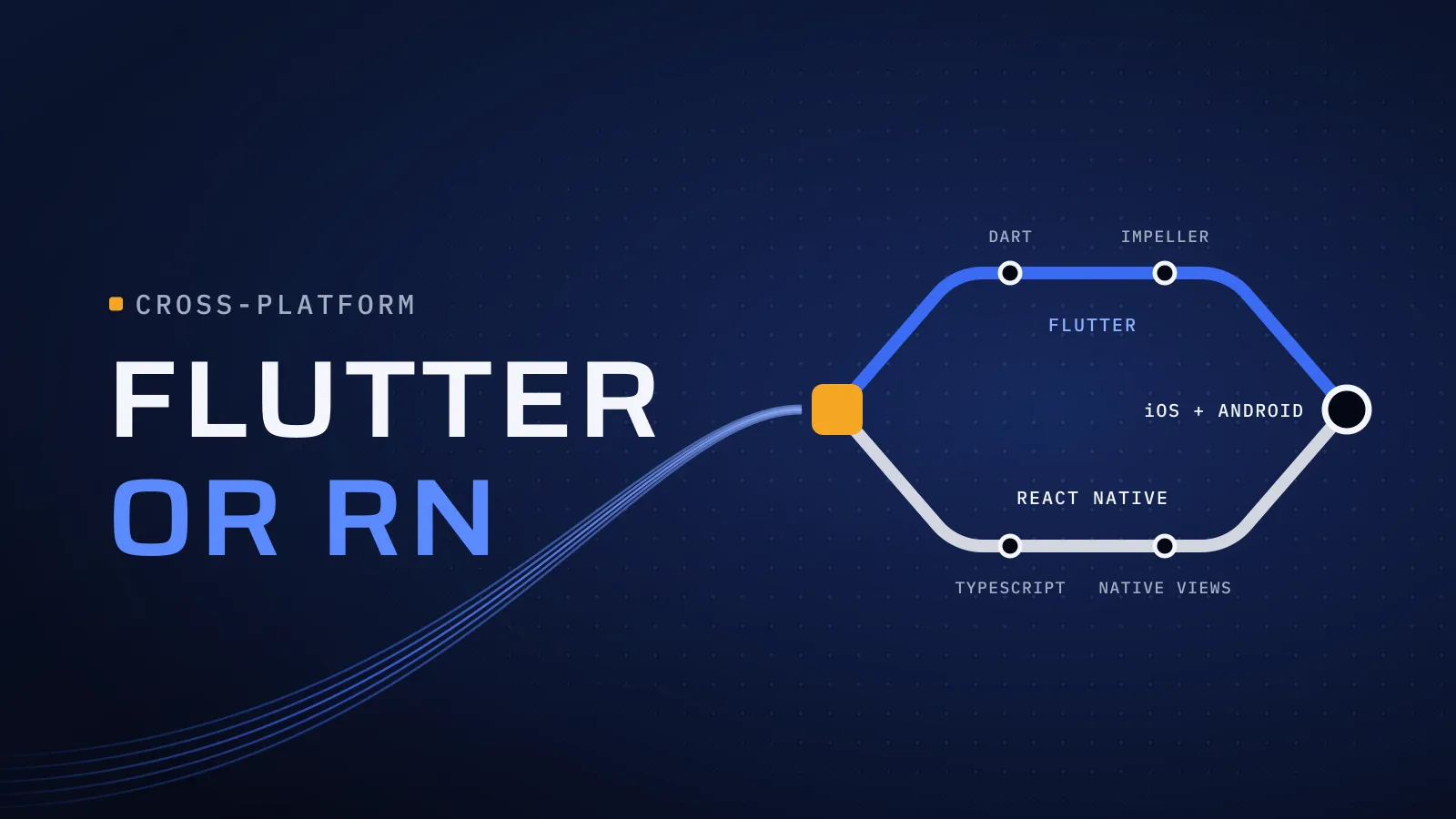
Flutter vs React Native is a choice about who can keep your app running for the next five years, not about last year’s benchmarks. Pick a framework you can’t hire for, or one that fights your Arabic screens, and you pay in slow releases and sometimes a rewrite; pick the one your team and your features point to, and either will ship a good app.
Flutter vs React Native: which should a UAE business choose?
Quick answer: Both build one app for iOS and Android, and both are mature in 2026. Choose React Native if the people who will maintain the app work in React. Choose Flutter for a fully custom design that looks the same on every phone, and an Arabic and English switch inside the app. Go native when the app depends on device hardware.
Have a feature list? Get a framework recommendation for your app →
What the wrong choice costs you
A framework is hard to change: moving from one to the other means rewriting every screen. A poor fit rarely fails on day one. It costs you slowly: developers you struggle to find in Dubai or Riyadh, Arabic screens patched one by one, and a vendor you can’t leave because nobody else knows the code. The scorecard below takes one meeting with your product lead, and it is cheaper than finding out in year three.
What has changed since the older comparisons
Many comparisons still call React Native slow because of the “bridge” between its JavaScript and the phone. That is out of date. Since React Native 0.82, released in October 2025, every app runs on the New Architecture, which calls the phone’s native code directly. Flutter, for its part, has used its Impeller renderer by default on iOS and on Android 10 and later since Flutter 3.27; it prepares its graphics in advance, so animations no longer stutter the first time they run.
For a booking, delivery, retail or company app, both are fast enough, and speed should not decide your choice. It matters for animation-heavy products, where Flutter drawing every pixel itself makes a custom design easier to keep identical on both platforms. For graphics-heavy products, the real question is whether to go native.
Arabic and right-to-left: where they differ
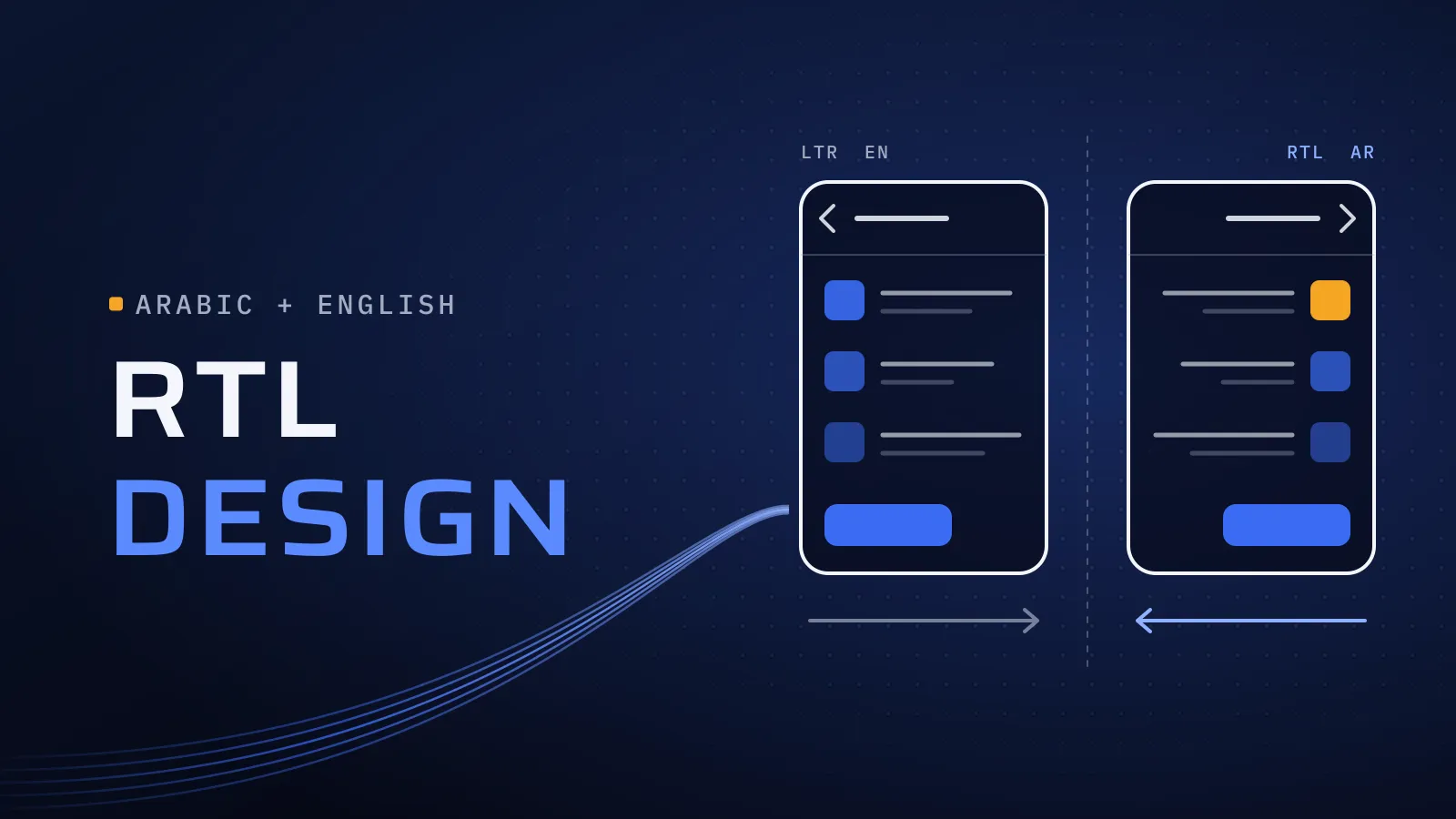
Both frameworks mirror layouts for Arabic, and both need the same care: icons that point the right way, a good Arabic font, numbers, dates and mixed Arabic and English text. The difference is switching language inside the app.
- Flutter takes the text direction from the app’s language. Change the language on your settings screen, and the screens redraw right to left with no restart.
- React Native sets the direction when the app starts. Its own documentation says forcing right-to-left requires a full app restart. A language button therefore either restarts the app or needs every layout written to read the direction as it draws.
If your users simply follow their phone’s language, the difference is small. If you want a language button in the app, weigh it. Our guide to Arabic app localization covers the rest of right-to-left design.
Hiring and handover in the GCC
The framework decides who can maintain your app after launch.
- React Native uses JavaScript or TypeScript with React, the same skills as most modern web front ends. A React web developer can move across quickly, and your app and website can share people and some code.
- Flutter uses Dart, a language few developers use outside Flutter. Flutter developers are mostly mobile specialists: no problem with a partner or a mobile team you keep, harder if you plan to hire one developer in-house.
Before you decide, search the job boards you hire from in Dubai, Riyadh or Doha for both names, and count the senior profiles near you. If you plan to bring the app in-house later, choose for that future team. If you would rather add developers than hire them, staff augmentation in the UAE adds Flutter, React Native or native developers to your team: we source the candidates, and you interview and choose who joins.
When to skip both and go native
Native apps, in Swift for iOS and Kotlin for Android, mean two codebases and usually two sets of developers. They earn that cost when:
- the app depends on hardware: Bluetooth devices, card readers, sensors or all-day background location;
- graphics are the product: AR, games, camera effects or video editing;
- widgets, watch apps or in-car screens are core features, not extras;
- you already run native teams, and the app joins their codebase.
Often only one feature needs native code. Then a cross-platform app with a small native module for that feature costs less than two native apps.
What the framework doesn’t change
The phone app is often the smaller part of the budget. The backend, the admin dashboard your team uses, payments, maps, UAE PASS sign-in and links to your ERP cost the same whichever framework draws the screens. Before you commit, check that each SDK you can’t launch without, such as your payment gateway, maps or identity sign-in, has a maintained package for your framework; if not, budget a native module for it. For apps that launch on both stores, our mobile app development cost guide treats one cross-platform codebase as the default.
How to decide, step by step
- List the features and the devices: every SDK and every piece of hardware the app touches, and the phones your users carry.
- Name who maintains it in three years: your own team, a partner or people you have yet to hire.
- Fill in the scorecard below with your product lead.
- Build the hardest screen first, in Arabic, with real data, in the framework the scorecard picked. A short trial shows problems a debate won’t.
- Write the decision and its reasons down, so the next developer and the next vendor know why.
The framework scorecard
For each row, tick the column that describes your app.
| Question | Points to Flutter | Points to React Native | Points to native |
|---|---|---|---|
| Who builds and maintains it? | A partner, or a mobile team you keep | Your web team, who work in React | Your existing iOS and Android teams |
| Does it share code with a website? | No, or the website is separate | Yes, a React website with shared logic | No |
| How custom is the design? | Fully branded, identical on every phone | Standard parts that feel native on each platform | The platform’s own look, including new system features |
| Arabic and English | A language button inside the app | Users follow their phone’s language | Either |
| Device features | Camera, maps, payments, notifications | The same | Hardware, AR, all-day background location, watch or widgets at the core |
| Who will you hire in-house later? | Mobile specialists | React developers | iOS and Android developers |
| Beyond phones | An internal web or desktop tool from the same code | A React website alongside | Watch, widgets and in-car screens |
How to read it: count the ticks in each column. A clear lead is your answer. A tie usually comes down to the first row: choose the framework the people who will maintain the app already know.
Filled in the scorecard, or stuck on one row? Send us your feature list, your users’ languages and who will maintain the app. We reply with Flutter, React Native or native, and the reasons for your app.
Get a framework recommendation →
Not ready for a call? Ask for our company profile and we’ll send it to you.
No framework to sell
We build mobile apps in Flutter, React Native and native Swift and Kotlin, and the backends behind them in Laravel and PHP, Java, .NET, Go and Python. So we recommend from your features and your team, not from habit, and our page on Flutter app development in Dubai shows the rest of our app work.
Quality built into every step. CTO oversight on the architecture, including the framework and the other decisions that are expensive to reverse; independent QA before each release; and a dated plan in FloPlan, the delivery software we built and use ourselves. Our core team are native Arabic speakers, so right-to-left screens are checked by people who read them every day.
Get a recommendation for your app
Since 2014 we have built software for more than 100 clients across the UAE, Saudi Arabia, Qatar, Kuwait, the USA and Canada, from our headquarters at Dubai Digital Park and our offices in Houston and Alexandria. Bring your feature list and the name of whoever will maintain the app.
Get a framework recommendation → We ask about your goal, what you use today, your timing and who else should be involved. You leave with clear next steps. The call commits you to nothing, and we sign an NDA first if you want one.
Frequently asked questions
Is Flutter or React Native cheaper for an app in the UAE?
For the same app, the build cost is close: both give you one codebase for iOS and Android instead of two. The difference shows after launch, in who can maintain it. If your web team works in React, React Native shares their skills; if not, the cost follows the framework your partner or future hires know. Your price is agreed in your proposal.
Which is better for an Arabic app?
Both support Arabic and right-to-left layouts. Flutter changes direction when the app's language changes, with no restart. In React Native the direction is set when the app starts, so a language button inside the app either restarts it or needs layouts written to read the direction as they draw. Test your hardest screen in Arabic before you commit.
Can we move from React Native to Flutter later, or the other way?
Only by rewriting the app's screens; the code does not convert. Your backend, admin dashboard, designs and data all stay. That is why the choice should follow who will maintain the app for the next few years, and the switch is rarely needed when it does.
When should we build native apps in Swift and Kotlin instead?
When the app lives on device features: hardware over Bluetooth, AR, heavy graphics, all-day background location, or widgets and watch apps at its core. Also when you already run native iOS and Android teams. If only one feature needs native code, a cross-platform app with a small native module for that feature usually costs less.
Which one do you recommend?
The one your features and your team point to. We build in Flutter, React Native and native Swift and Kotlin, so we have no framework to sell. Send us your feature list, your users' languages and who will maintain the app, and we reply with a recommendation and the reasons for it.
Who owns the app's code?
You do. The code passes to your company once the project is completed and paid, and the App Store and Google Play accounts can be in your company's name from the start.