Arabic-Speaking Developers for Hire: When Native Arabic Matters in Your Software Team
Arabic-speaking developers for hire: which roles need Arabic, what to test beyond fluency, and how to vet candidates for a UAE or GCC software team.
Arabic-speaking developers for hire are easy to find on paper and hard to judge in an interview, because “speaks Arabic” can mean anything from small talk to reading a 40-page government specification. Hire for the Arabic your product actually uses, and your team catches requirement gaps, right-to-left bugs and misread feedback before your users do; hire for the label, and you pay for a skill nobody uses, or miss the one you needed.
When does a developer need to speak Arabic?
Quick answer: Only where Arabic touches the work. A developer needs it to read requirements written in Arabic, to build and test Arabic screens, search and documents, or to talk directly with Arabic-speaking stakeholders and users. Decide which of those each role covers, then test that skill in the interview. Native fluency on its own proves none of them.
Know which roles need Arabic? Request developer profiles →
What the wrong Arabic costs you
When nobody on the build team reads Arabic, every Arabic requirement goes through a translator and comes back flattened. A field name in a government specification becomes a guess, a business user’s voice note waits for someone to explain it, and right-to-left bugs are found by customers. Each round trip adds days to a sprint. The opposite mistake costs too: a fluent speaker who has never built an Arabic screen still ships the same bugs, and you have narrowed your candidate pool for nothing.
Four jobs Arabic does in a software team
“Arabic-speaking” covers four different skills. Most teams need two or three of them, and rarely on every role.
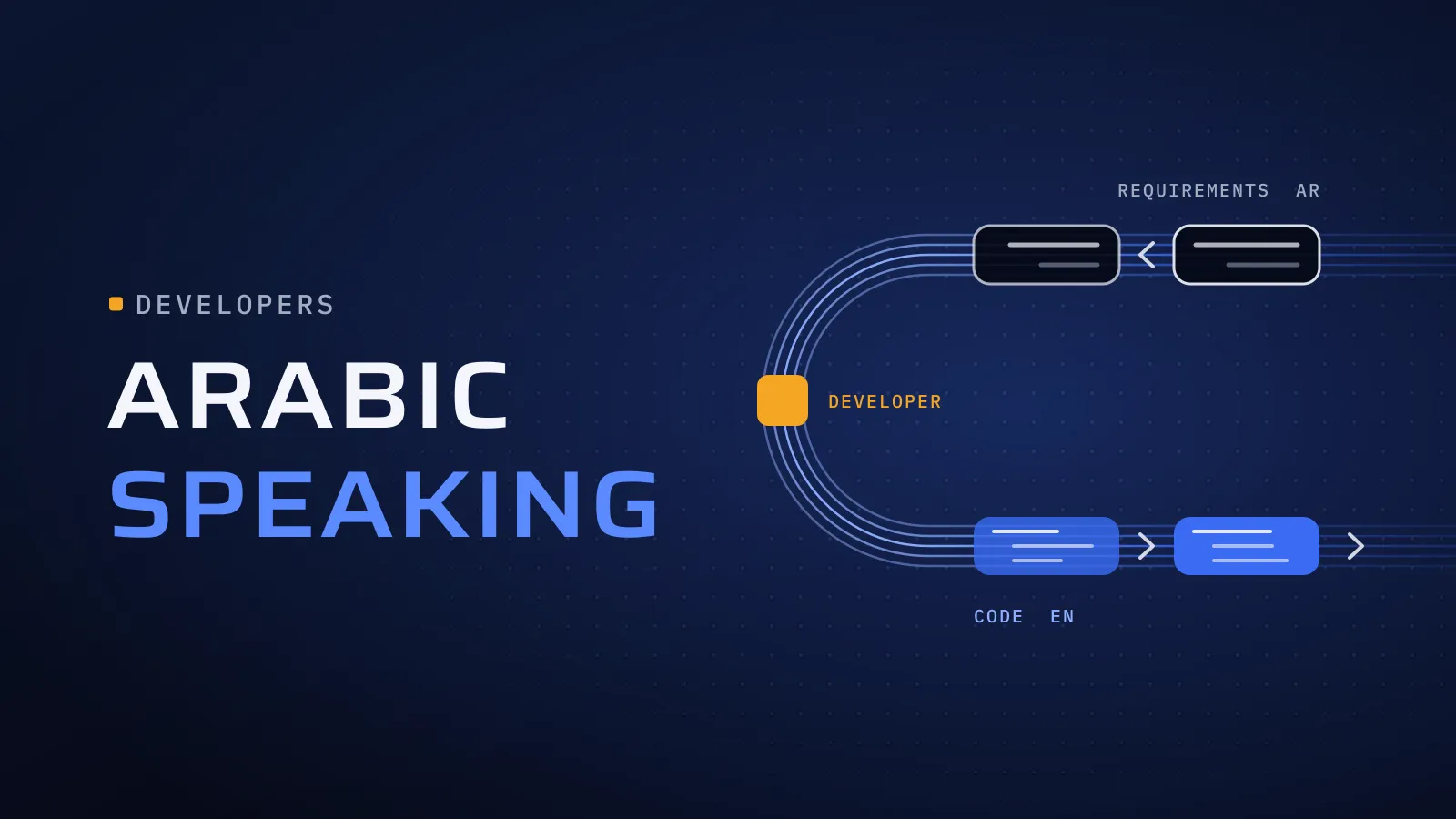
- Reading requirements. Tenders, business requirement documents and government specifications in the Gulf are often written in Modern Standard Arabic. Someone who reads them as a native turns them into user stories without losing the detail.
- Talking with stakeholders. Workshops, demos and acceptance testing with business users who think and speak in Arabic, often in a Gulf dialect. Requirements come out of these conversations, not only out of documents.
- Building for Arabic users. Right-to-left layouts, mixed Arabic and English on one line, Arabic search and sorting, and Arabic in PDFs, text messages and emails. This is an engineering skill. Speaking Arabic doesn’t teach it, and a developer who doesn’t speak Arabic can learn most of it.
- Reading what users will read. Labels, error messages, notifications and invoices in Arabic need someone who notices when a sentence reads wrongly, before your customers do.
Design is a separate question. Our guide to Arabic app localization covers mirrored layouts, icons, digits and fonts.
Which Arabic each role needs
Take this table to whoever writes the job brief. Put the Arabic on the roles that use it, and test it the way the role will use it.
| Role | The Arabic it needs | How to test it |
|---|---|---|
| Business analyst | Reads formal Arabic requirements and runs workshops in Arabic | A page of a real Arabic specification: write three user stories in English, plus the questions you would ask |
| Tech lead | Reads specifications and explains decisions to Arabic-speaking managers | Part of the interview in Arabic: explain a technical trade-off to a non-technical manager |
| Front-end or mobile developer | Builds right-to-left screens and spots broken Arabic text | Build one screen in both directions, with real mixed Arabic and English data |
| Back-end developer | Handles Arabic text in data, search, PDFs and messages | Make a search for “احمد” also find “أحمد”, and produce an Arabic PDF with joined letters in the right order |
| QA engineer | Reads Arabic as a native and tests right-to-left screens and Arabic content | A build with planted Arabic and right-to-left bugs: count what they find |
| Project manager | Runs status calls and escalations with Gulf stakeholders | A short role-play: report a delayed release to an Arabic-speaking client |
If none of the four jobs applies, because your product and stakeholders work in English and none of your data is in Arabic, don’t make Arabic a requirement at all. Spend the interview on the stack.
How to vet Arabic-speaking developers for hire
- Mark the Arabic in the brief. For each role, write which of the four jobs it covers: reading, speaking, building for Arabic users or checking what they read. “Native Arabic” in a job title tells candidates nothing about the work.
- Test the language with your own material. A page of a specification you already have, a voice note from one of your business users, an email from a stakeholder. Ask the candidate to summarise it in English and say what is unclear. Requirements are written in Modern Standard Arabic, but meetings happen in dialect, so test both if the role sits in meetings.
- Test the engineering separately. Give the right-to-left and Arabic-data tasks from the table to every developer who builds for Arabic users, whatever their first language. Score the result, not the accent.
- Interview in English too. Code, tickets and documentation stay in English, and the developer works with the rest of your team in English. A candidate who is strong in Arabic but can’t write a clear ticket in English creates a different translation problem.
- Check it again in the first sprint. The first Arabic screen or requirement the new developer handles is the real test. Review it together, and adjust the brief for the next hire.
Send us a role brief with the Arabic marked. List the roles, skills and seniority you need, and which of the four jobs each role covers. Arabic goes into our search for those roles, and you interview every candidate and choose who joins. Request developer profiles →
Not ready for a call? Ask for our company profile and we’ll send it to you.
Where our native-Arabic core team fits
Our core team in Alexandria are native Arabic speakers who work in English with international teams. That helps with Arabic product requirements, right-to-left interfaces and Gulf stakeholders. When we recruit developers for your contract, Arabic goes into the brief for the roles that need it. Our screening includes a technical interview with a senior Flojics engineer, a practical assessment relevant to the role, and an English check, written and spoken, plus Arabic where your project needs it.
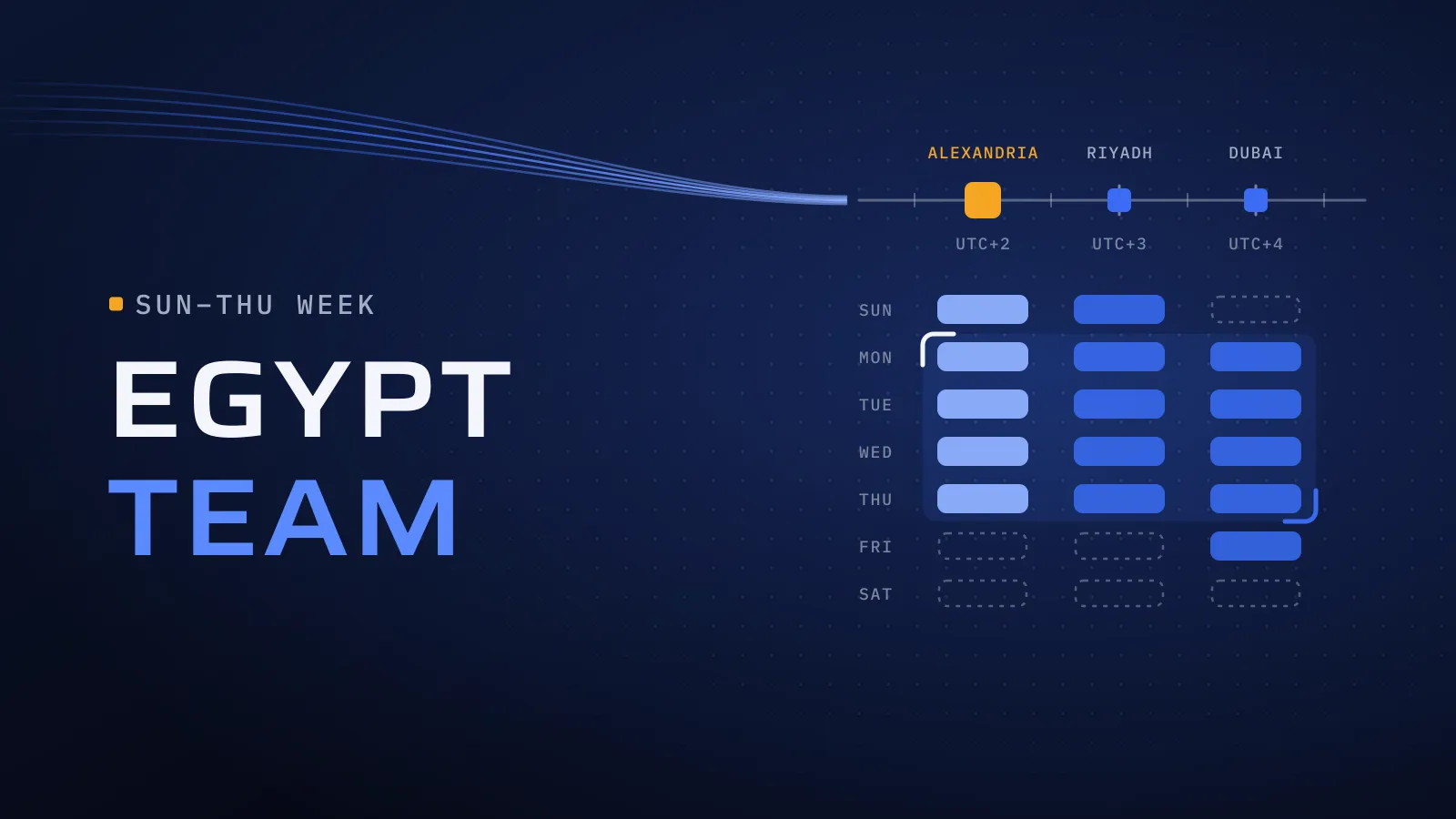
The team works the Sunday-to-Thursday week of Saudi Arabia, Qatar and Kuwait, one to two hours behind the UAE, and your contract is held by our headquarters at Dubai Digital Park, Dubai Silicon Oasis. See how staff augmentation in the UAE works with us, from the shortlist to your stand-ups. Building a product for the Kingdom rather than a team? Read about our Arabic app development in Saudi Arabia.
An Arabic product we built: Jood
Jood is an Arabic charity app that connects donors with people in need. Talk to the team that built it: book a meeting.
Two of our pillars matter most when Arabic is part of the product. Product thinking: each feature has to answer a business problem, and that starts with reading the requirement in the language it was written in. Independent QA: a dedicated testing and quality assurance process, so the Arabic screens are checked by someone who did not build them.
Put Arabic in the brief, not in the job title
Since 2014 we have worked with more than 100 clients across the UAE, Saudi Arabia, Qatar, Kuwait, the USA and Canada. Weighing a local hire first? Our staff augmentation vs in-house cost breakdown adds up what a developer in Dubai costs in year one.
Request developer profiles → We ask about your goal, what you use today, your timing and who else should be involved. You leave with clear next steps. The call commits you to nothing, and we sign an NDA first if you want one.
Frequently asked questions
Do all of your developers speak Arabic?
Our core team in Alexandria are native Arabic speakers who work in English. Developers recruited for your contract are sourced to your brief, so when a role needs Arabic, it goes into the brief, our screening checks it and you test it again in your own interview. Roles that don't need Arabic aren't limited by it.
Can a developer who doesn't speak Arabic build right-to-left screens?
Yes. Right-to-left layout, mixed-direction text and Arabic search are engineering skills, and a good developer learns them. What a non-speaker can't do is notice that an Arabic label reads wrongly. Pair them with a native reader in QA or design review, and test with users from your market before launch.
Do Arabic speakers from Egypt understand Gulf Arabic?
Specifications are written in Modern Standard Arabic, which is shared across Arabic-speaking countries. Spoken dialects differ in everyday words, so test what your project depends on: play a short voice note from one of your business users and ask the candidate to summarise it. That tells you more than any language certificate.
Does asking for Arabic change the rate?
Rates are agreed in your proposal and move with the role, seniority, stack and how long you need the person. Requiring Arabic narrows the candidate pool for some stacks, so we recommend it only on the roles that use it. That keeps the search wide where Arabic adds nothing.
Can we interview candidates in Arabic?
Yes. You interview every candidate on the shortlist, can hold part of the interview in Arabic and part in English, set your own technical task and approve only the people you want. Nobody joins your team without your yes.