Pet Care App Development: The App Types and What Each One Needs
Pet care app development for the UAE and GCC: shop, grooming, vet, sitting, walking and adoption apps, what each needs, payments, provider checks, Arabic.
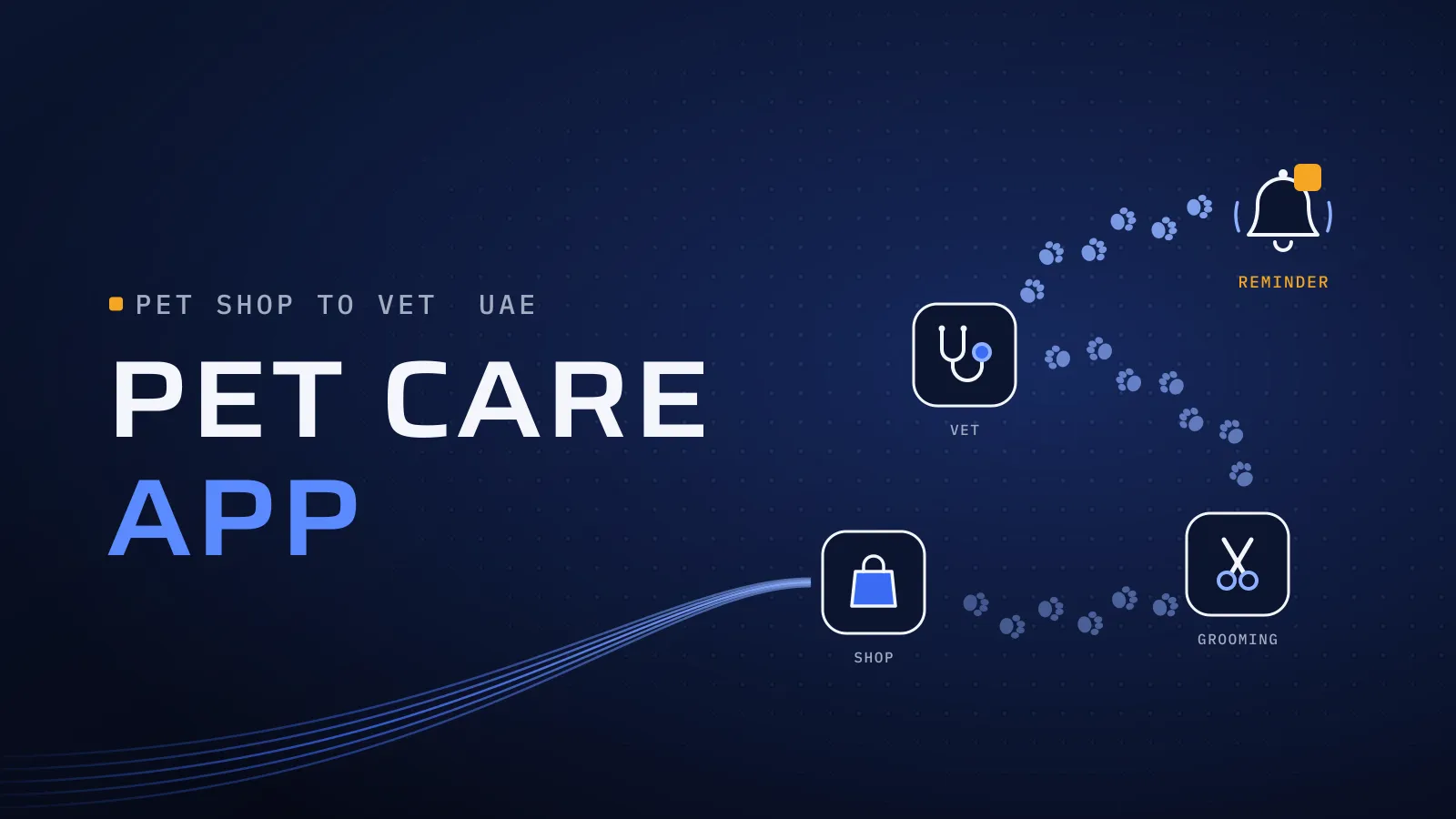
Pet care app development pays off when owners come back, not when they download once. What brings them back depends on the kind of app: a reorder for a pet shop, the next slot for a groomer, a vaccine reminder for a vet, a trusted face for a sitter or a walker. Pick the type first, and the features follow.
What does a pet care app need?
Quick answer: Every pet care app needs pet profiles, reminders tied to each pet, payments and Arabic and English screens. The rest depends on the type: a shop needs a catalogue and delivery, grooming and vet apps need bookings and records, sitting and walking apps need trust checks and live updates, and adoption apps need listings and applications. If other businesses or freelancers list with you, add a provider app or dashboard and an approval step.
Know which kind of pet app you’re building? Plan your pet care app →
Why owners delete pet apps
Owners already have WhatsApp for the groomer, a phone number for the vet and a delivery app for food. A pet app that only repeats one of those is easy to delete. It earns its place when it remembers the pet: the breed, the weight, the next vaccine, the last groom. Every booking or reorder that still runs through a call or a chat is one you don’t see, a review you don’t collect and a reminder you can’t send.
Types of pet care apps, and what each one needs
Most pet apps start as one of these types. Sort yours before you ask for a quote:
| App type | What it must do well | Watch out for |
|---|---|---|
| Pet shop | A catalogue by animal, size and diet, fast delivery, reorders | Stock that matches your shop or warehouse |
| Grooming | Slots that fit the pet’s size and coat, in a salon or at home | Travel time between home visits |
| Vet clinic or telehealth | Appointments, the pet’s history before each visit, notes after it | Who may read medical notes |
| Sitting, walking and boarding | Checked sitters and walkers, live updates and photos during each job | Owners hand over keys and pets, so trust comes first |
| Training | Single sessions, course packages, progress notes or video lessons | Packages that run across many sessions |
| Adoption and rescue | Listings with photos and health notes, applications, foster lists | Shelters work with volunteers, not sales teams |
| Marketplace | Many shops or providers in one app, with ratings | Provider sign-up, approval, commissions and payouts |
Pet shop apps: win the reorder, not the first order
Owners compare food prices across apps, so the first order is hard to win and easy to lose. The reorder is where a pet shop app pays:
- Shop by pet. Filters for the animal, its size, its age and any diet, so the owner sees what fits before scrolling.
- Repeat orders. A food subscription on the schedule the owner sets, with a reminder before each delivery and one tap to skip or change.
- Delivery that fits. Your own drivers or a delivery partner, with slots the owner picks. Our delivery app development guide covers the driver side.
- Stock that is true. The app reads stock from your shop system, so nobody pays for food you no longer have.
If the shop is the heart of your business, see our e-commerce app development in Dubai page.
Grooming and vet apps: bookings that fit the animal
A generic booking calendar breaks on pets, because the animal sets the job:
- Pet size and coat set the slot. A large long-haired dog takes longer than a cat’s nail trim, so durations come from the service and the pet profile, not a fixed hour.
- Salon, van or home visit. Mobile groomers and vets on home visits need travel time between jobs and an address they can find.
- Add-ons at booking. Nail trims, de-shedding or teeth cleaning, priced and picked before the owner pays.
- Cancellations and no-shows. A rule the owner sees before booking, and a deposit if no-shows cost your team income.
- Records for vets. The vet sees the pet’s past visits and vaccines before the appointment, and adds notes the owner can read after it. Set access rights so front-desk staff see the booking but not the vet’s notes.
- Video where it helps. Follow-ups and quick questions can run by video, if your vets want it, with a way to move the case to a clinic visit when the screen isn’t enough.
Sitting, walking and boarding apps: trust comes first
Owners hand a stranger their keys and their pet, so these apps live or die on trust:
- Checks before listing. ID, references and a short profile for each sitter or walker, and a meet-and-greet before the first booking.
- Live updates. A check-in and check-out, photos during the job, and the route of each walk, so the owner sees the work without calling.
- Private access notes. Door codes and feeding instructions stay hidden until a booking is confirmed, and disappear after it.
- Boarding capacity. A calendar of places per night, and proof of vaccines before check-in.
Adoption and rescue apps
Shelters and rescues need fewer screens than a shop, but different ones. Listings show photos, temperament and health notes. Adopters apply in the app and follow their application’s status, and the shelter books home checks and keeps a list of foster homes. Volunteers usually run these apps, so the admin side must be quick to learn.
Payments, provider approval and Arabic
- Payments: cards, Apple Pay and Google Pay through a local gateway, prices in the local currency, VAT on every receipt, and refunds your team can issue from the dashboard. If other businesses or freelancers list with you, the app also splits each payment: your commission, the provider’s share and when they are paid.
- Provider approval: what you check depends on the service: a trade licence for a shop, a professional licence for a vet, an ID and references for a sitter. Your admin approves each provider before they are listed, and the app reminds you before a licence expires.
- Arabic and English: the whole app, its push messages and its receipts, with right-to-left screens designed alongside the English ones. Our guide to Arabic app development and localization covers what to decide before design starts.
What makes a pet care app bigger
The type sets the base. These choices add to it:
- More than one type at launch, such as a shop plus grooming plus vet bookings.
- Outside providers. A marketplace adds a provider app or dashboard, approval, commissions and payouts. Our booking platform development guide covers the two-sided version.
- Live tracking for walkers, mobile groomers or deliveries.
- Video consultations and the testing they need on weak connections.
- Links to other systems: clinic software, your shop’s stock or accounting system, or a delivery partner.
- Subscriptions and loyalty points.
- More than one city or country, with its own currency, tax rules and providers.
How to build a pet care app, step by step
- Choose your type and model. Your own shop, salon or clinic in an app, or a marketplace where others list.
- Pick the first services. The one you already run well, plus pet profiles and reminders. Other types, video calls and new cities come in later releases.
- Design both sides and both languages. Clickable prototypes of the owner’s journey and the provider’s day, in Arabic and English, tried before the build.
- Build in short cycles. The owner app, the provider app or dashboard and the admin panel, with a test build at the end of each cycle and independent QA on every side.
- Launch in one area, then add. Start where your providers are, read bookings and reorders each week, and let those numbers pick the next service.
Planning a pet care app? Send us:
- the type: shop, grooming, vet, sitting and walking, training, adoption, or several;
- your model: one business, or a marketplace of shops and providers;
- the cities or countries you’ll launch in;
- whether you need Arabic at launch.
We reply with what a first release could cover, the team it needs and the price. Plan your pet care app →
Not ready for a call? Ask for our company profile
Bring your app type and your launch city
Since 2014 we have built software for more than 100 clients across the UAE, Saudi Arabia, Qatar, Kuwait, the USA and Canada. Our core team are native Arabic speakers who work in English. PET360 is a pet-care app we built for pet owners and pet stores. Talk to the team that built it: book a meeting.
Quality is built into every step: CTO oversight of the architecture, independent QA before each release, and a dated plan in FloPlan, our own delivery software. For the full build, our mobile app development company in Dubai page sets out each phase and who works on it. Tell us which kind of pet app you’re building, and where it launches.
Plan your pet care app → We ask about your goal, what you use today, your timing and who else should be involved. You leave with clear next steps. We reply by email first and set up a call only if you want one. Asking commits you to nothing, and we sign an NDA first if you ask.
Frequently asked questions
How much does pet care app development cost?
It follows the effort: the roles on the team and how much each one has to build. A first release for one business with one app type, such as a pet shop or a grooming salon, needs a delivery lead, a UI/UX designer, Flutter developers, a back-end developer and a QA engineer. Each extra app type, outside providers, live tracking or video calls add work for several of those roles. Send us your app type and first services, and we reply with the effort, the team and the price, phase by phase.
How long does it take to launch a pet care app?
It follows the first release. One business with one app type is the quickest route. Outside providers add sign-up, approval and payouts, and live tracking or video calls add their own testing. Store reviews and your payment gateway's merchant checks go into the plan, so you get a dated release plan before the build starts.
Do groomers, vets, sitters and walkers need their own app?
They need their own side of it, which is a provider app, a web dashboard or both. Anyone who works on the move, such as mobile groomers, walkers, sitters and vets on home visits, needs the app to accept jobs and update their status. Shops and clinics that work at a desk often prefer the dashboard. Your admin panel sits above both.
Can we start with one service and add others later?
Yes. Build the pet profiles and the provider model for the full app from the start, then switch services on one at a time. Bookings, reminders and payouts then extend the app you have instead of replacing it.
Who owns the app and its code?
You do. The code passes to your company once the project is completed and paid, and the App Store, Google Play and payment gateway accounts can be in your company's name from the start.