Outsourcing to Egypt for UAE and Saudi Companies: Which Roles, Which Hours, and Who Chooses
Outsourcing to Egypt for UAE and Saudi companies: remote staffing roles, the Arabic each needs, shared hours by country, and how you choose who joins.
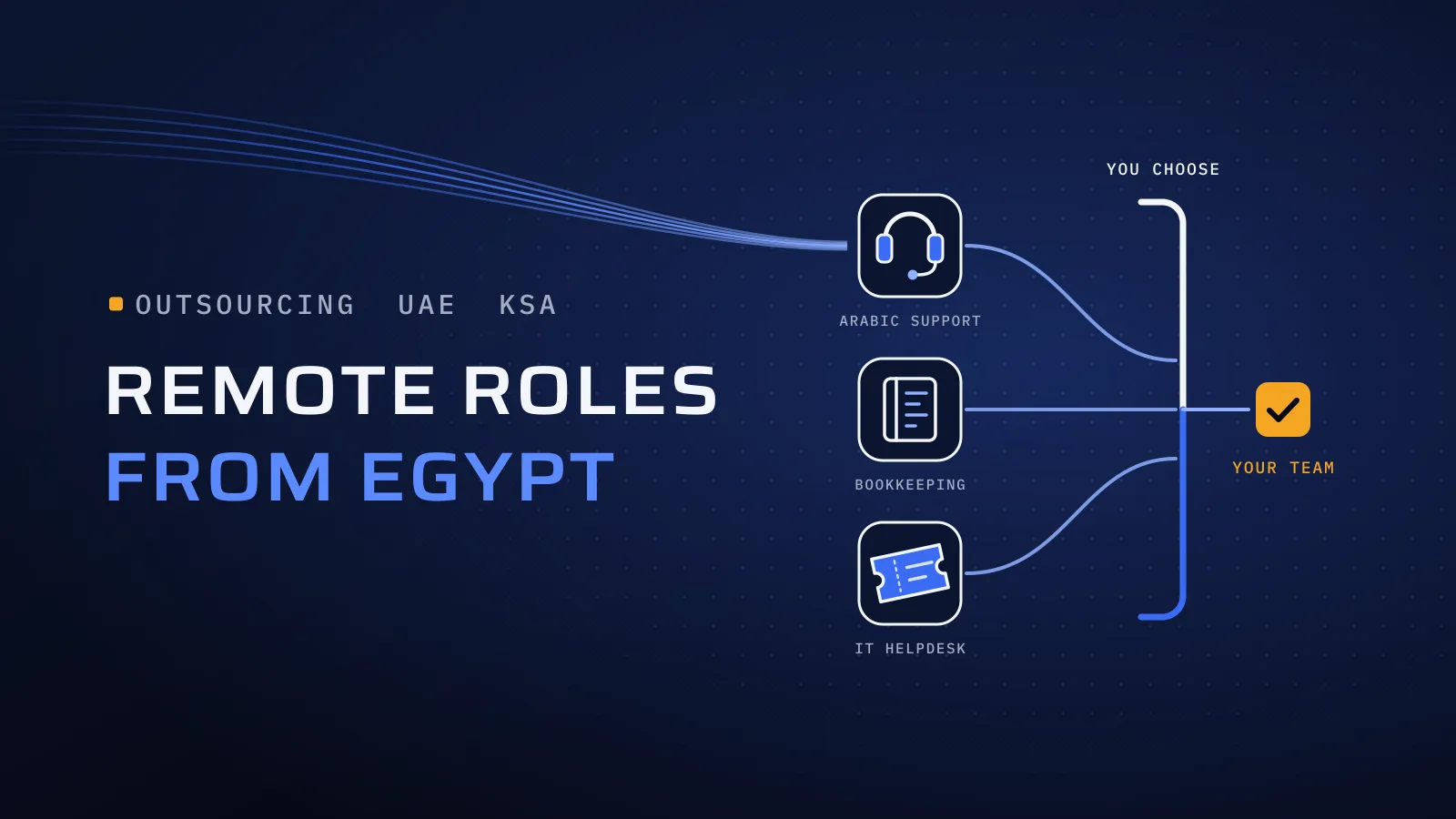
Outsourcing to Egypt gives a UAE or Saudi company the helpdesk, the Arabic support agent or the bookkeeper it can’t hire fast enough at home, from a country that shares most of its working day and speaks its customers’ language. Whether it works comes down to three questions: which roles travel well, which hours they keep, and who chooses the people.
Is outsourcing to Egypt right for a UAE or Saudi company?
Quick answer: For any role that works from a screen and a phone, yes. Egypt is one to two hours behind the UAE, level with or one hour behind Saudi Arabia, and works the Sunday-to-Thursday week. Arabic is its first language. We recruit IT, support, bookkeeping and back-office roles to your brief, and you interview and choose each person.
Know the roles already? Plan your team in the Team Planner →
What hiring every role at home costs you
Each local hire for a support or back-office role means a recruitment round, a visa, a desk and a notice period, one person at a time. While you wait, the work lands on whoever is nearest: your finance manager posts the supplier bills, your sales team answers WhatsApp after hours, and IT questions queue for the one person who knows the server. A role that works from a screen doesn’t need a desk in your office. It does need your hours, and often your language.
Which roles can you outsource to Egypt?
We can recruit, hire and onboard any role that can work remotely from Egypt. The table covers the common ones, IT first and then the roles outside IT, with the Arabic and English each usually needs and a test to set before you say yes.
| Role | Arabic it usually needs | English it usually needs | What to test in the interview |
|---|---|---|---|
| IT support and helpdesk | Spoken, if your staff raise problems in Arabic | Working, with clear written updates | Two tickets like the ones in your queue: how they diagnose each, and the update they send the user |
| System and network administrator | Optional | Technical reading and writing | A change on a setup like yours: the steps, the way back if it fails, and what they record |
| DevOps engineer | Optional | Technical | A failed deployment: where they look first, and what stops it happening again |
| Data analyst | Reading, if your data or your readers are in Arabic | Fluent in writing: managers read the findings | A sample export with names removed: one chart and three findings, explained to a non-analyst |
| UI/UX designer | Reading and writing, for right-to-left screens | Working | One of your screens in Arabic: what breaks in right-to-left, and the fix |
| Project manager | Fluent, if your stakeholders speak Arabic | Fluent, written and spoken | A late task and an unhappy stakeholder: the status note they would send |
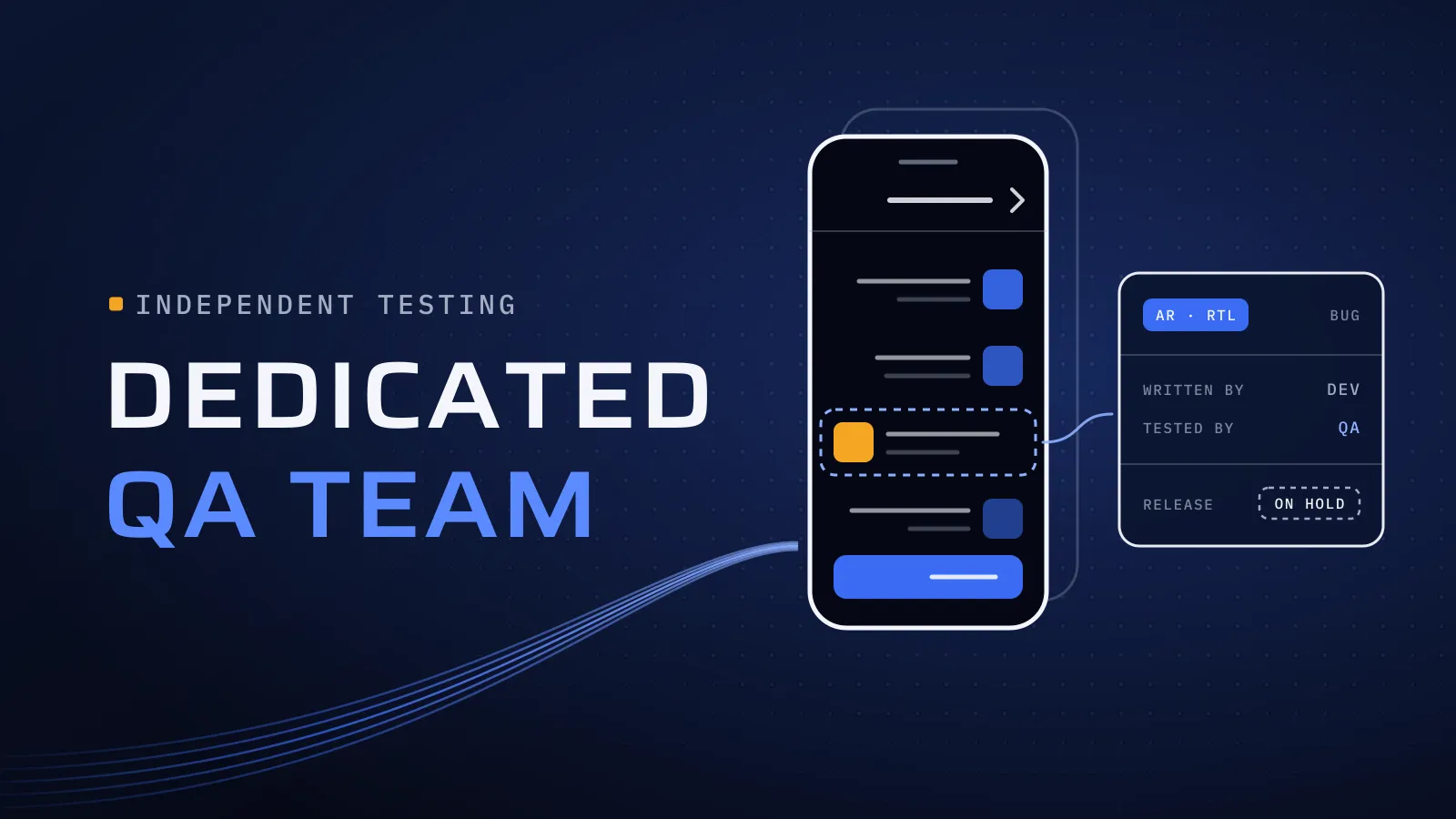
| QA engineer | Reading, to test Arabic screens | Working, for precise bug reports | One screen of your product: the bug reports they write |
| Arabic customer support | Native, and at ease with your customers’ dialect | Good, for English-speaking customers and internal notes | A role-play built from real messages with names removed, including one complaint and one in Gulf dialect |
| Accountant or bookkeeper | Reading, if bills or bank letters arrive in Arabic | Good, in writing | A test company in Odoo or Zoho: a bill with VAT, a credit note and a bank reconciliation |
| Back office and admin | Writing, if your documents are in Arabic | Writing | A batch of work from your real process, such as orders to enter, checked for accuracy |
Set the levels for your situation, not ours. A helpdesk for an English-speaking office needs no Arabic at all, while for an agent serving Saudi customers, Arabic outranks everything else in the brief.
Hiring developers? They have their own guide: a dedicated development team in Egypt, with the contract and Egypt compared with India.
Which hours: your shared day and week, by country
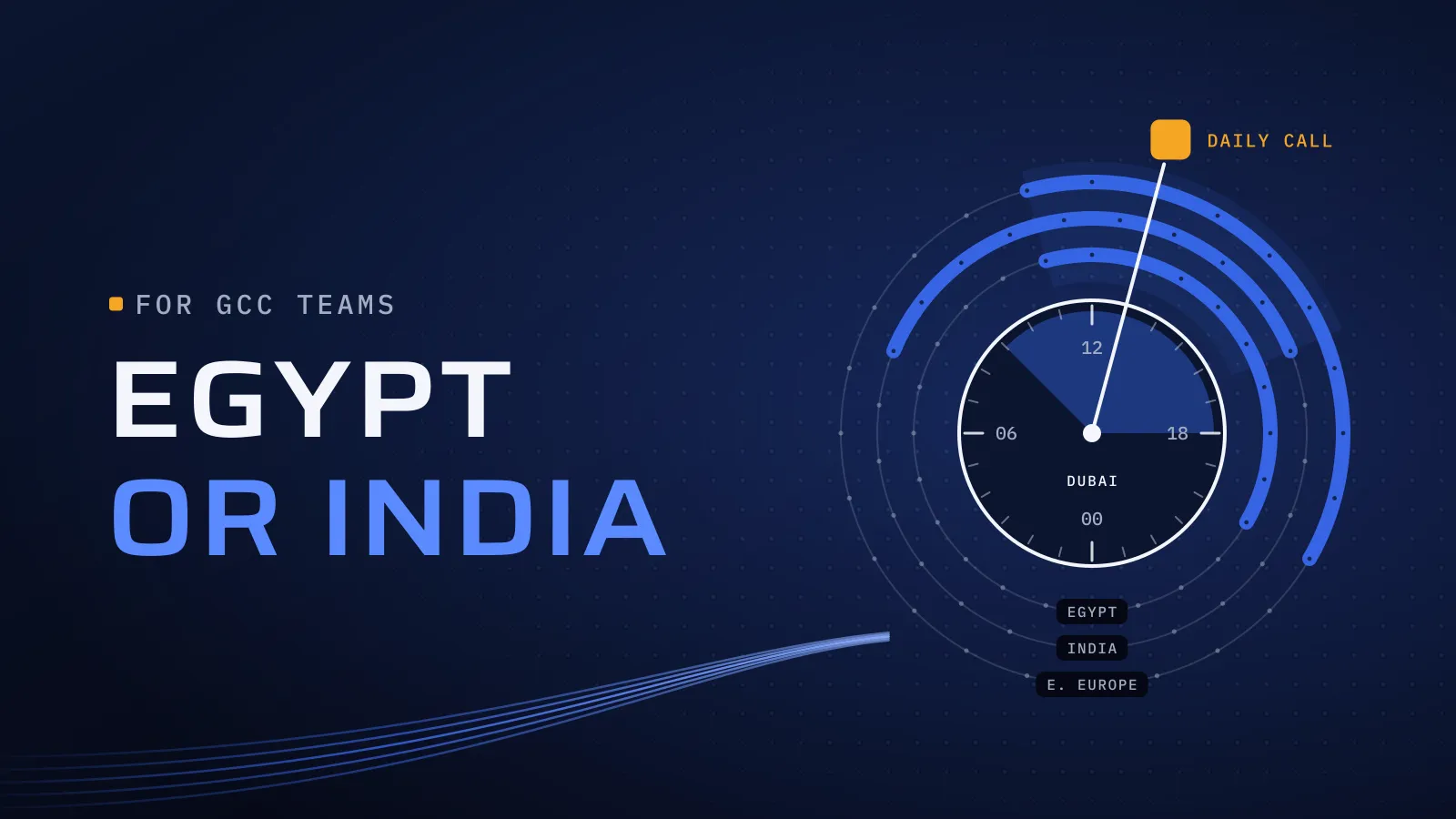
Egypt runs on UTC+2, and on summer time (UTC+3) from the last Friday of April to the last Thursday of October. The Gulf states don’t change their clocks, so the gap moves twice a year. On a 09:00 to 18:00 day in both places:
| Your office | Egypt’s clock | Shared hours a day | Your working week | Weekdays you share |
|---|---|---|---|---|
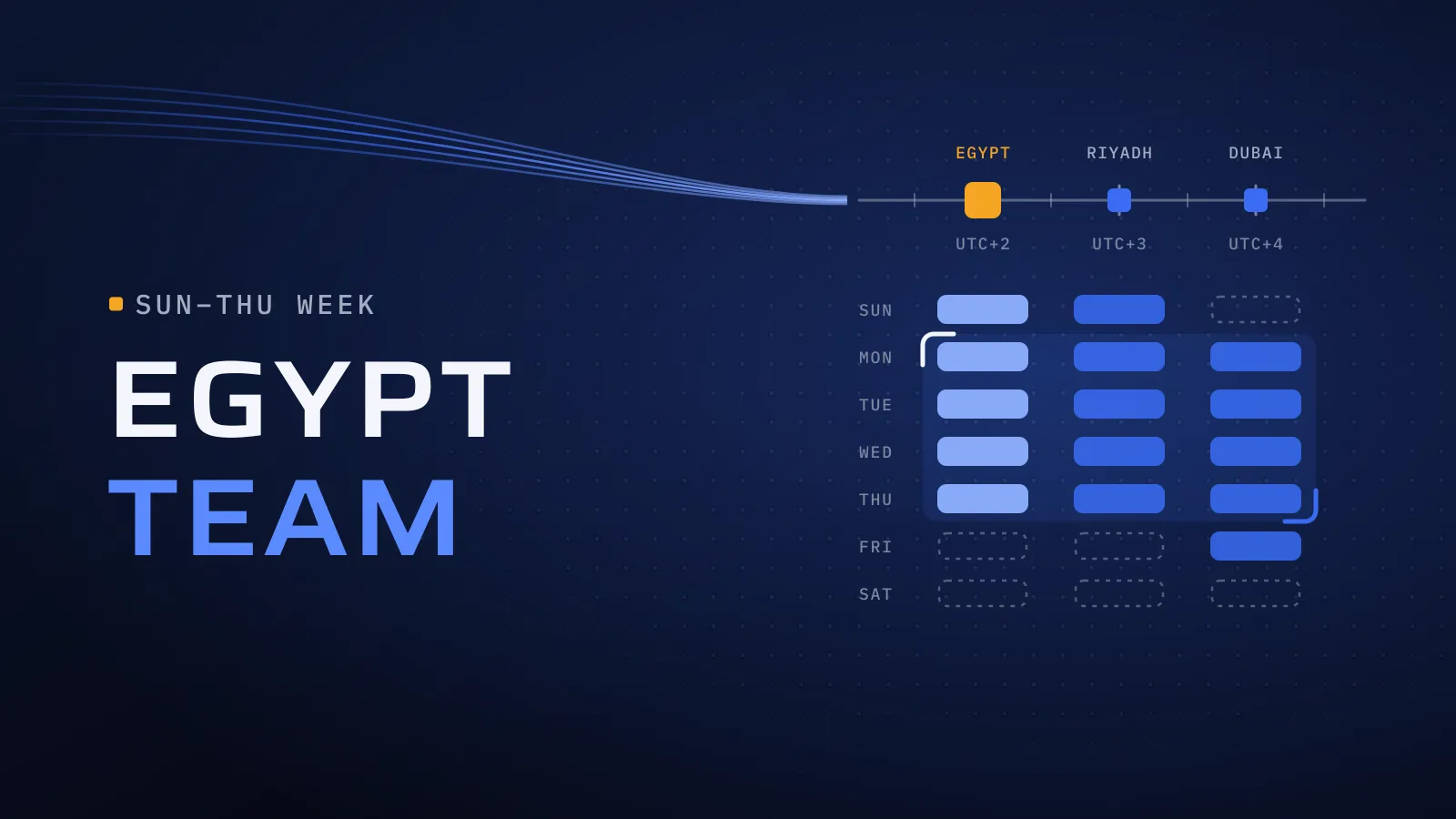
| UAE: Dubai, Abu Dhabi (UTC+4) | 2 hours behind in winter, 1 in summer | 7 in winter, 8 in summer | Monday to Friday at most private companies | 4: Monday to Thursday |
| Saudi Arabia: Riyadh, Jeddah (UTC+3) | 1 hour behind in winter, level in summer | 8 in winter, 9 in summer | Sunday to Thursday | 5: all of them |
| Qatar: Doha (UTC+3) | 1 hour behind in winter, level in summer | 8 in winter, 9 in summer | Sunday to Thursday | 5: all of them |
| Kuwait: Kuwait City (UTC+3) | 1 hour behind in winter, level in summer | 8 in winter, 9 in summer | Sunday to Thursday | 5: all of them |
Winter here means Egyptian winter time, late October to late April. UAE private companies set their own weekend. If yours works Monday to Friday, the person in Egypt works your Sunday while your office is closed and is off on your Friday, so plan anything that needs both sides for Monday to Thursday. For engineers on the Sunday-to-Thursday week, see staff augmentation for Saudi Arabia, Qatar and Kuwait.
Which hours each role keeps
- IT support and helpdesk keeps your office’s hours, because problems arrive when your staff log in. Put your opening time, and any Friday cover, in the brief.
- Arabic customer support keeps your customers’ hours, which often run into the evening and the weekend. Name the shift in the brief, Friday and Saturday included if your customers write then.
- Bookkeeping, data analysis and back office run on deadlines, not minutes. The shared hours are enough for questions, and the rest runs on written handovers in your Teams, Slack or email.
- Project managers, designers, QA and DevOps sit in your meetings, so book those inside the shared hours.
Remote staffing from Egypt in four steps
- Your brief. For each role: the work, the tools (your helpdesk, Odoo or Zoho, Microsoft 365), the Arabic and English level from the table, the hours and days, and the seniority. The Team Planner turns your choices into a short brief you can edit before you send it.
- Our shortlist. We source candidates for each role from the market and screen them against your brief: the skills, written and spoken English, and Arabic where the role needs it. You get each profile with our assessment notes.
- Your interviews. You interview every candidate, set the test from the table and decide who joins. If nobody fits, we go back to the market with the same brief.
- Onboarding. You deal with Flojics, a UAE company at Dubai Digital Park, and the contract and employment setup for each role are agreed in your proposal, with an NDA first if you want one. The person then gets named accounts in your tools, with access only to what the role needs.
Who chooses? You do, at every step: the brief, the candidates you interview and the person who joins. Nobody starts without your yes, and day to day they work to your priorities, inside your tools. That is also the difference from an employer-of-record platform, which employs a person you have already found. We start earlier, with the search.
Send us the roles, the hours and the language. For each role: the work, the Arabic and English it needs, the shift and the start date. We reply with how we would recruit for it and who you would interview. Ask for candidate profiles →
Not ready for a call? Ask for our company profile and we’ll send it to you.
Arabic customer support from Egypt
Outsourcing Arabic customer support to Egypt gives your Arabic-speaking customers someone who answers in their language, recruited for your team and not shared with other clients. The agent works in your helpdesk, your WhatsApp Business inbox and your CRM, in your tone and by your rules on refunds and exceptions.
Be precise about dialect. An agent from Egypt speaks Egyptian Arabic natively, while your customers may write in Gulf dialect, in Modern Standard Arabic, in English or in Arabic typed in Latin letters, sometimes all in one message. So test understanding with your customers’ own messages, and agree how replies should sound: clear written Arabic in chat and email, and a neutral spoken style on calls.
In the brief, list the channels, the shift, the systems the agent looks things up in, and what they may decide alone, such as a new delivery slot, against what goes to your team.
Pair the agent with an AI chatbot for your business, which answers routine questions at any hour and hands the rest, with the chat history, to the agent.
Ask for Arabic support profiles →
A remote bookkeeper inside your Odoo or Zoho
Outsourced bookkeeping from Egypt works best when the bookkeeper works in your books, not in a copy: a user in your Odoo or Zoho with the access the job needs. The typical work is entering supplier bills and customer invoices with the right tax on each line, reconciling bank statements, chasing overdue invoices and preparing a month-end pack for your accountant.
Two things stay on your side:
- Approvals. Payments, write-offs and credit notes stay with your finance lead.
- Tax filings. VAT and Corporate Tax returns, and the tax decisions behind them, stay with your accountant or tax agent. The bookkeeper keeps the records those returns are built from, and we don’t give tax advice.
Running Odoo in the UAE? The tax setup the bookkeeper posts into matters as much as the posting, and our guide to Odoo VAT in the UAE lists what to check. If the setup itself needs work, our Odoo team handles Odoo implementation in the UAE and support, including systems another company set up.
Our team-extension record is with engineers
ButlerFM is facility management software, and our engineers joined ButlerFM’s own team. Talk to the team that worked on it: book a meeting.
For the roles in this article, you judge the people directly: you set the test and run the interview, so you see each candidate’s work before anyone joins.
Send us the roles, the hours and the language
Since 2014 we have worked with more than 100 clients across the UAE, Saudi Arabia, Qatar, Kuwait, the USA and Canada. We have offices in Dubai, Houston and Alexandria. Our core team are native Arabic speakers who work in English, so a brief written in either language works.
Plan your team in the Team Planner → Pick the roles, the seniority, the market and whether Arabic is needed, and the planner turns them into a short brief for the contact form. Prefer to write it yourself? Ask for candidate profiles.
We ask about the roles you need, what your team uses today, your timing and who else should be involved. You leave with clear next steps. We reply by email first and set up a call only if you want one. Asking commits you to nothing, and we sign an NDA first if you ask.
Frequently asked questions
Which roles can a UAE or Saudi company outsource to Egypt?
Any role that works from a screen and a phone. In IT: IT support and helpdesk, system and network administrators, DevOps, data analysts, designers, project managers and QA. Outside IT: Arabic customer support, accounting and bookkeeping, and back-office work. We recruit each role to your brief, and you interview and choose the person.
Do remote staff in Egypt work on Fridays?
Egypt's weekend is Friday and Saturday, so the standard week is Sunday to Thursday, the same as Saudi Arabia, Qatar and Kuwait. A UAE office that works Monday to Friday shares Monday to Thursday. If a role must cover your Friday, as customer support often does, put that shift in the brief.
Who chooses the people?
You do. We source candidates against your brief and screen them, then you interview each one, set a test from your own work and decide who joins. Nobody starts without your yes, and day to day they work to your priorities, inside your tools.
An employer-of-record platform, or a partner who finds the person too?
They do different jobs. An employer-of-record platform employs a person you have already found, so the search, the tests and the choice stay with you. We start with the search: we take your brief, source and screen candidates, you interview and choose, and we onboard the person into your tools. How each person is contracted and employed is agreed in your proposal. If you have already found your candidate and only need them employed, an employer-of-record platform is the simpler route.
Can a bookkeeper in Egypt file our VAT or Corporate Tax return?
No. The returns, and the tax decisions behind them, stay with your accountant or tax agent. The bookkeeper works inside your Odoo or Zoho and keeps the records those returns are built from: bills and invoices with the right tax, bank reconciliations and a month-end pack. Payments and approvals stay with your finance lead.
How much does outsourcing to Egypt cost?
It is agreed in your proposal, role by role. What moves it: the role and its seniority, the Arabic and English it needs, the shift it covers, how many people you add and for how long. Send us the roles, and we reply by email with how we would recruit them and who you would interview.