B2B Ordering Portal for UAE Distributors: Customer Prices, Credit and ERP Sync
B2B ordering portal for UAE distributors and wholesalers: customer pricelists, credit limits, reorders, Arabic, invoices, statements and ERP sync.
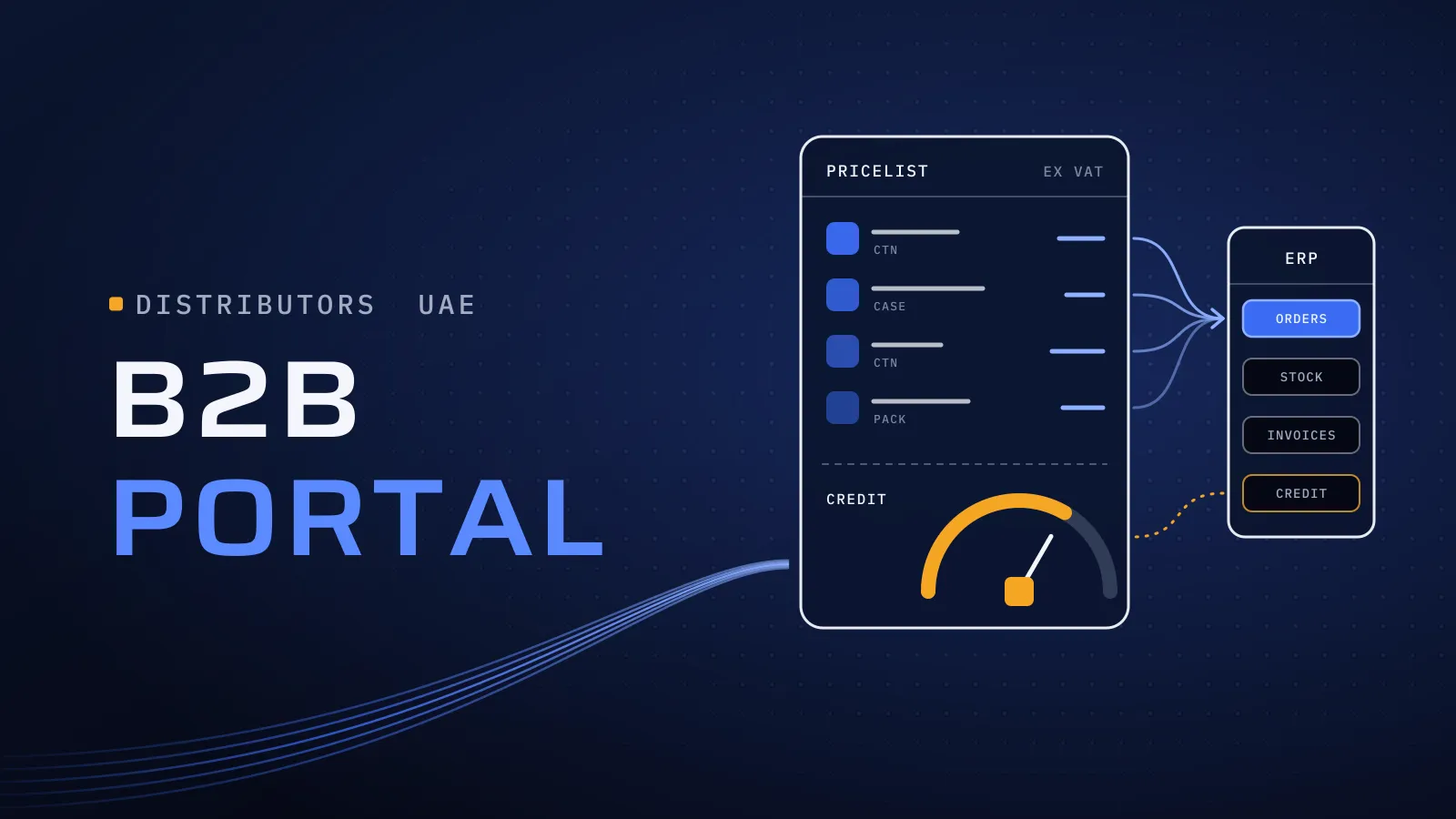
A B2B ordering portal earns its keep in the orders your team stops retyping: voice notes on WhatsApp, photos of handwritten lists and calls from shop owners who want “the same as last week”. Your trade customers order at any hour, at their own prices and within their credit, and each order reaches your ERP once, exactly as placed.
What does a B2B ordering portal do for a UAE distributor?
Quick answer: A B2B ordering portal is a website or app where your trade customers sign in and order at their own prices: their pricelist, their credit limit and last week’s order one tap away. For a UAE distributor it must also work in Arabic and English, show VAT invoices and statements, and sync stock, prices and orders with your ERP.
Still taking orders on WhatsApp? Plan your ordering portal with us →
What phone and WhatsApp orders cost you
Every order typed from a voice note is a chance to ship the wrong pack size at last month’s price. A new salesman quotes from memory, a customer over their limit gets another delivery because nobody checked the balance, and the item promised on the phone is already in someone else’s van. Reps spend their visits writing orders instead of selling, and an order sent late at night waits for the office to open. None of it shows as one line in your accounts; it surfaces as returns, credit notes and overdue balances.
What a UAE distributor’s portal must handle
Ask every quote how it handles each row. The last column says which system should own the data, so no price or balance is ever kept in two places.
| What you need | What the portal does | Owned by |
|---|---|---|
| Customer-specific prices | Each account sees its own pricelist, contract prices and quantity breaks, without VAT | ERP |
| Bonus schemes and promotions | “Buy 10 cartons, get 1 free” and dated offers, applied the same way for every customer | ERP, or rules in the portal |
| Units and minimums | Cartons, packs and pieces, case multiples and a minimum order value | ERP product list |
| Credit | Available credit on screen; over-limit or overdue orders held for approval or blocked, by your rule | Balance in the ERP, rule in the portal |
| Reorders | Last order, usual items and saved lists per outlet, repeated in one tap | Portal |
| Branches and buyers | A chain’s outlets order separately; head office approves and pays | Portal roles |
| Stock and delivery | Available stock by warehouse, delivery days by emirate or route, and an order cut-off time | Stock in the ERP, calendar in the portal |
| Invoices and statements | VAT tax invoices with your TRN, a statement of account, ageing, and cheques received but not yet cleared | ERP |
| Arabic and English | Product names, units, search and invoices in both, with right-to-left screens | Both |
| Sales reps | Reps order for a customer from their phone, with the same prices and credit checks | Portal |
| Returns | Damaged or short-dated goods reported with a photo, against the original invoice | Portal, then ERP |
How to read it: whatever the ERP owns is read from it, never retyped. If a quote keeps prices or balances in the portal, ask how they stay in step with your accounts.
One rule for 2027: B2B invoices in the UAE move to e-invoicing in phases, sent through an accredited provider. The portal shows each invoice and its status, and your ERP sends the e-invoice itself, so the portal never runs invoicing of its own.
How the portal connects to your ERP
On Odoo, in the UAE. Odoo’s eCommerce has a B2B setup: sign-up by invitation, prices without VAT and each customer’s pricelist once they sign in, while its customer portal lists their orders and invoices. For a distributor with simple rules, that is a sound start. Odoo’s credit limit warns rather than stops an order, as our guide to Odoo for trading companies in the UAE explains, and bonus schemes, outlets under one head office and offline ordering by reps need more. A custom portal then reads and writes Odoo through its API, which needs Odoo’s Custom plan, and Odoo stays the record for prices, stock and invoices.
Selling on Noon or Amazon as well? We have connected Odoo to both, so marketplace orders draw on the same stock count as your portal.
On another ERP. The portal connects to the system you run through its API, or through a scheduled file exchange where there is none. We implement Odoo in the UAE only; elsewhere, we connect the portal to the ERP you already have.
Ordering is not the only portal. If your goal is fewer status calls and emailed invoices rather than taking orders, our guide to customer portal development in Dubai covers that kind of portal, and when to build, extend your ERP’s portal or buy one.
Getting trade customers to use it
A portal pays off only when shop owners and purchasing staff stop sending voice notes. What moves them:
- Reps place the first order with the customer, on the customer’s own phone, during a normal visit.
- The reorder is quicker than a voice note: last week’s order, changed and sent from one screen.
- Arabic and English on any phone, with product photos, because many buyers don’t read the English item codes.
- A reason to switch: orders placed before the cut-off make the next delivery run.
- WhatsApp stays for questions, and a link in the chat opens the customer’s reorder list.
Count WhatsApp and phone orders before and after the pilot; that number decides the next phase.
How a B2B portal project runs
- Map one customer’s order from start to finish: price, bonus, credit check, picking, delivery, invoice, and payment or cheque.
- Decide which system owns what, using the table above.
- Agree the first release: ordering at each customer’s prices, reorders, the credit rule, invoices and statements, in Arabic and English. Online payment, a rep app and a bonus engine can follow.
- Build and test against a copy of your ERP: an over-limit order, an item selling out mid-order, a price change and an Arabic invoice on paper.
- Launch with a pilot group of customers your reps know well, then widen.
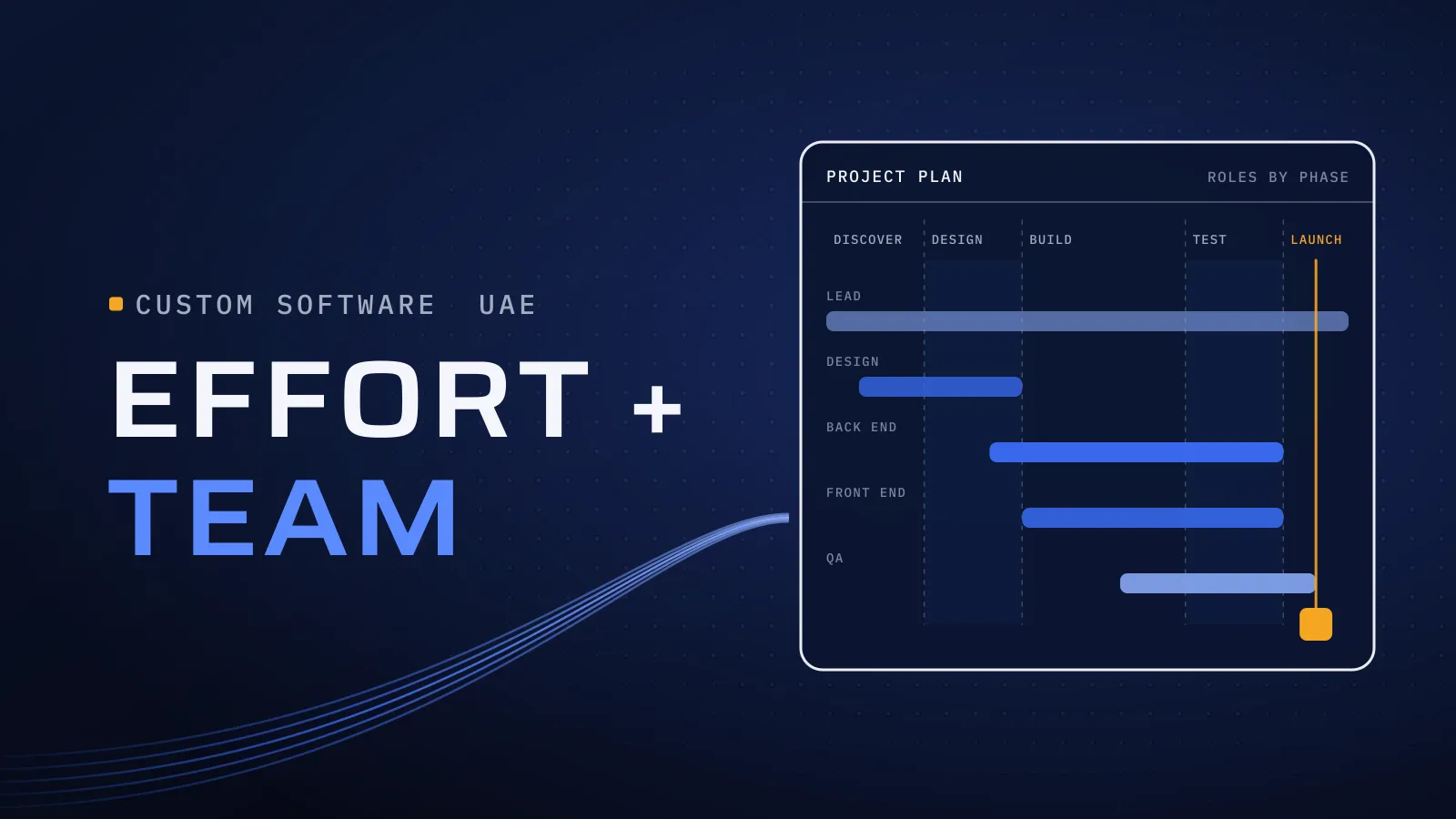
It runs as project delivery, with a fixed scope per phase, and the effort, team and price are agreed in your proposal.
Want the table turned into a plan? For an estimate, send us:
- what you distribute, and roughly how many products;
- how many trade customers order, and how they order today;
- how your prices, bonus schemes and credit terms work;
- your warehouses and delivery areas;
- the ERP or accounting system you run;
- whether reps should order for customers.
We reply with what a first release covers, what stays in your ERP, and the effort, team and price. Plan your ordering portal →
Not ready for a call? Ask for our company profile and we’ll send it to you.
Who builds it
We build portals, business systems and the links between them as part of our custom software development in Dubai. When the portal sits on Odoo, our Odoo team leads the rollout, from our Odoo implementation in the UAE practice.
Al-Mawared ERP is a web-based ERP we built for exchange companies across the MENA region. Talk to the team that built it: book a meeting.
Quality built into every step: CTO oversight on the data design, meaning which system owns prices, stock and credit; independent QA before each release, re-running real orders, credit holds and invoices; and a dated plan in FloPlan, the delivery software we built and use. Our core team are native Arabic speakers who work in English, so Arabic product names and invoices are checked by people who read Arabic every day.
Selling to consumers too? Our e-commerce website development in Dubai covers the retail side on the same stock and the same ERP.
Start with one customer’s order
Since 2014 we have built software for more than 100 clients across the UAE, Saudi Arabia, Qatar, Kuwait, the USA and Canada. Our headquarters is at Dubai Digital Park, and our other offices are in Houston and Alexandria. Send us one order as it reaches you today, a voice note or a photo is fine, with that customer’s pricelist and credit terms.
Plan your ordering portal → We ask about your goal, what you use today, your timing and who else should be involved. You leave with clear next steps. We reply by email first and set up a call only if you want one. Asking commits you to nothing, and we sign an NDA first if you ask.
Odoo’s B2B eCommerce documentation checked on the date this guide was updated.
Frequently asked questions
How is a B2B ordering portal different from an online store?
Only invited customers sign in, and each one sees its own prices without VAT, its available credit and its usual items. Orders go on account and are settled against invoices and statements, not paid by card at checkout. Quantities come in cartons and case multiples, and your reps can order for a customer. A retail store has none of that built in.
Can Odoo be our B2B ordering portal?
For simple rules, often yes. In the UAE we implement Odoo, and its eCommerce can run by invitation only, with each customer's pricelist and prices shown without VAT. When you need credit holds, bonus schemes, outlets under one head office or reps ordering offline, a custom portal on Odoo's API adds them while Odoo stays the record.
Will our customers actually use it?
They do when it is quicker than a voice note. Reps help each customer place a first order, a reorder takes one tap, screens work in Arabic and English, and portal orders make the next delivery run. A pilot group shows early which step puts people off, and that step is fixed before you widen.
What does a B2B ordering portal cost?
It follows the scope: how many pricing and bonus rules you run, the ERP it syncs with, whether reps and online payment are in the first release, and Arabic. Send us those details and we reply with the effort, the team and the price, phase by phase, agreed in your proposal.
Can customers pay online through the portal?
Yes. Customers can pay open invoices by card through a UAE payment gateway, and each payment posts against its invoice in your ERP. Most distributors keep credit terms and cheques alongside, so the statement shows card payments and cheques received in one place.
Who owns the portal and its data?
You do. The code passes to your company once the project is completed and paid, and your ERP stays the record for prices, stock and invoices.