Is Your Process Ready for an AI Agent? A One-Page AI Readiness Check for UAE Teams
An AI readiness assessment for UAE teams: ten yes/no questions that score one process, show if it suits a first AI agent, and what to fix first if it doesn't.
An AI readiness assessment for a UAE team should answer one practical question: which process can an AI agent take on first, and will it save real time? Choose well and your people win back the hours they spend copying and checking; choose badly and the first agent stalls, taking the board’s appetite for a second one with it.
What is an AI readiness assessment, and is your process ready?
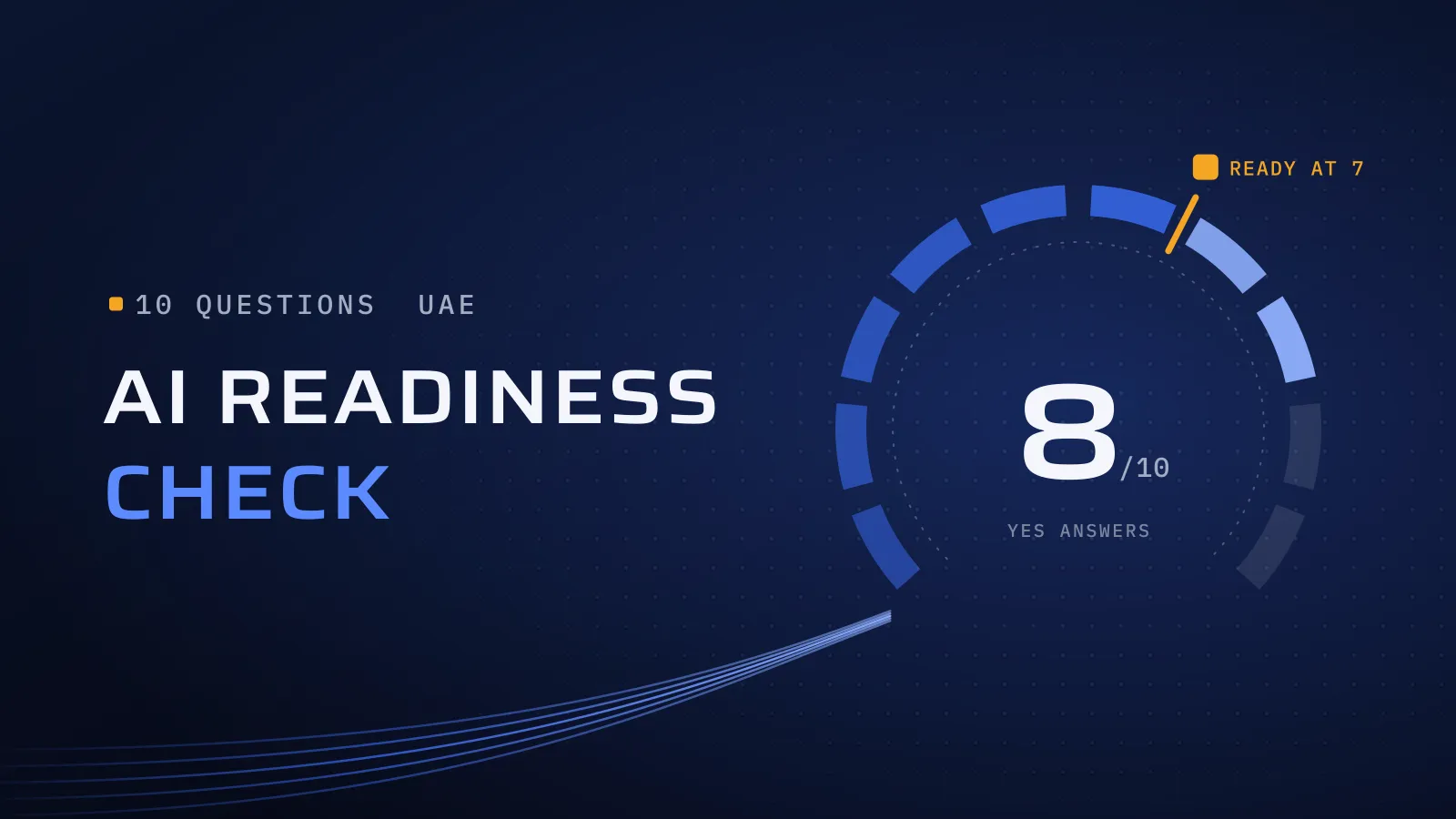
Quick answer: An AI readiness assessment that helps you act checks one process, not the whole company. Ask ten yes/no questions: does it repeat daily, arrive digitally, rely on data the agent can reach, have a named owner, produce output a person can judge quickly and errors you can catch? Seven or more yes answers make a good first AI agent.
Have a process in mind? Find your first AI process →
What does a wrong first process cost?
Waiting has a price: every month, skilled staff re-key invoices, sort a shared inbox in Arabic and English, and rebuild the same report. Starting in the wrong place costs more. The reasons a first agent stalls are usually visible before any build: the data it needs sits in a system nobody can connect to, nobody owns the result, or the work turns up a few times a month. Data access is the most common gap in the region. Only 16% of GCC CEOs say their most-used AI tools can reach all the relevant documents and data (PwC, 29th Global CEO Survey: Middle East findings). One meeting with the check below finds these gaps while they are still cheap to fix.
How to run the check with your team
- List three to five candidate processes. Start with the ones your team complains about: the re-keying, the chasing and the copying between systems.
- Score each one with the people who do the work. A manager knows the volume; the clerk knows where the inputs come from and what goes wrong. Answer for the process as it runs today, not as it should run.
- Check the two must-haves. Questions 8 and 9 below. A no on either parks the process, however well it scores elsewhere.
- Record the baseline of the highest scorer. Time per case, error rate and cases per month. Without a baseline, nobody can say later whether the agent saved anything.
- Decide: trial, fix first or park. The score tells you which, and the no answers tell you what to fix.
The one-page AI readiness check
Score one process at a time. Print this page or share the link, and tick yes only when the whole row is true today.
| # | Question | Tick yes if |
|---|---|---|
| 1 | Does it repeat every day? | New cases arrive daily, or at least every week, not a few times a month |
| 2 | Is the volume worth it? | A few minutes saved per case add up to hours a week across the team |
| 3 | Do the inputs arrive digitally? | Emails, PDFs, web forms or system records. Paper counts only if it is scanned on arrival |
| 4 | Do the inputs vary? | Layouts, wording or language change from case to case, such as supplier PDFs or customer emails in Arabic and English |
| 5 | Can the agent reach the data? | The systems it reads and writes to have an API or an export, and IT will give the agent its own limited account |
| 6 | Are the records reliable? | The records it checks against, such as suppliers, customers or prices, are current and kept in one place |
| 7 | Can a person judge the output quickly? | A reviewer can check a draft in less time than it takes to do the case from scratch |
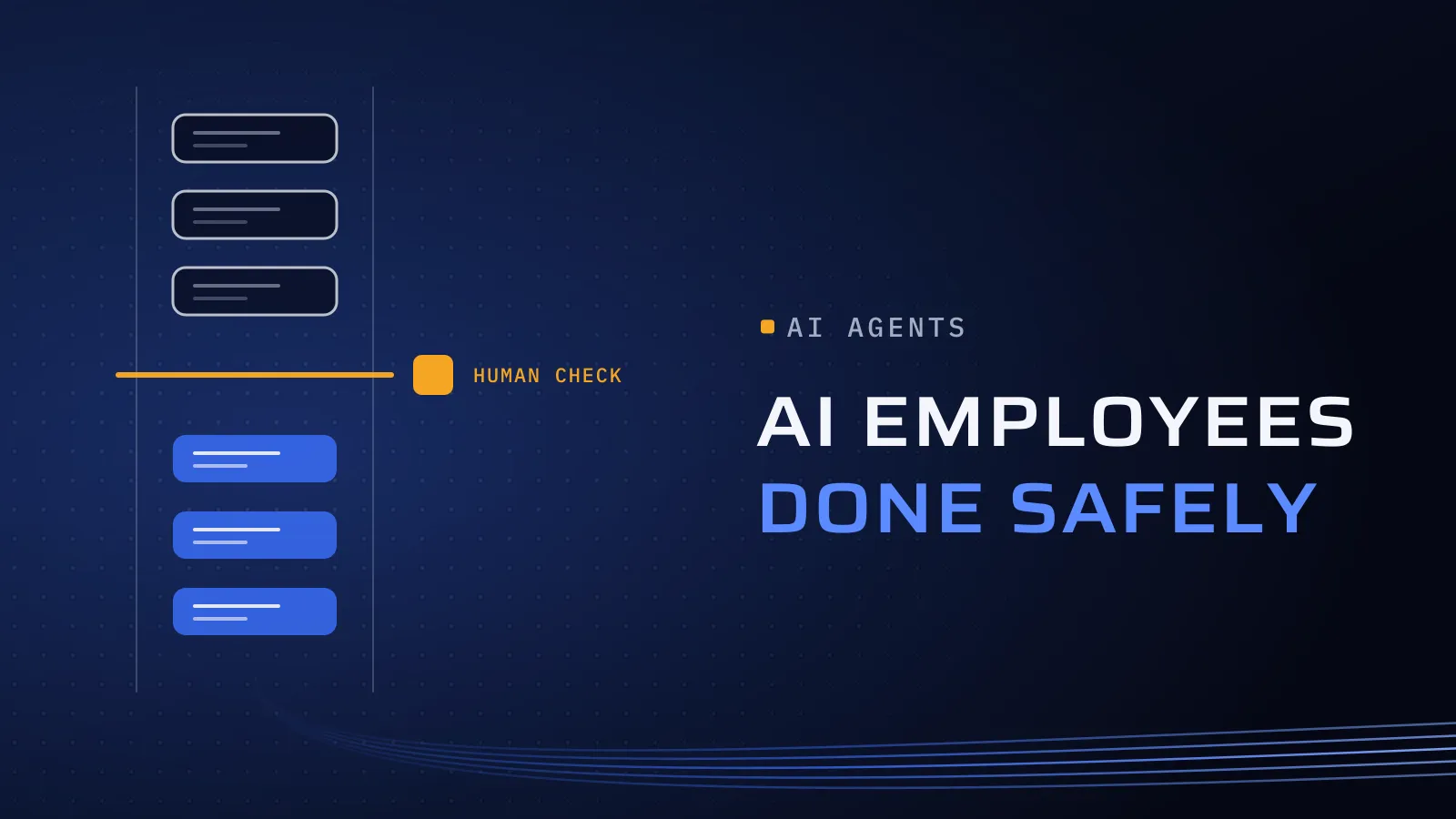
| 8 | Can mistakes be caught before they land? | Errors are stopped before they reach a customer, the ledger or a regulator. The agent drafts; it never pays, approves or sends on its own |
| 9 | Is there a named owner? | One person signs off go-live, handles escalations and can switch the agent off |
| 10 | Do you know today’s baseline? | You know, or can measure this month, the time per case and how often cases go wrong |
How to read your score
- 9–10 yes: a strong first agent. Record the baseline and plan a trial run beside your team.
- 7–8 yes: a good first agent. Fix the no answers while the process is mapped. They are usually data access or the state of the records.
- 4–6 yes: fix first. The no answers are your work plan: digitise the inputs, clean the records, name an owner. Then score the process again.
- 0–3 yes: not this process. Move to the next one on your list.
A no on question 4 points somewhere else. If one fixed rule handles every case, plain workflow automation is cheaper and more predictable than an agent, and we will tell you so.
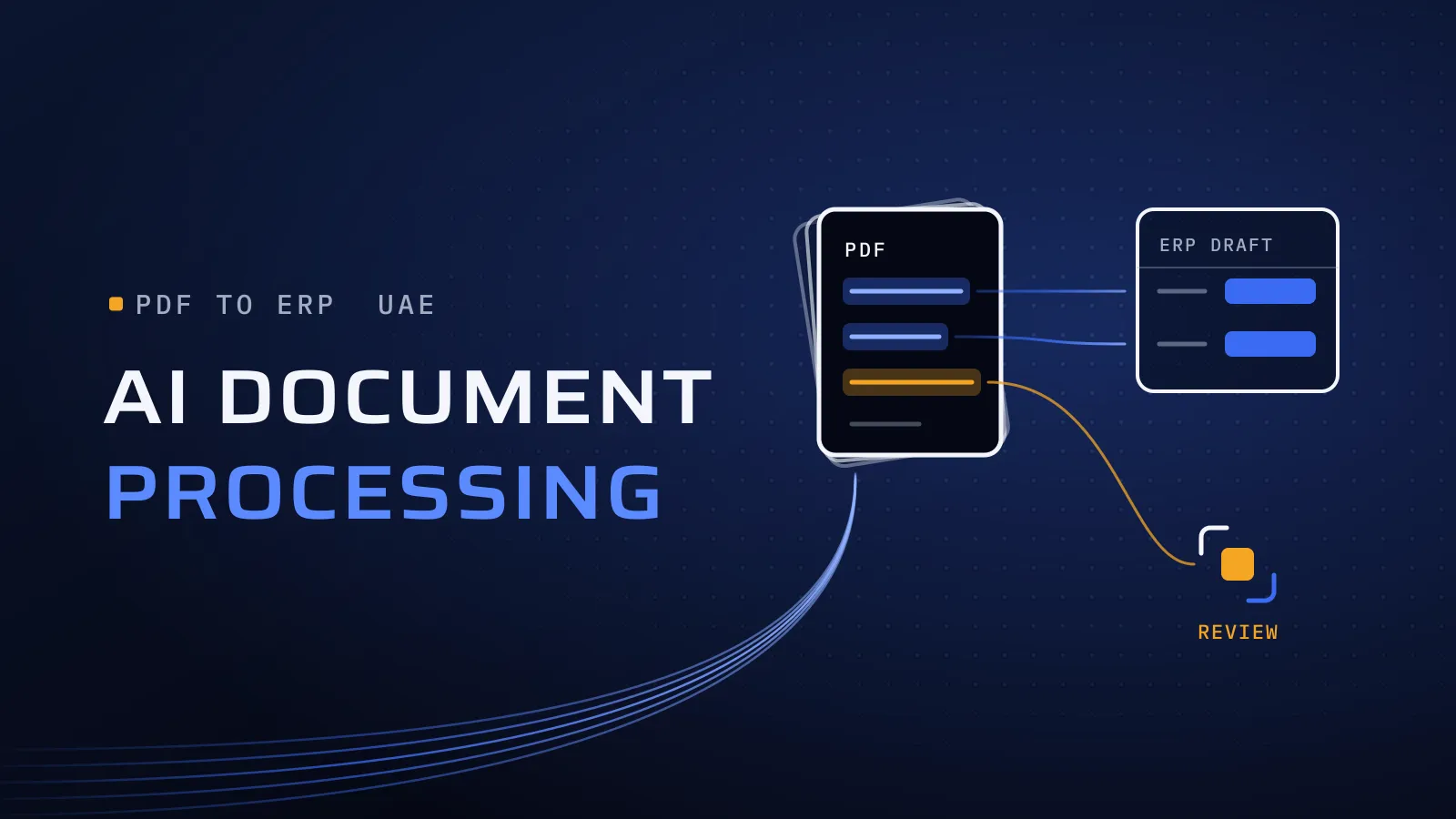
Two examples. Supplier invoice intake often scores 9 or 10: a steady flow of PDFs by email, checked against purchase orders in the ERP, quick to confirm, and nothing is paid until accounts payable releases it. Credit approvals can score 8 and still be parked, because a wrong decision reaches the customer (question 8). Keep a person deciding there, and let AI summarise the file for them.
Scored a process? Send it to us, whatever it scored.
A few lines or a spreadsheet are enough: the process, its scores and the systems it touches. We reply with whether it suits a first agent, what to fix first and which cases should stay with your people.
Need to brief your leadership team first? Ask for our company profile and we’ll send it to you.
What happens after the check
Our AI agent development in Dubai starts where this check ends: with one process that passed. We map it with the people who run it, confirm the agent can reach the data it needs, take the baseline from step 4 and agree which cases always go to a person.
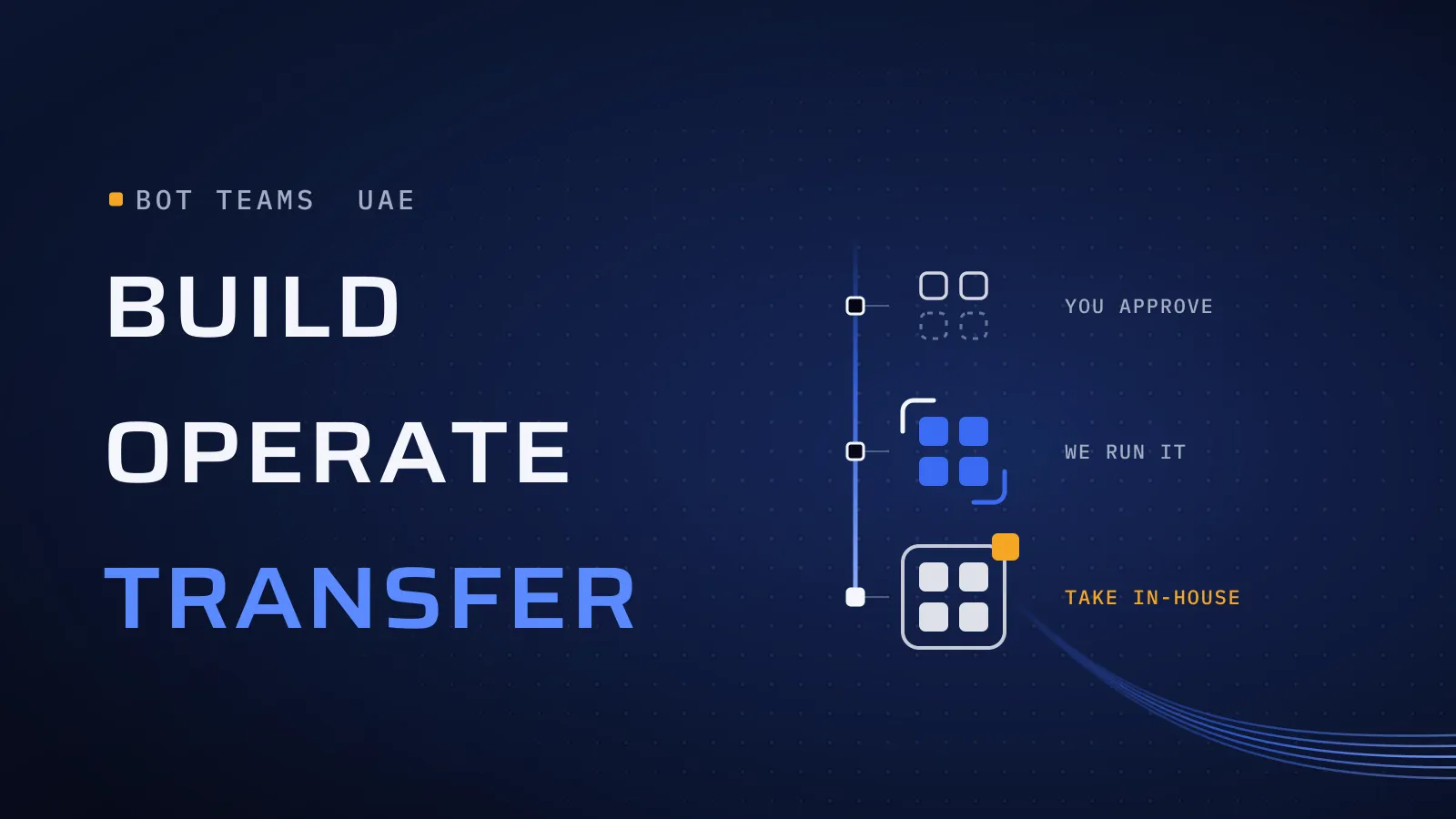
The agent then works beside your team on real cases before it acts on anything live, and a named person on your side signs off what it drafts. It takes on more cases, or a second process, only when time per case, errors and escalations beat the baseline. If the numbers don’t hold, you stop with the process mapped and measured, and nothing has gone live. An AI pilot runs as project delivery, ending in a go or no-go decision.
Two of the ways we work matter most at this stage:
- Product thinking. We solve business problems, not only deliver features, so the agent is judged on the hours and errors it saves, not on how clever it looks.
- Transparent delivery. Clear milestones, reporting and communication: you see the baseline, the trial numbers and the reasons behind the go or no-go decision in writing.
For the access rights, logs and review rules in more depth, read our guide to AI agents for enterprises.
Find your first AI process
Since 2014 we have built software for more than 100 clients across the UAE, Saudi Arabia, Qatar, Kuwait, the USA and Canada, from our headquarters at Dubai Digital Park in Dubai Silicon Oasis. Bring your shortlist and your scores, or just the process that costs your team the most hours.
Find your first AI process → We ask about your goal, what you use today, your timing and who else should be involved. You leave with clear next steps. The call commits you to nothing, and we sign an NDA first if you want one.
Frequently asked questions
What does a first AI agent cost?
There is the build, which covers mapping the process, connecting your systems and testing. Then there is the running cost: AI usage billed by volume, plus the time your team spends reviewing drafts. Our price is agreed in your proposal once we have seen the process, and a monthly spending cap with an alert keeps the running cost in view from the first day.
How long until we know whether the agent works?
You find out in the trial run, when the agent works beside your team on real cases without acting on them. The timeline is agreed in your proposal, and the main factor is how easily the agent can reach your systems, which is question 5 on the check. You see its numbers against your baseline before you commit to anything more.
What if none of our processes scores 7 or more?
Then the check has saved you a build that would have stalled. The no answers become a short work plan: get the inputs into digital form, clean the records, open a way into the systems, name an owner. That work saves time even without AI, and once it is done you can score the process again.
Who is accountable when the agent gets something wrong?
Your named owner, the person question 9 asks for. The agent works through its own account with limited rights, every action is logged, and your owner can switch it off. Because a person reviews what it drafts, a mistake is caught at the draft stage, where it is quick to correct.
What happens to our data during the trial?
Before any access, we agree with you which AI tools are used, where your data is stored and processed, and which personal data the agent can see. We sign an NDA first if you want one, so your data is covered before anyone sees it.
Do we need new systems before we start?
Usually not. The agent connects to the ERP, CRM and shared mailbox you already run, through each system's API and its own account. If a system offers no way in, the check shows it at question 5, and we suggest the simplest fix before any build starts.