ChatGPT for Business in the UAE: Where It Is Enough, and When You Need an AI Agent on Your Systems
ChatGPT for business in the UAE: where it is enough, and when an AI agent on your Odoo, CRM and inbox pays off, compared on data, Arabic and approvals.
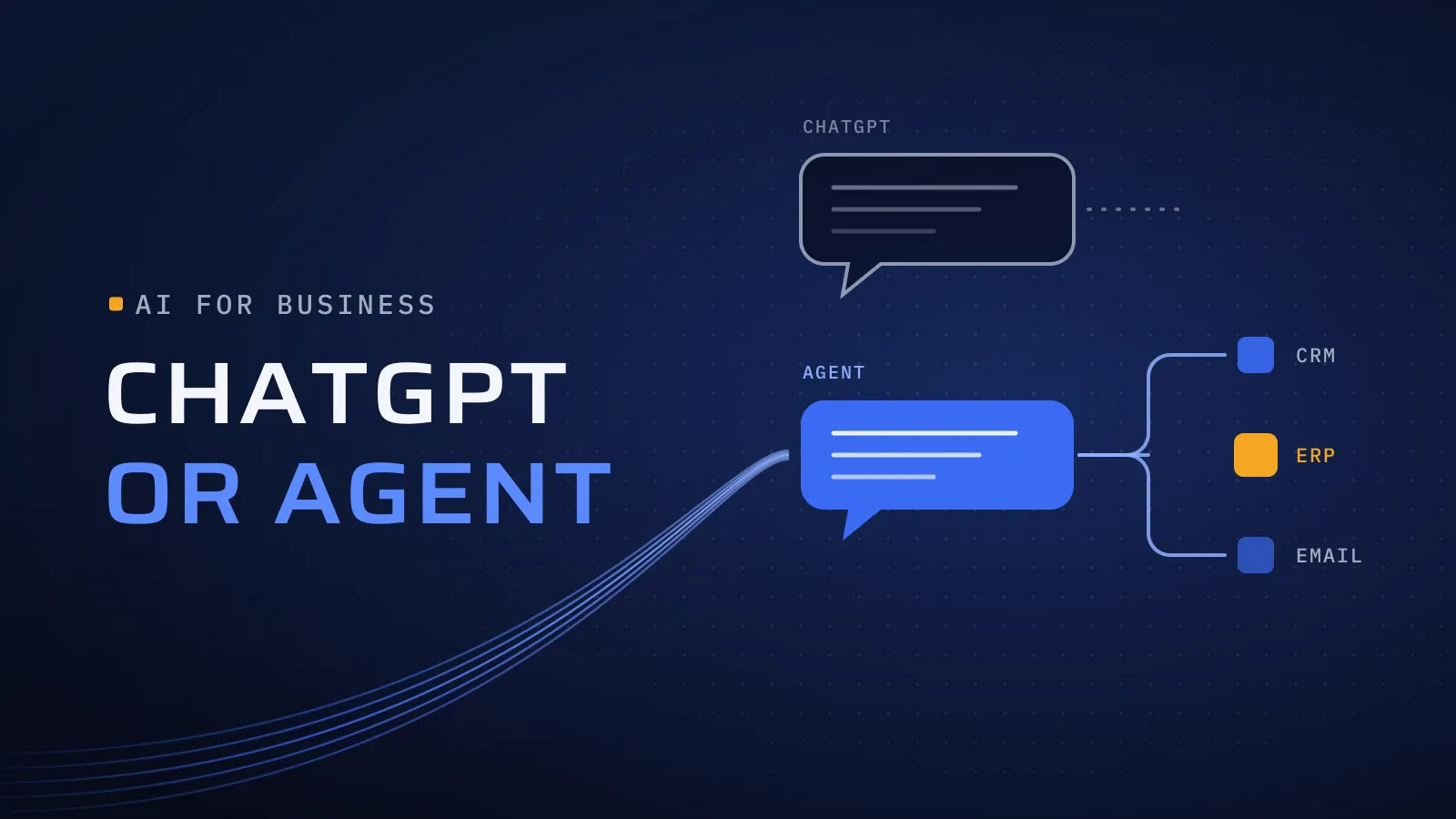
Your team probably already uses ChatGPT for business in the UAE: drafting emails in Arabic and English, summarising contracts, tidying up reports. The next question for an operations, finance or customer-service head is where the hours still go, because they are usually lost in the copying between ChatGPT and your Odoo, CRM and shared inbox, and that is the part an AI agent can take on.
Is ChatGPT for business in the UAE enough, or do you need an AI agent?
Quick answer: ChatGPT is enough when a person brings the input, reads the answer and does the next step: drafting, summarising, translating, research. You need an AI agent when the work starts in your systems, depends on live records, ends with an entry in Odoo or your CRM, and needs approvals and an audit trail.
Have a process in mind? Find your first AI process →
What the copy and paste costs you
ChatGPT speeds up the writing, but someone still downloads the invoice, pastes it into a chat, checks the total against Odoo, types the result back and logs it in the CRM. That copying is where the hours and the errors sit, and it grows with every new customer or supplier. Data is the other cost. By default, OpenAI does not train its models on data from its business plans or its API (OpenAI), but personal accounts follow different rules, and no plan on its own knows your stock levels, credit limits or open cases.
Five questions that decide it
Ask these about one process, with the people who run it:
- Where does the input come from? If a person types or uploads it, ChatGPT works. If it arrives in a shared mailbox, a supplier portal or your ERP, an agent can pick it up where it lands.
- Does the answer need your live records? Drafting a polite reply doesn’t. “Is order 4512 out for delivery?” does. ChatGPT only knows what someone pastes in; an agent reads the record through the system’s API, with its own account.
- Does the work end with an action? A draft vendor bill, an updated ticket, a reply sent to a customer. ChatGPT hands back text and a person does the entry. An agent does the entry in draft, inside limits you set.
- Who approves, and where is the record? With ChatGPT, the history sits in each person’s account. With an agent, rules send certain cases to a person (amounts above a limit, new suppliers, complaints) and every action is logged.
- How much Arabic, and whose Arabic? Both handle Arabic and English text. The difference is testing: anything that replies or extracts on its own has to be tested on your real messages first.
ChatGPT or an AI agent: the comparison
Take this table to your next team meeting. Most processes fall clearly into one column.
| What the work needs | ChatGPT for business is enough | Build an AI agent |
|---|---|---|
| Data access | Staff paste or upload what they need | Reads Odoo, your CRM and inbox through their APIs, with its own limited account |
| Live records | Not needed: drafts, summaries, research | Answers depend on today’s stock, prices, balances or case history |
| Arabic | Drafts in Arabic or English that a person reviews before sending | Replies or extractions in Arabic at volume, tested on your own messages, including dialect and mixed language |
| Accuracy | A person checks every answer anyway | Checks against your records, and sends low-confidence cases to a person |
| Actions in Odoo or CRM | None: a person makes the entry | Creates draft bills, tickets or updates, within limits |
| Approvals and audit | Chat history in each user’s account | Rules for which cases go to a person, every action logged, a named owner who can switch it off |
| Volume | A few tasks per person a day | The same kind of case, many times a day |
| Cost model | A monthly fee per user | A build, then AI usage billed by volume |
What this means for you: keep ChatGPT for the work where a person is the input and the judge: writing, summarising, translating, thinking a problem through. Move a process to an agent only when it repeats every day, starts and ends inside your systems, and has someone who will own it. Many teams end up with both: seats for everyone, and one agent for the process that takes the most hours.
Where UAE teams outgrow ChatGPT
The same three patterns come up in finance, customer service and operations:
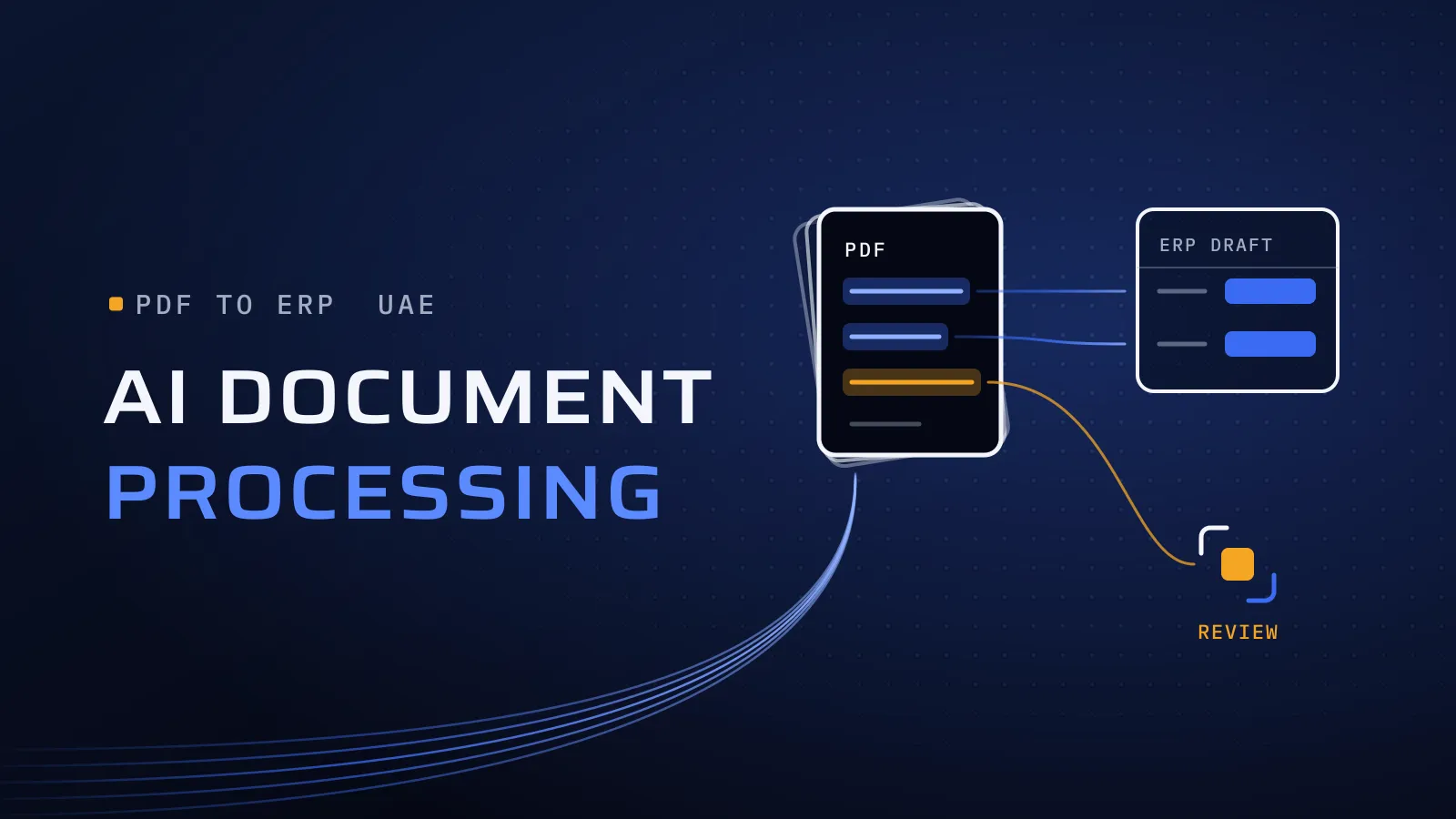
- Finance: supplier invoices. ChatGPT can read one PDF that someone uploads. An agent picks invoices up from the accounts-payable mailbox, matches each one to its purchase order in Odoo and creates the vendor bill in draft. Your accounts team approves mismatches and posts.
- Customer service: the shared inbox. ChatGPT drafts a reply after someone pastes the message in. An agent reads every incoming email in Arabic or English, labels it, pulls the order status from your system and drafts the reply for staff to send. Complaints and refunds go straight to a person.
- Operations: status and reports. ChatGPT can’t know where an order is. An agent reads it from your ERP, answers your team’s status questions and drafts the weekly report from live figures for the report owner to check.
In each case the agent doesn’t replace the person who decides. It removes the copying before the decision.
Tell us what your team pastes into ChatGPT most often. We reply with whether ChatGPT is enough, whether an agent on your systems would pay off, and which cases should stay with your people.
Not ready for a call? Ask for our company profile and we’ll send it to you.
When an agent is the wrong answer
An agent isn’t always the next step after ChatGPT:
- A fixed rule does the job. A nightly data copy or a reminder on a due date needs plain workflow automation, which is cheaper and more predictable.
- The records aren’t ready. If supplier or customer data is scattered and out of date, fix it first. An agent working from poor records gives confident, wrong answers.
- The volume is low, or nobody owns it. A task that turns up a few times a month rarely repays a build.
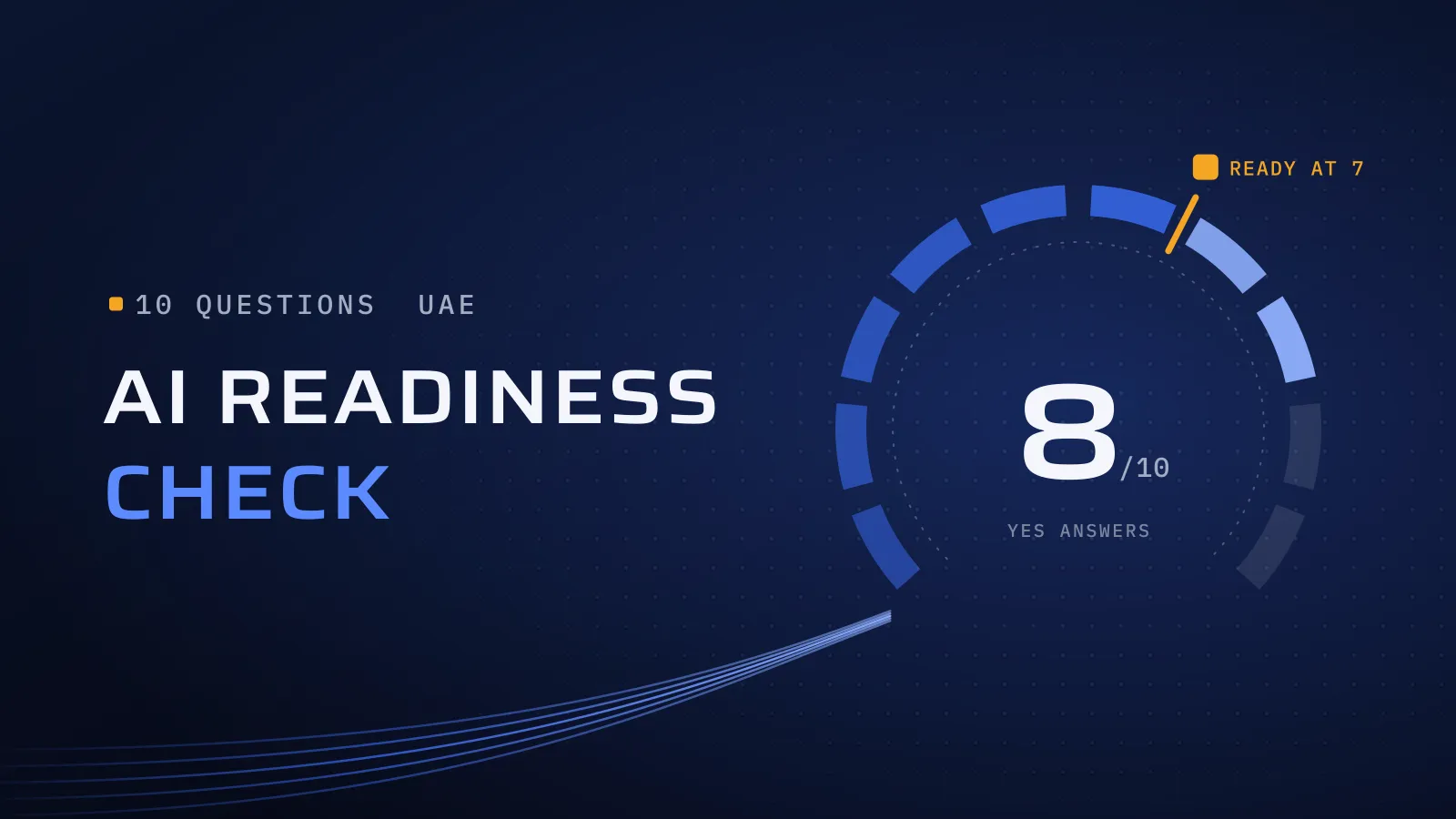
Before you commit, score the process with our AI readiness check for UAE teams. Ten yes/no questions show whether it suits a first agent, or what to fix first.
How we build an agent on your systems
Our AI agent development in Dubai starts with one process. We map it with the people who do the work, record today’s time per case and error rate, and agree which cases always go to a person. Then we connect the agent to the ERP, CRM and email you already run. It gets its own account with limited rights, never a person’s login, and it works beside your team on real cases before it acts on live work. Because we also handle Odoo implementation in the UAE, an agent for a company on Odoo is built by people who know where its records live.
Two of the ways we work matter most here. Custom development: built around your business’s requirements, so the agent follows your approval rules rather than a vendor’s defaults. Independent QA: separate from development, so the person testing the agent did not build it, and the Arabic, mixed-language and scanned cases get tested before launch. Our guide to AI agents for enterprises covers the roll-out and governance in more detail.
Find your first AI process
Since 2014 we have built software for more than 100 clients across the UAE, Saudi Arabia, Qatar, Kuwait, the USA and Canada, from our headquarters at Dubai Digital Park in Dubai Silicon Oasis and our offices in Houston and Alexandria. Bring a list of what your team uses ChatGPT for today. We’ll help you pick the one process worth moving into your systems, and say plainly if ChatGPT already covers the rest.
Find your first AI process → We ask about your goal, what you use today, your timing and who else should be involved. You leave with clear next steps. The call commits you to nothing, and we sign an NDA first if you want one.
Frequently asked questions
Is ChatGPT safe to use with company data?
Start with the plan and the rules. By default, OpenAI does not train its models on data from its business plans or its API, so put your team on a business plan rather than personal accounts, and agree what may be pasted in. An AI agent goes further: it reads only what the task needs, through its own logged account, and we agree with you which AI tools are used and where your data is processed before any access.
Can't we just connect ChatGPT to Odoo or our CRM?
You can wire a chat tool to an API, but then it needs what an agent needs anyway: its own limited account, rules for what it may change, approvals and a log of every action. That is the build. On Odoo, a typical first agent creates vendor bills in draft for your accounts team to check and post.
How well does AI handle Arabic?
Current AI models read and write Arabic, and drafts that a person checks are a safe place to start. Before an agent replies or extracts on its own, an independent tester builds cases from your real messages, including Gulf dialect, mixed Arabic and English, and scanned documents. Anything the agent is unsure of goes to a person.
What does an agent cost compared with ChatGPT seats?
Seats are a monthly fee per user. An agent has a build cost, for mapping the process, connecting your systems and testing, plus AI usage billed by volume and your team's review time. Our price is agreed in your proposal once we have seen the process, and a monthly spending cap with an alert keeps usage predictable.
What if the agent gets something wrong?
It works in draft and within limits, so a mistake is caught before it lands: a person posts the bill, sends the reply or approves the refund. Every action is logged, a named owner can switch it off, and it runs alongside your team on real cases before it acts on live work.
Do we stop using ChatGPT once we have an agent?
No. Keep the seats for writing, summaries and research, where a person is both the input and the judge. The agent takes one repeated process out of the chat window and into your systems, and the next process follows only when the first one has proved itself.